


Rosemary: The Piney Classic
There’s a reason rosemary is a staple in both gardens and kitchens. Its woody, pine-like scent is instantly invigorating. The best part? It releases its fragrance when you brush against its needle-like leaves, making it a perfect interactive plant for
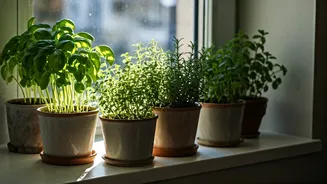
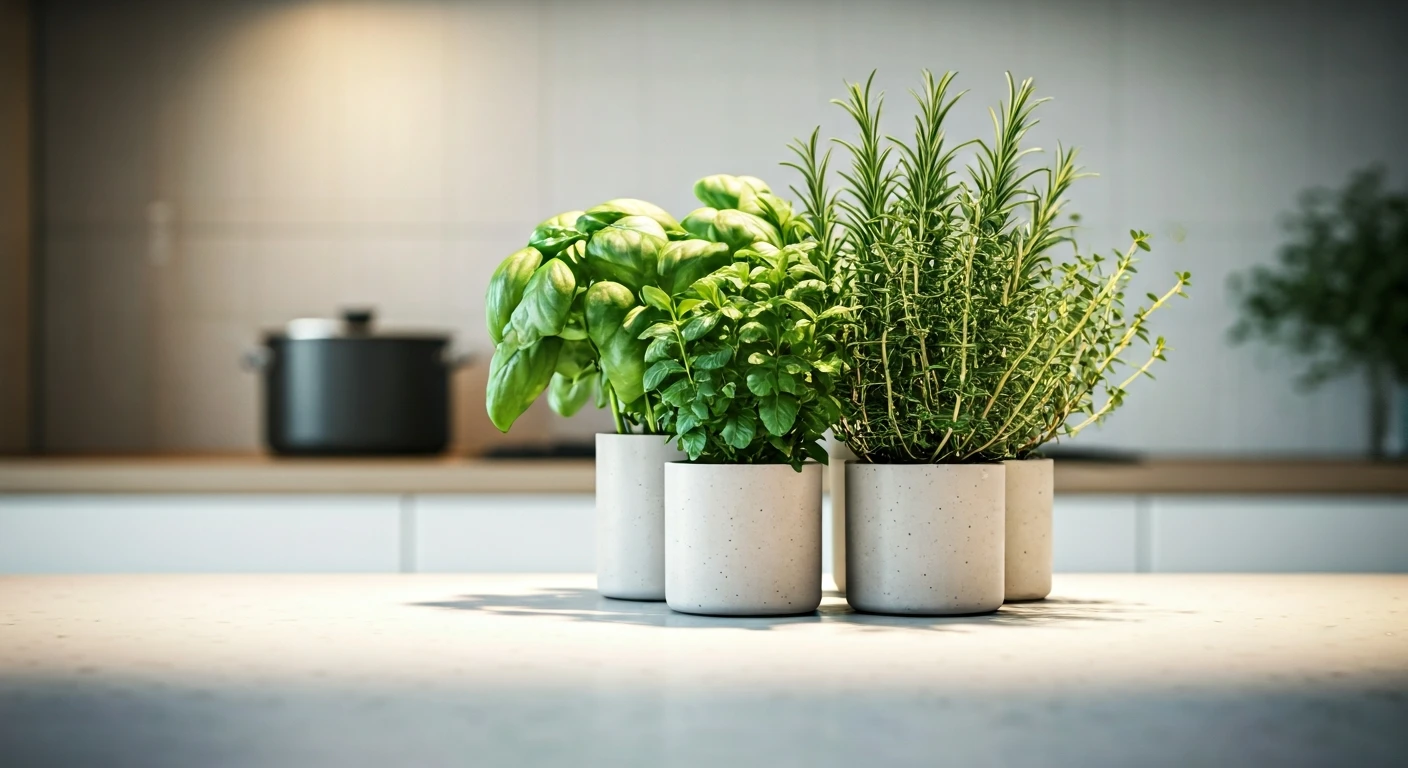
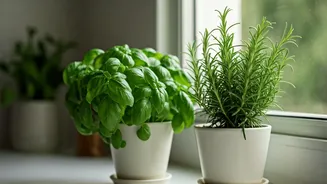
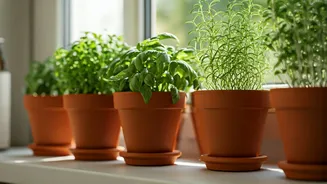
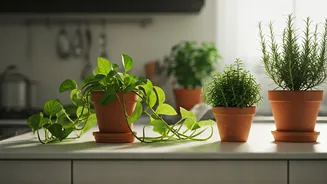
a high-traffic counter. A small potted rosemary bush provides a beautiful, rustic, and slightly wild look that contrasts nicely with modern kitchen surfaces. It looks like a miniature evergreen, bringing a touch of the outdoors in. Beyond its scent and looks, it’s a culinary powerhouse. Snip a sprig to toss into a pan with roasting potatoes or to garnish a cocktail. Rosemary loves sun, so place it in the brightest spot your kitchen has. Let the soil dry out completely between waterings; it hates having wet feet.
Mint: The Refreshing Energizer
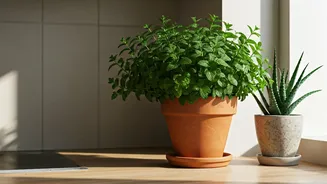
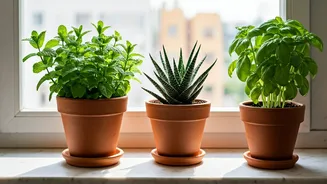
For a burst of clean, refreshing fragrance, nothing beats mint. Spearmint and peppermint are the most common varieties, each offering a cool, sweet scent that can help mask other lingering kitchen odors. The mere act of watering it or picking a leaf for tea can perfume the air. With its bright green, textured leaves and fast-growing nature, a pot of mint provides lush, vibrant greenery. It can look a bit unruly, but that’s part of its charm. Just keep it in its own pot—mint is an aggressive grower and will take over any container it shares. Use the leaves for mojitos, iced tea, or a simple garnish for fruit salads. Mint prefers consistently moist soil and can tolerate less direct sunlight than other herbs, making it a flexible kitchen companion.
Basil: The Scent of Summer
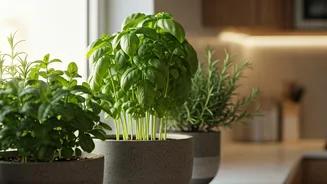
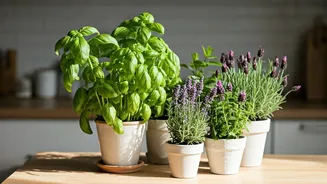
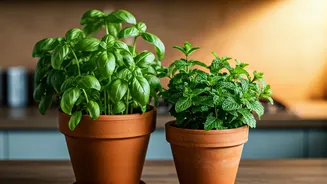
The sweet, slightly spicy scent of fresh basil is synonymous with summer, pesto, and Italian cooking. Having a pot on your counter is like having a secret ingredient at the ready. Genovese basil is the classic choice, but try purple or lemon basil for a different visual and aromatic twist. A healthy basil plant is a beautiful thing, with large, glossy, and verdant leaves that signal freshness and vitality. It brings a lush, edible-garden feel right to your prep space. Keep it well-watered and give it plenty of sun. The key to a full, bushy plant is to pinch off the top sets of leaves regularly—which, conveniently, is exactly what you do when you’re making a caprese salad.
Lavender: A Calming Presence
While more commonly associated with bedrooms and soaps, certain varieties of lavender can thrive indoors on a sunny counter. The clean, floral scent is renowned for its calming properties, bringing a touch of spa-like tranquility to a busy kitchen. English and French lavenders are good candidates for potting. The plant’s silvery-green foliage and iconic purple flower spikes provide a stunning pop of color and a delicate, elegant silhouette. It’s a sophisticated choice that feels both rustic and refined. While the flowers are edible (used sparingly in baking or lemonade), this plant is primarily for its aromatherapy benefits. Lavender demands as much direct sunlight as you can give it and needs soil that drains extremely well. Be careful not to overwater.
Lemon Balm: The Citrus Stand-In
If you love the smell of citrus but don't have room for a dwarf lemon tree, lemon balm is the perfect substitute. A member of the mint family, its leaves release a bright, zesty lemon scent when touched or bruised. It’s a cheerful, uplifting aroma that can cut through stale air. The plant itself is bushy and green, similar in appearance to mint, providing a simple, clean aesthetic. It fills a pot nicely and adds a soft texture to your counterscape. The leaves can be used to make a wonderfully fragrant herbal tea or muddled into cold drinks for a citrusy kick. Like its mint cousin, lemon balm is easy to grow. It thrives in moderate sunlight and prefers to stay evenly moist.