





When the Heat Becomes Unlivable
Imagine a forecast where 110°F feels like a mild day. For vast stretches of India, this isn't imagination; it's the reality of April, May, and June. Recent years have seen heatwaves that are not just uncomfortable but dangerously prolonged, pushing infrastructure
and human bodies to their limits. In cities like New Delhi, Mumbai, and Bengaluru, where concrete and asphalt create powerful 'heat island' effects, the relentless sun makes daily life a sweltering ordeal. Air conditioning units run nonstop, power grids strain, and the simple act of being outside becomes a health risk. This isn't just summer; it's a climate-amped crisis that has left millions of city dwellers desperate for any form of relief.
Enter the 'Daycation'
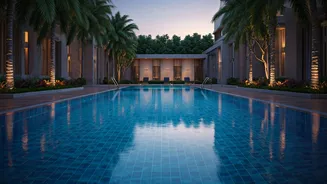
While most public swimming pools are few, far between, or poorly maintained, every five-star hotel has a shimmering, blue oasis sitting tantalizingly behind its walls. Recognizing a new market born of desperation, India’s luxury hotels have pivoted. They’re now aggressively marketing “daycations” or “day-use packages.” For a fraction of the cost of an overnight stay—typically ranging from $30 to $100—a family can gain access to what feels like paradise. These packages often bundle several hours of pool time with access to a cool, air-conditioned room, Wi-Fi, and a food and beverage credit. It’s a strategic move for hotels to monetize rooms and facilities that would otherwise sit empty between check-out and check-in, turning a slow Tuesday afternoon into a revenue stream.
More Than Just a Swim
This trend is about more than just cooling off. For India’s burgeoning urban middle and upper-middle class, it’s a form of aspirational consumption. It’s a chance to experience a slice of the luxury lifestyle, documented extensively on Instagram with pictures of cocktails by the water. For parents with kids out of school for the summer, it’s a contained, safe, and exciting activity that breaks the monotony of being cooped up at home. For remote workers, it’s an opportunity to “work from pool,” trading a stuffy home office for a laptop and a lounge chair. In a society where public spaces can be chaotic and crowded, the hotel pool offers a curated, clean, and exclusive environment—an escape not just from the heat, but from the friction of city life itself.
A Glimpse of a Climate-Changed Future
While this trend provides a clever solution for some, it also highlights a stark reality of climate adaptation: it is often a privilege. The vast majority of Indians weathering these heatwaves cannot afford a day pass to a five-star hotel. They rely on simpler, more traditional methods—wet cloths, shaded areas, and waiting for the sun to go down. The rise of the hotel pool as a public cooldown spot is a fascinating case study in market-based responses to environmental crises. It shows how businesses can adapt and how consumer behavior shifts under pressure. But it also serves as a potent symbol of the growing divide between those who can pay to escape the effects of climate change and those who have no choice but to endure them.