





1. Beyond the Potted Plant
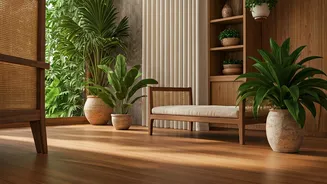
While lush greenery is central to the look, this trend goes far beyond a lonely succulent on a coffee table. In apartments across Mumbai, Delhi, and Bangalore, designers are creating entire “living walls” and integrating extensive vertical gardens. With
urban air quality a growing concern, this isn't just aesthetic. Homeowners are curating indoor jungles of snake plants, areca palms, and money plants, which are known for their air-purifying properties. The goal is to create a tangible, breathable oasis that actively improves the home’s environment, making greenery a functional utility rather than mere decoration.
2. A Return to Natural Materials
The biophilic ethos champions authenticity, a principle reflected in a renewed love for organic materials. Polished marble and synthetic finishes are making way for the warmth of reclaimed teak, the texture of bamboo, and the earthy appeal of terracotta and jute. These materials are not just sustainable; they are deeply woven into the fabric of Indian craftsmanship. You’ll see it in hand-woven cane furniture, raw silk cushions, and clay pottery, creating a sensory experience that feels both grounded and luxurious. This tactile connection to nature provides a subtle, constant reminder of the world beyond the concrete.
3. The Modern Courtyard Concept
For generations, the heart of many traditional Indian homes was the 'aangan,' or central courtyard—an open-to-sky space for family, light, and ventilation. As high-rise living became the norm, this crucial architectural element was lost. Biophilic design is cleverly bringing it back in modern forms. Architects are designing apartments with internal atriums, double-height balconies that can house small trees, and floor-to-ceiling windows that blur the line between a living room and its green terrace. It’s a nostalgic nod to the past, reimagined to give city dwellers their own private patch of sky.
4. The Strategic Worship of Light
In a country blessed with abundant sun, designers are finally treating natural light as the precious resource it is. The design philosophy is shifting from blocking out the heat to strategically harnessing the light. This means incorporating large, unadorned windows, reflective surfaces, and open-plan layouts that allow sunlight to penetrate deep into the home throughout the day. Sheer, handloom cotton curtains replace heavy drapes, filtering light to create a soft, diffused glow. This focus aligns with biophilic principles that link dynamic and diffuse light with improved mood, energy, and productivity.
5. Nature-Inspired Patterns and Forms
Biophilia also operates on a symbolic level. Even without a full-blown jungle, the essence of nature is being integrated through patterns, shapes, and art. This can be seen in textiles featuring floral or leaf motifs (a modern take on traditional block prints), furniture with soft, organic curves instead of harsh lines, and nature-inspired color palettes—think sage green, earthy terracotta, and ocean blue. Small indoor water fountains, mimicking the sound of a gentle stream, are also becoming popular for their calming, meditative effect. These subtle cues create what designers call an “indirect connection” to nature, fostering tranquility even in the most urbanized settings.