






The 244-Tonne Elephant in the Room
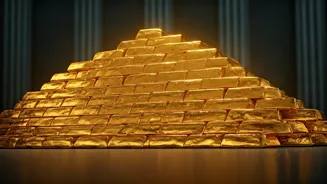
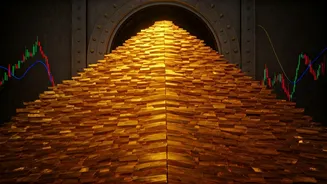
So, what is this number? In the first quarter of 2023, the world’s central banks collectively bought a staggering 244 tonnes of gold. To put that in perspective, that’s about the weight of a blue whale and a half, or roughly 538,000 pounds of the yellow
metal. At today’s prices, that single quarter’s haul is worth over $18 billion. It was a record-breaking start to the year and a continuation of a massive trend. While individual investors and hedge funds get most of the media attention, their buying and selling is a drop in the bucket compared to this kind of institutional tidal wave. When buyers with seemingly bottomless pockets enter a market and aren’t concerned with short-term price fluctuations, it fundamentally changes the game. This wasn't a one-off event; it was a flashing signal of a major shift in the global financial landscape.
Why the World's Banks Are Stockpiling
Central banks don’t buy gold on a whim. Their actions are deliberate, strategic, and tell us a lot about their view of the world. There are three main reasons for this modern-day gold rush. First is de-dollarization. For decades, the U.S. dollar has been the world's undisputed reserve currency. But many countries, particularly emerging economies like China, India, and Turkey, are actively trying to reduce their dependence on the dollar for geopolitical and economic reasons. Gold is the ultimate monetary asset that isn’t issued or controlled by any single country. Second, gold is a classic hedge against inflation and economic uncertainty. As governments printed money to combat economic slowdowns, central banks sought a reliable store of value that couldn't be devalued by policy decisions. Third, in an increasingly fractured world, gold is seen as a neutral asset that provides stability during times of geopolitical tension. It’s financial insurance on a national scale.
This Isn't Just a Passing Fad
The 244-tonne figure might be from early 2023, but the trend has only solidified. According to the World Gold Council, central banks continued their shopping spree throughout the year, accumulating a net total of over 1,000 tonnes for two consecutive years (2022 and 2023)—levels not seen since the 1960s. This isn't speculative froth; it's a long-term strategic reallocation of reserves. These institutions are what market analysts call “price-insensitive buyers.” They aren't trying to flip gold for a quick profit. They are buying it to hold for decades as a foundational part of their national wealth. This sustained, large-scale demand creates a powerful support level for the price of gold. It acts as a constant upward pressure, absorbing any dips and providing a strong floor that encourages other investors to join in.
What It Means for You
You might not be in the market for a literal tonne of gold, but this central bank activity has a direct impact on the broader market. The immense and steady demand acts as a major tailwind for the gold price. When the biggest players in the world are all buying, it sends a powerful signal that trickles down to everyone, from institutional funds to individual retirement savers looking at gold ETFs. This institutional demand helps explain why gold has remained so resilient, and even thrived, despite high interest rates—a factor that would typically make a non-yielding asset like gold less attractive. It has introduced a new, powerful dynamic into the market that overrides some of the old rules. The buzz around gold isn’t just hype; it's a reaction to a fundamental shift in who is buying and, more importantly, why.