



The Myth of a Washed-Out Vacation
For many American travelers, the word “monsoon” conjures images of canceled plans and ruined holidays. We’re conditioned to seek endless sunshine, and our travel plans often treat rain as an enemy to be avoided at all costs. The industry default is to funnel
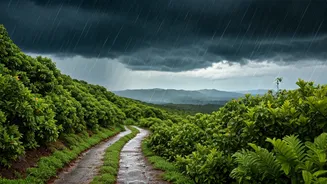
tourists into large, sealed-off resorts designed to keep the local climate at bay. But this approach misses the point entirely. In many parts of the world, from Southeast Asia to India and even the American Southwest, the rainy season is a time of renewal, celebration, and profound beauty. The landscapes, once parched and dusty, explode in vibrant green. The air is cleansed, the temperatures can drop to more comfortable levels, and a welcome slowness settles over daily life. The first step to a better monsoon trip is letting go of the fear that a little rain will ruin everything. It won’t; in fact, it might just make it.
Beyond the Marble Lobby
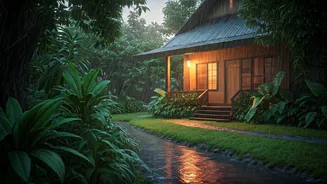
The problem with experiencing a monsoon from a five-star hotel is that these institutions are fundamentally designed to create a uniform, placeless bubble. Their goal is to insulate you from the outside world—its weather, its noise, its unpredictability. The air conditioning hums, the windows are triple-paned, and the closest you get to the rain is watching it streak silently down glass from 15 floors up. It’s a controlled, predictable, and ultimately sterile experience. Contrast that with a small, locally-owned guesthouse or boutique inn. Here, the architecture is often designed to work *with* the climate. Covered verandas, open-air common areas, and courtyards become theaters for the storm. The sound of rain on a tin roof isn't muffled; it's the soundtrack to your afternoon nap. You aren’t sealed off from the destination; you’re immersed in it. This is the “warmth” the headline speaks of—it isn't about temperature, but about connection and presence.
The Intimacy of the Guesthouse
In a large hotel, you are one of hundreds of guests, a room number and a key card. In a small guesthouse, you are a person. The warmth of monsoon travel comes from this human scale. When a sudden downpour sends everyone scurrying for cover, the shared lounge of a 10-room inn becomes a cozy, impromptu community. The host might bring out a complimentary pot of hot ginger tea or share stories about what the rains mean for the local community. They’ll know the best nearby restaurant that makes a perfect rainy-day soup and which waterfalls are most spectacular after a storm. This is where travel transforms from a consumer transaction into a genuine human exchange. The shared experience of waiting out the rain with fellow travelers and a welcoming host fosters a sense of camaraderie that is impossible to find in an anonymous hotel corridor.
A Feast for the Senses
Monsoon isn’t just a visual event; it’s a full-body sensory experience, and smaller lodgings are the best places to appreciate it. There’s the earthy, intoxicating smell of petrichor—the scent of rain hitting dry soil—that you can’t get from a hermetically sealed room. Food, too, seems to taste better. There’s a reason why so many cultures have specific “rainy day” foods. A bowl of spicy noodle soup, a crispy fried snack, or a steaming cup of masala chai all feel infinitely more satisfying when the world outside is wet and wild. The experience is about surrendering to the moment. It’s about reading a book on a covered porch as the rain drums down, watching the world turn lush and green, and feeling a part of the natural cycle instead of just observing it from a distance.
How to Find Your Monsoon Haven
Finding these places is easier than ever. When searching on booking platforms, filter for “guesthouse,” “inn,” or “homestay.” Pay close attention to reviews, but don’t just look at the star rating. Search for keywords like “host,” “atmosphere,” “cozy,” “veranda,” or “porch.” Look at guest photos—do they show inviting common areas and evidence of a personal touch? Consider booking only your first few nights in a major city and then asking for local recommendations once you arrive. Often, the best spots aren’t the ones with the slickest marketing, but the ones passed along by word of mouth. Be adventurous and trust that the warmth you’re seeking is found not in luxury amenities, but in the simple, profound pleasure of being welcomed in from the rain.