

The Minimalist Dilemma
Let’s be clear: the appeal of minimalism is undeniable. In a world of constant digital noise and material excess, creating a home that’s intentionally sparse feels like a radical act of self-care. It’s about prioritizing mental clarity over physical clutter.
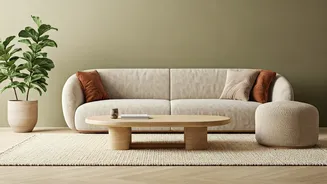
The philosophy, rooted in the idea of “less is more,” gives every item in your home a job to do, whether functional or purely aesthetic. But this noble pursuit has a common pitfall. When everything is smooth, mass-produced, and perfectly symmetrical, a space can lose its humanity. It can feel cold, impersonal, and more like a catalog than a home where a life is actually lived. The challenge isn't abandoning minimalism, but evolving it.
The Story in the Object
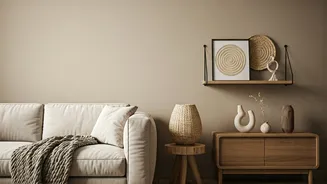
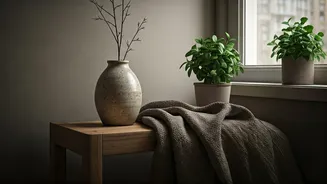
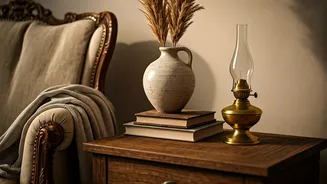
This is where the handmade piece enters the picture. Think of it as the soul of the room. A handmade object—be it a ceramic vase with subtle fingerprints in the glaze, a hand-carved wooden bowl with an irregular grain, or a woven textile with a slightly imperfect edge—is a vessel for a story. It tells the tale of its creator, the materials it came from, and the time invested in its making. Unlike a factory-made item that exists in thousands of identical forms, an artisanal piece is a one-of-a-kind statement. Its very existence in your minimalist space is an act of curation. It says, “Among all the things I could have, I chose this one thing, because its story, its texture, and its imperfections speak to me.”
Texture and Imperfection
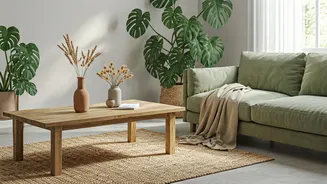
Minimalist interiors often rely on a sleek, uniform finish—smooth walls, polished floors, and unadorned furniture. While calming, this can lead to a lack of sensory richness. A handmade object is the perfect antidote. The rough, uneven texture of hand-thrown pottery, the soft slub of hand-loomed linen, or the organic contours of a piece of driftwood provide a necessary and welcome contrast. These textures invite touch and engage the senses in a way a perfectly smooth surface cannot. This embrace of imperfection is tied to the Japanese concept of wabi-sabi, which finds beauty in the transient and incomplete. A small crack, an uneven surface, or a slightly asymmetrical form isn’t a flaw; it's evidence of authenticity. It’s a quiet rebellion against the tyranny of perfection.
Curating, Not Collecting
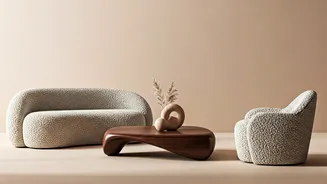
Adding handmade pieces to a minimalist home isn't an excuse to start collecting clutter. The key is intention. Instead of acquiring many things, focus on finding a few pieces that have a real impact. It’s about quality, not quantity. When choosing, consider the material. Natural materials like wood, clay, wool, and linen automatically bring a sense of warmth and organic life to a space. Pay attention to form. Does the shape of a vase create an interesting silhouette against a bare wall? Does a small sculpture draw the eye and invite contemplation? And most importantly, choose objects you have a personal connection to. Maybe it’s a mug you bought directly from the potter on a vacation, or a textile passed down from a family member. These connections are the very definition of soul.
The Art of Placement
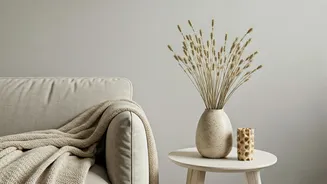
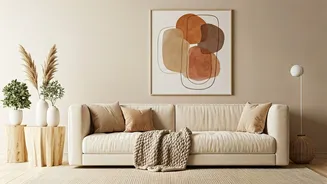
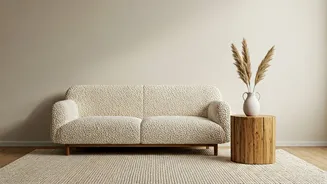
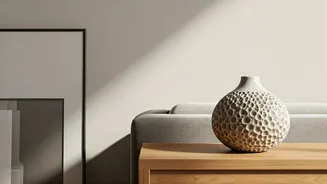
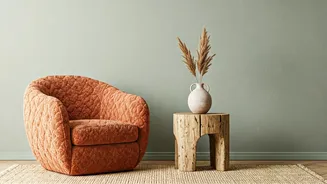
In minimalism, negative space is just as important as the object itself. The empty space around an item gives it room to breathe and elevates its importance. A single, beautifully crafted bowl on a large dining table can have more visual weight than a dozen smaller items. Think of your handmade piece as a piece of art and place it accordingly. Use it to create a focal point in a room. A striking ceramic vessel can stand alone on a console table, its form doing all the talking. A unique textile can be hung on the wall, adding color and texture without adding clutter. The goal is to let the piece shine, allowing its character and story to become a central feature of your home’s calm, considered landscape.