





An Entirely Different Safari
In the northeastern corner of India lies Assam, a state defined by the immense Brahmaputra River. This is not the India of bustling megacities, but a land of rolling tea plantations, dense forests, and a pace of life dictated by the water. For most of the year,
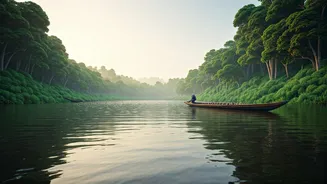
wildlife safaris here mean bumping along in a Jeep through national parks like Kaziranga, famous for its one-horned rhinoceros. But as the seasons turn and the early monsoon clouds gather, a different, more serene kind of adventure becomes possible: the river safari. This is your chance to explore the region’s dynamic ecosystem from the water, witnessing a side of Assam that most travelers miss entirely. It’s an experience that trades the frantic energy of a Jeep chase for the quiet hum of a boat motor and the gentle lapping of water against the hull.
The Magic of the Early Monsoon
For Americans, “monsoon season” often conjures images of torrential downpours and catastrophic flooding. But in Assam, the period from late April through May marks the “early monsoon,” a magical transition. These first showers, locally known as “Bordoisila,” are a welcome relief after the dry winter. They settle the dust, cool the air, and trigger an explosion of life. The parched earth transforms into a carpet of impossible green. The fragrance of wet soil—a scent called petrichor—hangs heavy in the air. This isn't the relentless, travel-disrupting deluge of the peak monsoon in July and August. Instead, it’s a time of intermittent, refreshing rain that brings the landscape to its most beautiful and photogenic peak, creating a perfect window for exploration before the river swells to its full, formidable power.
Exploring the Hidden River Islands
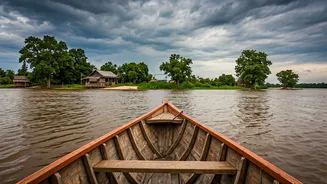
The Brahmaputra is one of the few braided rivers in the world, meaning its channel is filled with thousands of temporary, sandy islands known as 'char-chapori.' These are the “hidden river islands” of the headline. Formed and destroyed by the river's annual floods, they are home to unique ecosystems and resilient communities of Mishing tribes, who live in stilted homes adapted to the river’s rhythms. A boat safari allows you to navigate this shifting maze of land and water. You’ll pass by tiny villages where life seems untouched by the modern world, see farmers tending to their crops on fertile silt, and witness a profound connection between people and the river that both sustains and threatens them. It’s a cultural immersion as much as a wildlife experience, offering a glimpse into a way of life that is both precarious and beautiful.
Wildlife from a New Perspective
While the core zones of Kaziranga National Park close to Jeep traffic during the monsoon, the park's periphery and the river itself come alive. The rising waters push animals from the low-lying grasslands to seek higher ground, often bringing them closer to the riverbanks. From the vantage point of a boat, you have a unique and unobstructed view. Look for herds of Asiatic wild buffalo wallowing in the shallows, families of elephants foraging near the water's edge, and the iconic one-horned rhinos, which often appear as prehistoric silhouettes against the lush greenery. The birdwatching is simply phenomenal. The early monsoon is prime time for sighting water birds, including storks, herons, and egrets. And if you’re truly lucky, you might even spot the subtle flash of a Gangetic river dolphin breaking the surface—a rare and unforgettable sight.
How to Plan Your River Adventure
Planning a trip to this unique corner of the world requires a bit of local expertise. The best time to go for this specific experience is from late April to early June. The main gateway to Assam is Lokpriya Gopinath Bordoloi International Airport (GAU) in Guwahati. From there, you can travel by road to embark on your river journey. Rather than going it alone, it is highly recommended to book with a reputable local tour operator that specializes in Brahmaputra river cruises or boat safaris. They will have the necessary knowledge of the river’s unpredictable currents, the best spots for wildlife viewing, and relationships with the local communities. Options range from simple day trips on smaller boats to multi-day expeditions on more comfortable river cruisers, allowing you to tailor the adventure to your comfort level.