



The New Focal Point
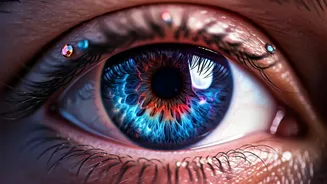
If the past few years taught us anything, it’s how to communicate with half a face. With our smiles hidden behind masks, our eyes did all the talking—and smizing, glaring, and flirting. Now, in a post-pandemic world, that focus hasn't faded; it has simply
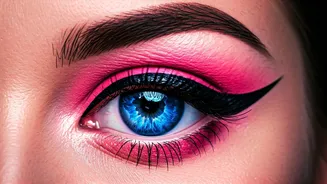
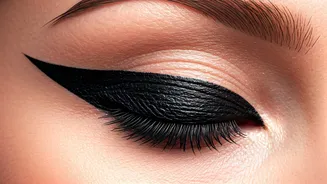
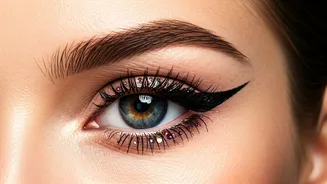
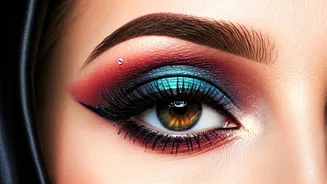
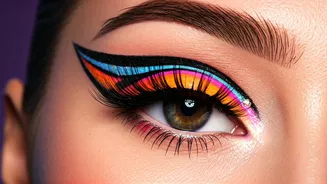
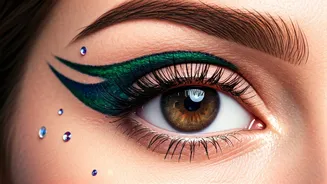
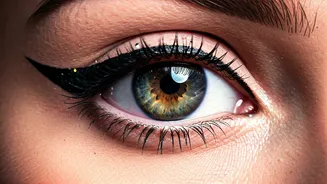
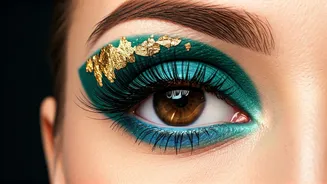
been amplified and adorned. The trend of “expressive eyes” isn't just about a single product or technique. It’s a broader cultural shift towards using the eye area as a primary canvas for identity, creativity, and emotion. Think less about a simple coat of mascara and more about deliberate artistry. We’re seeing a surge in razor-sharp “siren eyes” inspired by TikTok tutorials, bold graphic liners that defy the natural lash line, and a rainbow of jewel-toned shadows and mascaras. It's a maximalist approach that feels both playful and powerful, turning a daily makeup routine into a form of personal branding.
A Reaction to Years of Restriction
The psychological underpinning of this trend is impossible to ignore. For nearly two years, the eyes were the only visible feature we could use to signal friendliness to a stranger, share a joke with a coworker, or convey empathy. This period functionally retrained our social brains to seek and send cues from the brow bone down to the under-eye. As masks came off, we didn't just revert to old habits. Instead, we carried that heightened awareness with us. The move towards bold eye makeup can be seen as a celebration of this rediscovered feature. It’s a joyful, slightly rebellious declaration that we will no longer take facial expression for granted. In a sense, we’re making up for lost time, decorating the part of ourselves that became our primary tool for connection during a period of isolation.
History Repeats Itself, One Gaze at a Time
The idea of the eye as a focal point for beauty is, of course, nothing new. The “trending again” aspect of the headline is key. Each time expressive eyes have dominated, it has coincided with a specific cultural moment. In the 1920s, the dark, kohl-rimmed eyes of silent film stars like Clara Bow conveyed a world of emotion on screen without a single word. In the 1960s, the graphic, doll-like eyes of Twiggy, with her painted-on lower lashes, mirrored a youthquake culture obsessed with all things new and futuristic. The 1980s saw punk and new wave scenes use jagged, colorful eyeliner to signal rebellion and non-conformity. Today's trend borrows from all these eras but is filtered through a uniquely digital lens. We have the smoldering drama of the '20s, the graphic experimentation of the '60s, and the colorful rebellion of the '80s, all available as a filter, tutorial, or viral challenge.
The TikTok and Red Carpet Effect
You can’t talk about a modern trend without talking about social media. Platforms like TikTok and Instagram have become massive accelerators for beauty movements. Complex looks that once lived only on high-fashion runways are now broken down into 30-second tutorials, making them accessible to anyone with a smartphone and a steady hand. Hashtags for looks like #SirenEyes and #DoeEyes rack up billions of views, creating a feedback loop where creators and consumers shape the trend in real time. This digital democratization is mirrored on the red carpet. Celebrities and their makeup artists, from Zendaya to Doja Cat, are increasingly using eye makeup to make a statement, knowing the close-up shot will be screen-grabbed and analyzed across the internet within minutes. This creates an ecosystem where a bold look can go from a celebrity’s eyelid to a viral trend in a matter of hours, cementing the eye as the ultimate high-impact accessory.