





First, What Is This Glorious Anarchy?
Imagine a city park, a rooftop, or a spacious studio filled with people doing yoga, dancing, or powering through a HIIT class. Now, take away the giant speaker blasting a generic EDM track. The scene is nearly silent, punctuated only by the scuff of sneakers,
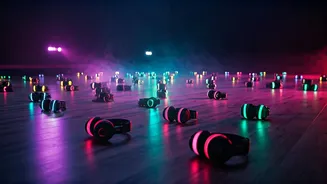
the occasional grunt, and the collective sound of breathing. Everyone is wearing a set of glowing wireless headphones, lost in their own world. This is silent disco fitness. Instructors speak into a microphone that transmits directly to your headset, often alongside a curated music playlist. Sometimes, there are multiple channels, allowing you to choose between a high-energy pop mix, a calming ambient soundscape, or just the instructor’s voice. It’s a simple technological twist, but one that fundamentally alters the DNA of a group fitness class. It takes a public, shared experience and makes it intensely personal, creating a bubble of sound that’s yours and yours alone.
The Sound of Silence (and Lizzo)
The magic isn’t just in the novelty; it’s in the freedom that bubble provides. Traditional fitness classes are an exercise in social navigation. Is the music too loud? Too quiet? Do you hate this song? Is that person next to you grunting with Herculean effort while you’re just trying to survive a plank? The shared soundtrack forces a shared mood. Silent disco headphones eliminate all of that. You control the volume. If you need to tune out the world and just focus on the instructor’s cues for your warrior pose, you can. If you want to drown out your own inner critic with an empowering blast of Lizzo, that option is yours. This isn’t just about customization; it’s about control. It removes the external variables that can make a workout feel like a chore or a competition. The focus shifts from the group’s energy to your own. There’s no pressure to match the vibe in the room, because the room, sonically speaking, doesn’t exist.
Permission to Be a Little Weird
And this is where the beautiful chaos comes in. When you’re cocooned in your personal soundscape, a glorious thing happens: you stop caring what you look like. The low-grade social anxiety that hums in the background of most gyms—the feeling of being watched, judged, or compared—evaporates. You’re free to be uncoordinated. You can miss a beat during a dance cardio class and nobody will notice or care. You can let out an audible sigh of relief during a yoga stretch without disrupting your neighbor’s zen. It fosters a space for joyful, uninhibited movement. People sing along off-key. They make weird faces during a tough set of squats. They dance with a goofy abandon usually reserved for the privacy of their own living rooms. This shared, simultaneous privacy creates a bizarre and wonderful paradox: you’re alone, together. The sight of a hundred people dancing in what appears to be total silence is objectively absurd, and leaning into that absurdity is liberating. It’s a communal agreement to let go of looking cool.
An Antidote to Performative Wellness
Ultimately, the rise of silent disco fitness feels like a direct response to the tyranny of a perfectly curated, Instagrammable wellness lifestyle. So much of modern fitness culture is about aesthetics—the right outfit, the perfect form, the post-workout selfie in flawless lighting. It can feel less like self-care and more like a performance for an invisible audience. Silent disco fitness is defiantly imperfect. It’s messy, individualistic, and prioritizes feeling good over looking good. The goal isn’t to achieve a perfect, synchronized routine but to find a personal flow. It’s a reminder that movement can be purely for play and release, not just for metrics and results. In a world that constantly asks us to optimize and broadcast our lives, the simple, chaotic act of putting on headphones and dancing like nobody’s watching—even when they are—feels like a small rebellion.