




How It Works: The Magic Is Just Hot Air
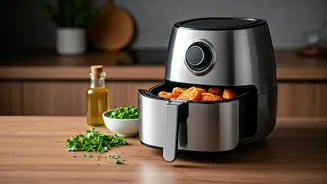
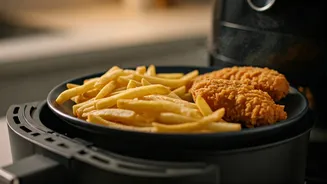
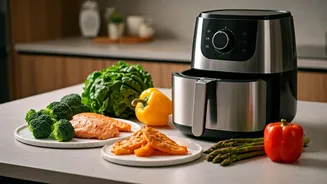
First, let's clear up a common misconception: an air fryer doesn't actually “fry.” There’s no vat of bubbling oil. Instead, an air fryer is essentially a small, powerful countertop convection oven. It works by circulating extremely hot air at high speed
around your food. A perforated basket allows this air to hit the food from all angles, creating a crisp outer layer that mimics the texture of deep-frying. This process, known as the Maillard reaction, is the same chemical reaction that gives seared steaks and toasted bread their delicious brown crust and savory flavor. The air fryer simply supercharges it, achieving that golden-brown exterior much faster and with more intensity than a conventional oven.
The 'Healthy' Part Explained
The health claim comes down to one simple factor: oil. Deep-frying involves completely submerging food in hot oil, which adds a significant amount of fat and calories. An air fryer, by contrast, requires very little oil—often just a teaspoon or a light spritz—or sometimes none at all. For foods that already have some fat, like chicken wings, the air fryer can actually help render it out, leaving you with a crispy skin and less grease. Compared to deep-frying, studies have shown that air-fried foods can contain up to 70-80% less fat. It’s a healthier alternative, but it’s not a magic wand. The healthiness of the final dish still depends on what you put inside. Air-fried Oreos are still Oreos.
Rescuing Vegetables from Soggy Oblivion
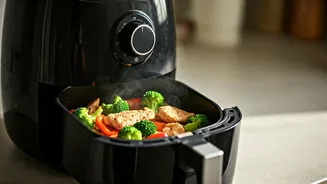
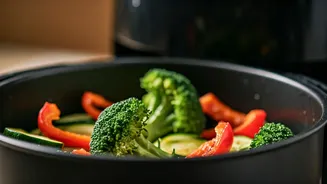
This is where the air fryer truly earns its place on the counter. For anyone who has struggled to make vegetables appealing, this machine is a game-changer. Take Brussels sprouts. In an oven, they can take a long time to get crispy, often ending up soft in the middle. In an air fryer, they transform in about 15 minutes, with shatteringly crisp outer leaves and a tender, caramelized core. The same miracle applies to broccoli and cauliflower florets, which get delightfully browned and nutty instead of steamy and sulfurous. Even simple root vegetables like carrots and sweet potatoes become snack-worthy, developing a concentrated sweetness and a french-fry-like texture.
Beyond Fries: Perfecting Proteins
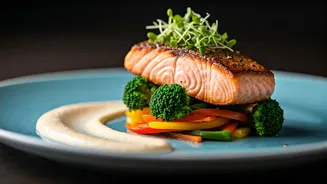
While it’s great for potatoes, the air fryer’s utility extends far beyond side dishes. It’s fantastic for cooking proteins quickly and without drying them out. Chicken wings become legendarily crispy without the mess of deep-frying. Salmon fillets develop perfectly crisp skin while the inside remains moist and flaky, a feat that can be tricky to achieve in a pan. And for plant-based eaters, the air fryer is the secret to better tofu and tempeh. It effortlessly wicks moisture from the surface, creating a firm, chewy exterior that’s ready to soak up any sauce you throw at it—no more pressing tofu under a stack of heavy books for an hour.
Tips for a Perfectly Crisp Result
To get the most out of your machine, follow a few simple rules. First, don't overcrowd the basket. The hot air needs space to circulate, so cook in batches if necessary. Second, while you don’t need much oil, a little bit helps with browning and flavor, so lightly tossing your food in a half-teaspoon of oil can make a big difference. Third, for even cooking, give the basket a good shake halfway through the cooking time. Finally, make sure your food is relatively dry before it goes in; excess moisture creates steam, which is the enemy of crispiness. Pat vegetables and proteins dry with a paper towel for the best crunch.