


Why Window Light Isn't Always Enough
Plants are solar-powered machines. They use light for photosynthesis, the process of converting light, water, and carbon dioxide into energy to grow. While a spot near a sunny window seems ideal, it's often not sufficient, especially in the U.S. during
the fall and winter months. Days are shorter, the sun's angle is lower, and cloud cover can turn a bright room into a dim cavern. Even in a well-lit home, a plant placed just a few feet from a window receives significantly less light energy than one right on the sill. Signs of insufficient light are classic but subtle at first: slow or stunted growth, smaller new leaves, yellowing lower leaves, and a 'leggy' appearance as the plant stretches desperately toward the nearest light source.
Decoding the Lingo on the Box
Shopping for grow lights can feel like an advanced physics lesson. Let's simplify the key terms. 'Full-spectrum' is the most important one; it means the light mimics the natural range of sunlight, providing the blue and red wavelengths plants need for vegetative growth and flowering, respectively. 'Lumens' measure brightness as perceived by the human eye, which is less important for plants than 'PAR' (Photosynthetically Active Radiation), a measure of the light usable by plants. However, PAR isn't always listed on consumer bulbs. As a rule of thumb, look for high-lumen, full-spectrum bulbs. Finally, 'Kelvin' (K) measures color temperature. A lower Kelvin rating (2700K) is a warmer, red-yellow light good for flowering, while a higher rating (6500K) is a cooler, blue-white light ideal for leafy growth. A bulb between 5000K and 6500K is a great all-purpose choice for most houseplants.
The Best Bulb for the Job: LED
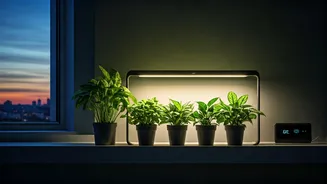
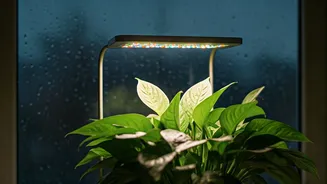
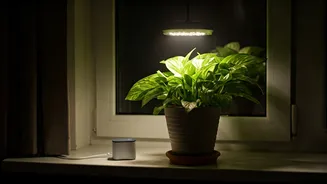
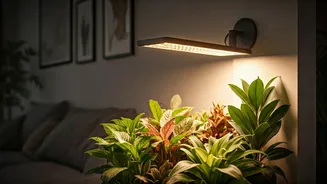
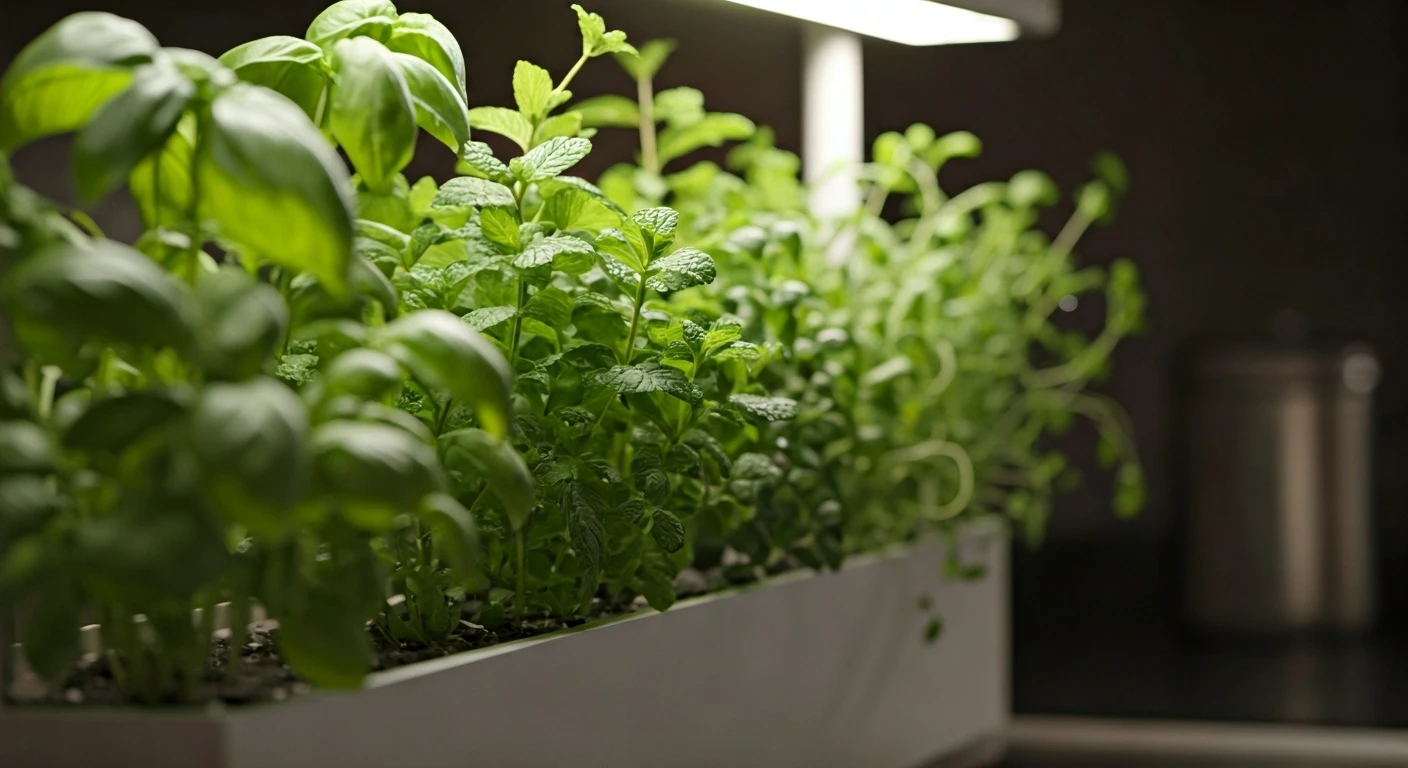
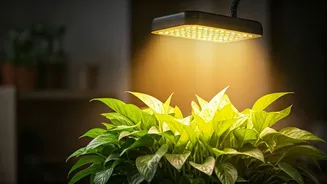
While fluorescent tubes were once the standard, Light Emitting Diodes (LEDs) are now the undisputed champion for home growers. They are dramatically more energy-efficient, saving you money on your electricity bill. They also run much cooler than other bulbs, reducing the risk of scorching delicate leaves that get too close. This low heat profile allows you to place them nearer to your plants, delivering more intense light where it's needed. Best of all, the technology has become incredibly accessible. You no longer need a bulky, industrial-looking shop light. You can find full-spectrum LED grow bulbs that screw into any standard lamp, sleek light strips to mount under shelves, and convenient clip-on lamps perfect for a single pot.
Position and Timing Are Everything
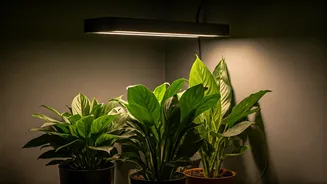
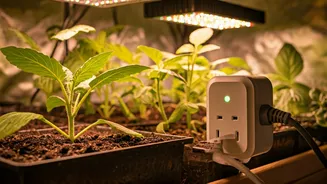
Owning a grow light is one thing; using it effectively is another. The 'inverse square law' of light means that a plant two feet from a light source receives only one-quarter of the energy as a plant one foot away. For most LED setups, placing the light 6 to 12 inches from the top of your plant is a good starting point. Watch for signs of stress: if leaves look bleached or develop brown, crispy spots, the light is too close. Consistency is also crucial. Plants thrive on routine. Aim to provide 12 to 16 hours of supplemental light per day. The easiest way to achieve this is with a simple outlet timer, which costs less than $10. Set it to turn on in the morning and off in the evening, giving your plants a consistent 'day' and a necessary 'night' period to rest and respire.