




Nature's Ephemeral Gallery
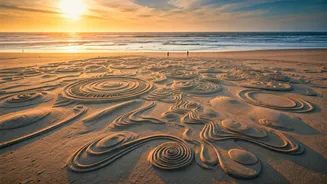
Imagine walking onto a vast expanse of beach to find the sand etched with thousands of delicate, branching patterns. From a distance, it looks like an enormous, abstract etching, with rivulet-like lines forming complex systems that resemble everything
from delicate lacework to the veins of a giant leaf. These are not man-made sculptures. This is “monsoon sand art,” a breathtaking and entirely natural spectacle that lasts for only a few hours before the next tide washes it all away. Found most prominently along India’s western Konkan Coast, particularly in the states of Goa and Maharashtra, this phenomenon turns familiar beaches into otherworldly landscapes. The patterns can stretch for miles, with each design unique to the specific conditions of the day—the intensity of the rain, the angle of the slope, and the texture of the sand. For those who stumble upon it, the experience is one of quiet awe, a private viewing of an artwork that exists only for a fleeting moment.
The Science of the Spectacle
While it looks like magic, the creation of this sand art is a beautiful dance of physics and geology. It all begins with the heavy downpours of the monsoon season. The rain saturates the upper layers of sand on the beach. As the tide recedes, this trapped groundwater begins to seep out and flow back toward the ocean. Because the water can't escape all at once, it carves tiny channels as it moves downslope. These initial channels, governed by a process known as "sapping," grow and merge, branching out into intricate, fractal-like patterns. The specific shape depends on the sand's grain size and cohesiveness. Fine, well-packed sand tends to create more delicate and detailed designs. It's a perfect storm of tidal mechanics, hydrology, and sedimentology, resulting in a masterpiece of fluid dynamics etched onto the shore. It’s nature’s own printmaking process, with the tide serving as both the artist and the eraser.
A Secret Becomes an Attraction
For generations, these monsoon patterns were simply a part of the local landscape, a seasonal curiosity enjoyed by fishermen and coastal residents. They were a beautiful, but expected, feature of the rainy season. However, in the age of the smartphone and social media, this once-quiet phenomenon has found a global audience. Photographers, both amateur and professional, began capturing the stunning, large-scale designs and sharing them online. Instagram feeds and travel blogs filled with mesmerizing aerial shots taken by drones, showcasing the art’s immense scale in a way that was previously impossible to appreciate. The posts went viral, and soon, what was a local secret became a bucket-list item. Now, during the monsoon, a new kind of visitor joins the locals: tourists who come specifically to witness and photograph the sand art. They walk the beaches at low tide, cameras in hand, hoping to catch the designs at their peak before they vanish.
Chasing a Fleeting Wonder
Unlike a permanent landmark, the appeal of monsoon sand art lies in its transient nature. You can’t schedule a viewing. You can’t buy a ticket. You can only show up and hope the conditions are right. The prime time to witness it is during the monsoon months, typically from June through September, on beaches with a gentle slope and fine sand. Visitors learn to read the tide charts and watch the weather, heading to the shore as the tide begins to ebb after a significant rainfall. The experience has become a kind of treasure hunt for travelers seeking unique, authentic encounters. It’s a powerful reminder that some of the most beautiful things in the world are not built to last. The thrill is in the chase and the knowledge that the masterpiece you’re admiring today will be gone by tomorrow, replaced by a completely new, and equally beautiful, creation.