


The Land of Living Clouds
Nestled in the hills of northeast India, Meghalaya is a state that lives and breathes moisture. Its name translates from Sanskrit to “Abode of the Clouds,” and for good reason. The region is home to Mawsynram and Cherrapunji, two of the wettest places
on Earth, where rainfall is measured not in inches, but in feet. From roughly June to September, the monsoon winds, heavy with moisture from the Bay of Bengal, slam into the Khasi Hills. Unable to climb over them, the clouds unleash a deluge so profound it feels biblical. For an American traveler accustomed to seeking sun, this might sound like a nightmare. But here, the rain is not a gloomy drizzle; it’s a life-giving force. It arrives in dramatic, cleansing sheets, often followed by moments of brilliant sunshine that make the entire landscape glitter. The air becomes thick with the scent of petrichor—the smell of rain on dry earth—and the world outside your window transforms into a moving watercolor of gray clouds and vibrant greens.
Waterfalls in Overdrive
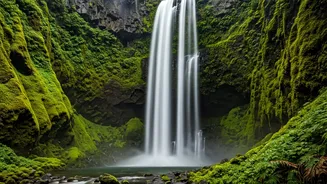
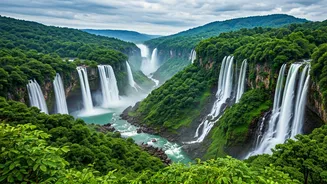
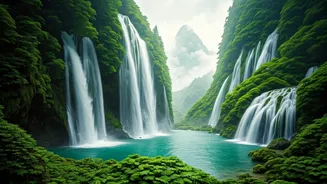
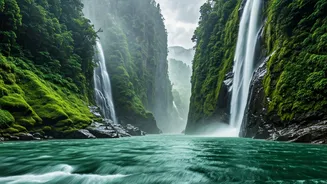
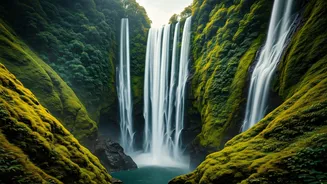
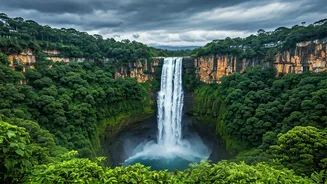
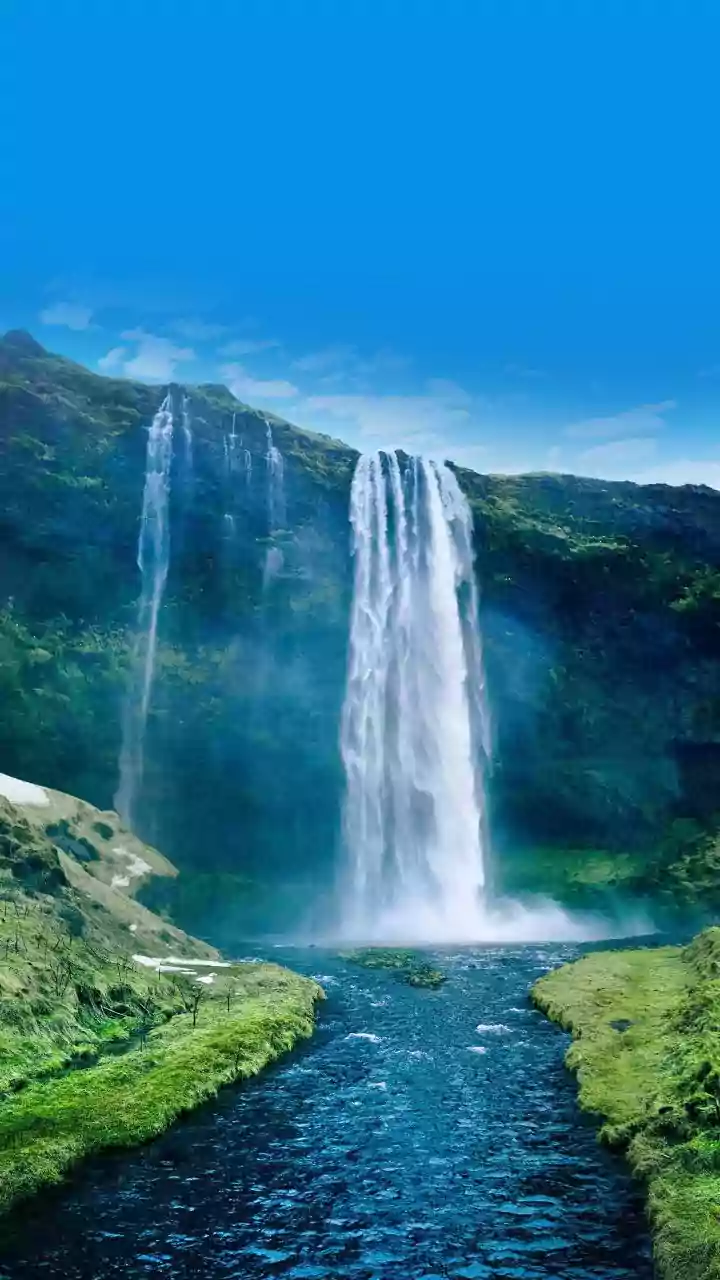
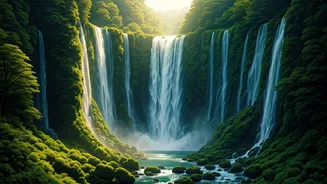
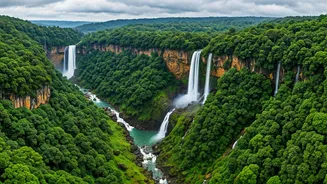
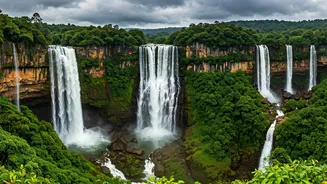
The most immediate reward for enduring the downpours is the spectacle of the waterfalls. During the dry season, many of Meghalaya’s famous falls are mere trickles. But when the monsoon arrives, they become roaring, thunderous torrents of water, plunging hundreds of feet into misty valleys. The Seven Sisters Falls (Nohsngithiang Falls), a wide cascade that splits into multiple streams, comes alive as a unified wall of water. Nearby, Nohkalikai Falls, one of India’s tallest plunge waterfalls, drops over 1,100 feet in a single, powerful stream. The local legend behind its tragic name is dwarfed by the sheer, unadulterated power of the water crashing into the turquoise pool below. To stand at a viewpoint, wrapped in a raincoat, and watch these natural wonders at their peak is to witness the raw power of nature in a way that’s both humbling and exhilarating.
A World Painted Emerald Green
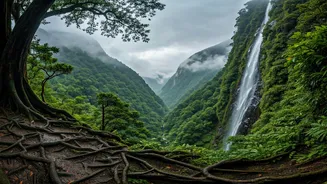
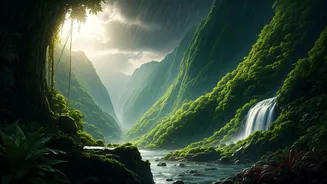
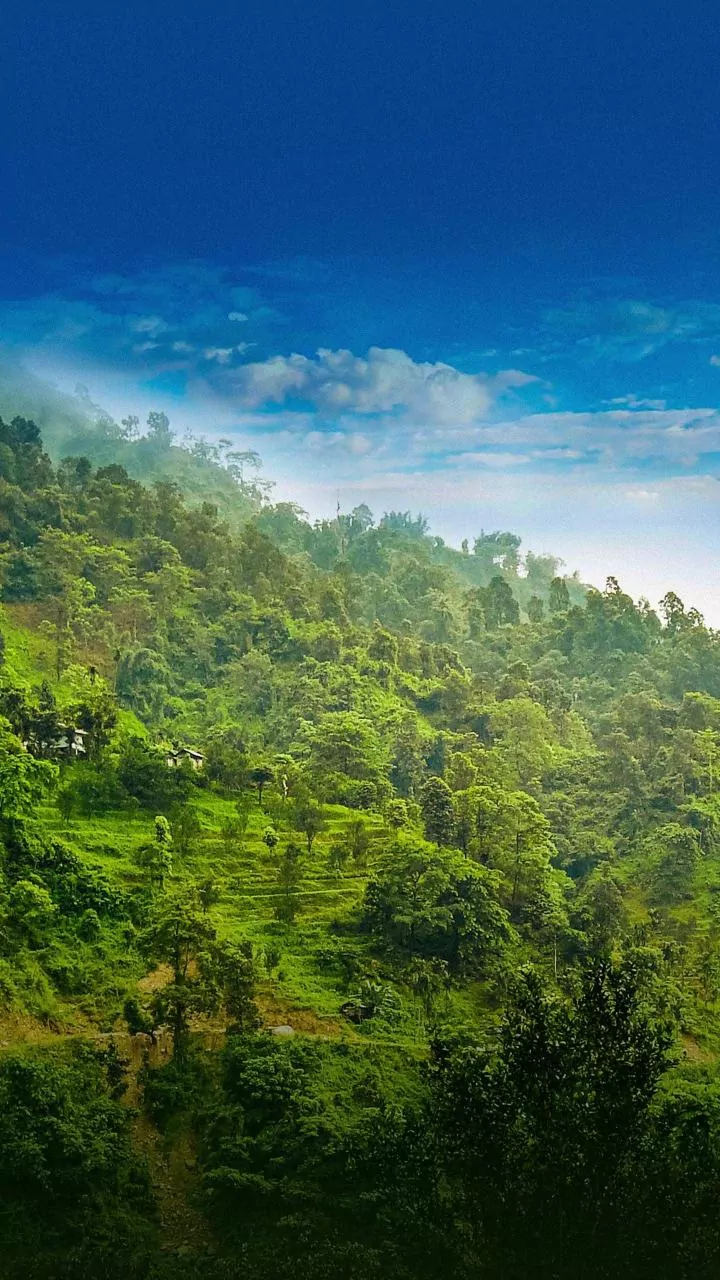
The constant rain saturates the landscape with an impossible spectrum of greens. The rolling hills, terraced slopes, and deep gorges are covered in a blanket of foliage so lush and vibrant it almost seems unreal. Every leaf seems washed clean, every blade of grass electric. This isn’t the muted green of a temperate forest; it’s a riot of emerald, lime, and jade, punctuated by the dark, wet bark of trees and the gray stone of the cliffs. The clouds themselves become part of the scenery, rolling through the valleys like a slow-motion river, sometimes obscuring a view entirely, only to part minutes later for a dramatic reveal. It’s a dynamic, ever-changing landscape where the line between earth and sky blurs, and you feel as if you’re walking through the clouds themselves.
The Genius of Living Root Bridges
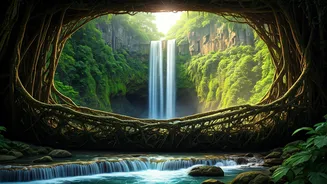
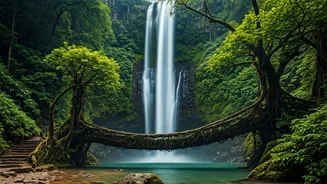
Perhaps the most enchanting feature of Meghalaya is its living root bridges. For centuries, the indigenous Khasi and Jaintia peoples have guided the aerial roots of rubber fig trees across rivers and gorges, weaving them together until they form strong, durable bridges. These marvels of bio-engineering are the perfect solution for a place where a wooden bridge would quickly rot and a steel one would be impractical to build. During the monsoon, when streams swell into impassable rivers, these living structures are essential lifelines. Visiting the famous double-decker root bridge in Nongriat involves a steep, sweaty trek, but the reward is a sight straight out of a fantasy novel. Walking across a bridge made of living, breathing trees, with a rain-swollen river rushing below, is an experience that connects you directly to the ingenuity and wisdom of the people who call this wet, wonderful place home.