



The Festival of the Bleeding Goddess
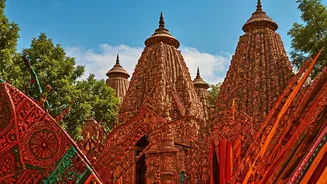
At the heart of the Ambubachi Mela is a concept both startling and profound to many Westerners: the celebration of divine menstruation. The festival is centered at the Kamakhya Temple in Guwahati, one of the most revered Shakti Peeths, or sites of feminine
cosmic power, in Hinduism. According to mythology, these are the locations where body parts of the goddess Sati fell to Earth. The Kamakhya Temple is believed to house her yoni (womb and vulva), making it a potent center of fertility and creation. For three days during the Mela, the temple doors are closed as the Goddess Kamakhya is believed to be undergoing her annual menstrual cycle. During this time, the Earth itself is considered fertile and impure, so no farming, praying, or reading of holy texts occurs. The festival is a powerful, public reverence for a biological process often shrouded in taboo, reframing it as a sacred and life-giving force.
A Gathering of Mystics
While millions of everyday devotees flock to the temple, the Ambubachi Mela is most famous as the world’s largest congregation for Tantric practitioners. Sadhus, aghoris, and tantriks—ascetics and mystics who often live in seclusion in the Himalayas—descend upon the temple grounds. Their matted hair, bodies smeared in ash, and intense meditative practices create an atmosphere that feels ancient and otherworldly. For them, this is a time to perform rituals, display yogic powers, and harness the heightened spiritual energy of the site. For a visitor, witnessing this gathering is a glimpse into a rarely seen dimension of Hinduism. It’s a dynamic of contrasts: the austere, solitary mystics mingling with seas of joyous families, all united by a shared faith in the divine feminine.
The Atmosphere on Nilachal Hill
The energy the headline hints at is palpable. The temple complex, perched atop Nilachal Hill, transforms into a sprawling, vibrant tent city. The air is thick with the scent of incense, camphor, and rain-soaked earth. Chants, devotional songs, and the ringing of bells provide a constant soundscape. It’s crowded, chaotic, and deeply immersive. This isn't a curated tourist event; it's a living, breathing pilgrimage. Navigating the crowds requires patience, but the reward is an unfiltered experience of devotion. You’ll see people from every walk of life, from poor villagers who have traveled for days on foot to wealthy urbanites, all waiting for the temple to reopen.
The Culmination and the Blessing
On the fourth day, the festival reaches its climax. The temple doors swing open, and a massive crowd surges forward for a chance to receive darshan (a sight of the divine) and prasad (a blessed offering). The most sought-after prasad here is not food, but small bits of red cloth, called ‘rakta bastra.’ These pieces are believed to have been soaked in the goddess’s menstrual fluid, making them incredibly potent symbols of fertility and protection. Devotees tie them around their wrists or keep them in their homes as a powerful blessing. This moment encapsulates the festival's core theme: the belief that what is most fundamentally human and natural is also profoundly divine.