



Beyond the Google Calendar
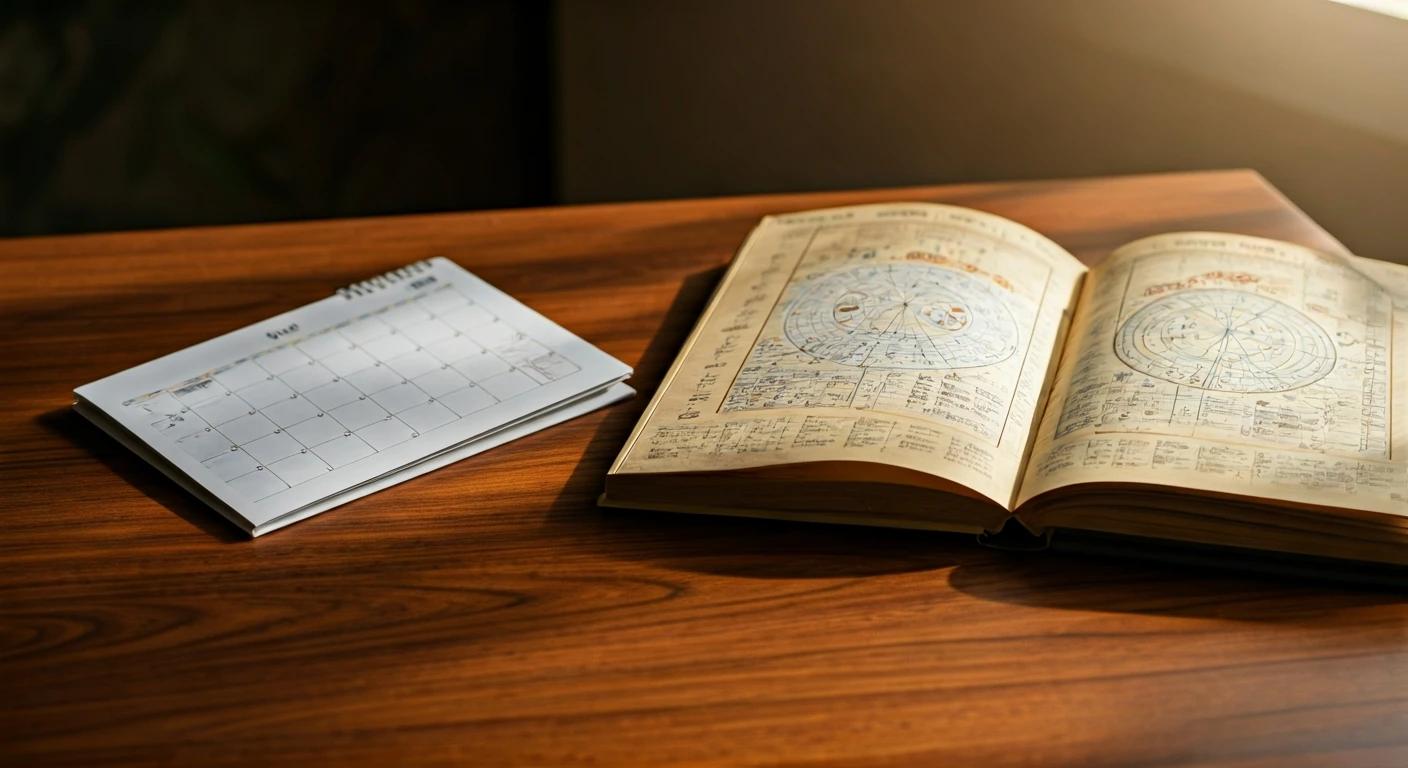
We live by the Gregorian calendar, a brilliant system for organizing meetings and remembering birthdays. But it’s fundamentally quantitative. It measures time but tells us nothing about its quality. Is today a good day to start a new project? A better
day for quiet reflection? Is the energy right for a difficult conversation? Our digital planners are silent on these questions. This is where the Panchang, the traditional Hindu almanac, offers a radically different approach. Instead of a flat grid of empty boxes, it presents time as a living, breathing entity with its own texture, mood, and potential. Using it feels less like time management and more like learning to surf the natural rhythms of the universe.
What Exactly Is a Panchang?
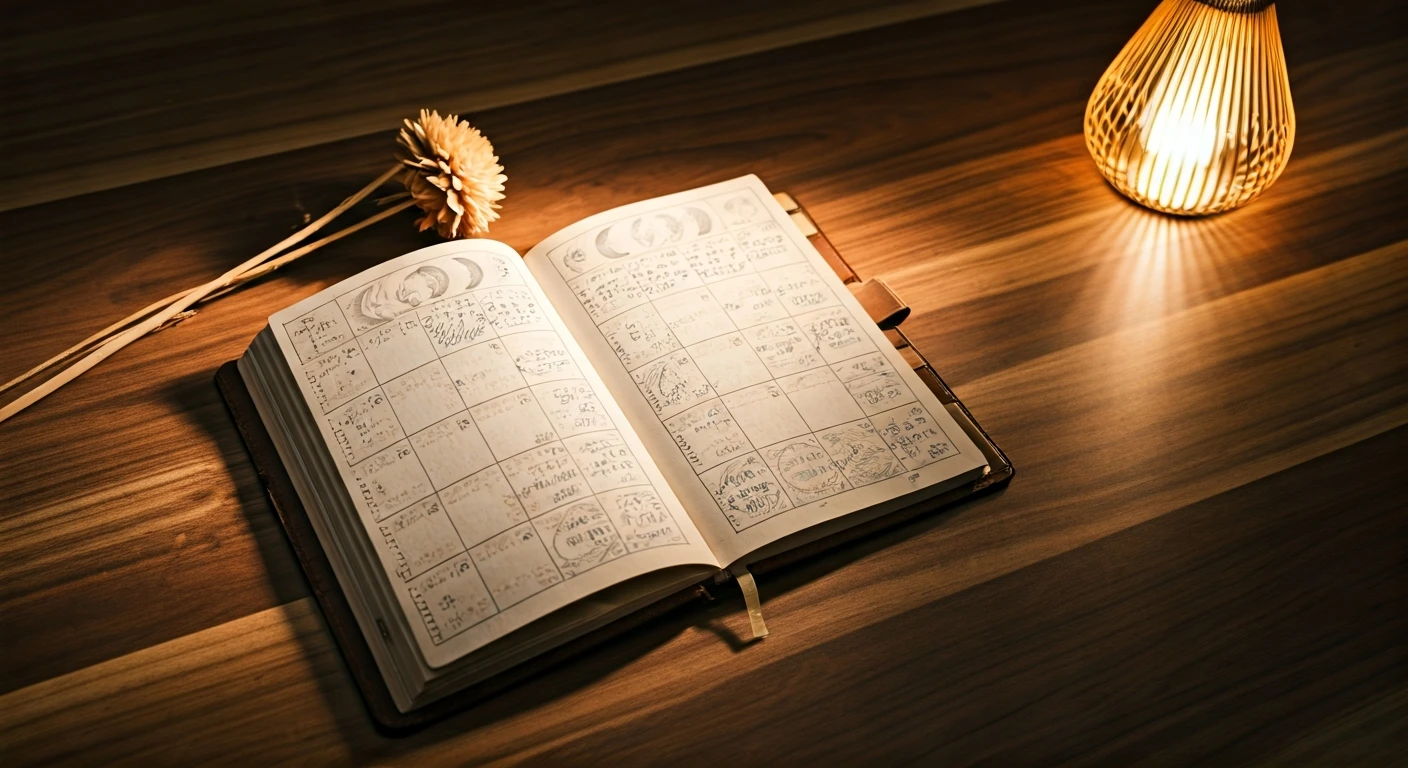
The word “Panchang” literally translates from Sanskrit to “five limbs” (panch, five; ang, limbs). It’s a Vedic almanac that tracks five key astronomical and astrological elements for any given day. Think of it as a cosmic weather report that goes far beyond “sunny with a chance of rain.” These five elements are: 1. Tithi (Lunar Day): The position of the moon relative to the sun. This influences the emotional and relational energy of the day. 2. Vaar (Weekday): The solar day, ruled by a specific planet (e.g., Sunday by the Sun, Monday by the Moon), which gives the day a foundational character. 3. Nakshatra (Lunar Mansion): The segment of the zodiac the moon is currently occupying. This is arguably the most important element, describing the core energy or consciousness of the day. 4. Yoga (Alignment): A specific angular relationship between the sun and moon, indicating harmony or discord. 5. Karana (Half a Lunar Day): This provides a finer, more nuanced shade to the day's energy. Together, these five data points paint a detailed picture, suggesting which activities are supported by the day’s energy and which might face resistance.
Putting Ancient Wisdom into Practice
This sounds complex, but in practice, you don't need to be an astrologer to use it. Numerous apps and websites (like Drik Panchang) do the heavy lifting, presenting the day’s information in an accessible format. They often provide simple guidance, flagging days as “auspicious” (shubha) for new beginnings or “inauspicious” (ashubha) for major decisions. My July experiment wasn't about following these labels rigidly. It was about using them as prompts for mindfulness. On a day with a Nakshatra associated with creativity and speed, I scheduled a brainstorming session I’d been dreading. The ideas flowed effortlessly. On a day marked for rest and introspection, I canceled a stressful errand and took a long walk instead, feeling zero guilt. It wasn't that the Panchang predicted my day; it gave me permission to align my actions with a more intuitive flow.
How It Changes Your Perspective
The most significant shift wasn't in my productivity, but in my intentionality. Before, my week was a flat landscape of appointments and tasks. With the Panchang, it became a dynamic terrain of energies. A “difficult” day wasn't a write-off; it was an opportunity to practice patience or focus on routine tasks that required less creative spark. A “favorable” day felt like a gift, a cosmic tailwind encouraging me to be bold. This simple reframing turned mundane planning into a daily ritual of checking in with myself and the world around me. It replaced the anxiety of an overwhelming schedule with the curiosity of “What kind of day is it today, and how can I best work with it?” It made me feel like an active participant in my life, not just a manager of my time.
A Simple Way to Start
Intrigued? You don't have to overhaul your entire life. Start small. Pick one app or website and just look at the main Nakshatra for the day. See if the description of its energy resonates with how your day unfolds. Don't worry about all five limbs at first. The goal isn’t perfect prediction or rigid adherence. It’s about introducing a new layer of awareness. You can use it to choose a better day for a first date, decide when to launch a personal project, or simply understand why you might feel more energetic or sluggish on a particular afternoon. It’s a tool for living in harmony with time, rather than in constant battle against it.