





1. Perform a 60-Second Pre-Storm Check
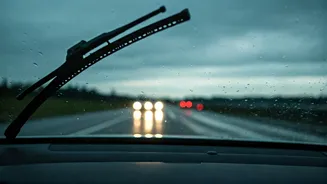
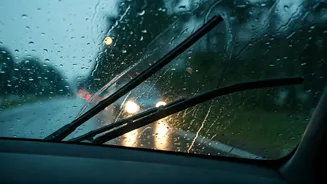
The best trick for handling a storm is preparing before it hits. Take one minute to check three critical components. First, your wiper blades. If they squeak, skip, or leave streaks, they won't clear your view when you need them most. They're cheap and easy
to replace. Second, your tires. Proper inflation ensures the best possible grip on wet roads. Check the pressure sticker on your driver-side doorjamb for the correct PSI, not the number on the tire itself. Finally, walk around your car and make sure all your lights—headlights, taillights, and turn signals—are working. In a low-visibility downpour, being seen is as important as seeing.
2. Use a Penny to Check Your Tires
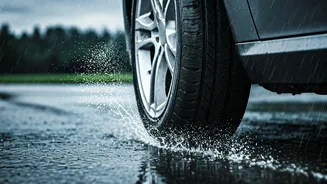
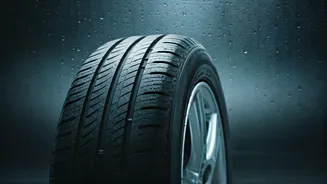
Tire tread is what channels water away, preventing your car from hydroplaning. But how do you know if your tread is deep enough? Grab a penny. Turn it so Abraham Lincoln's head is pointing down and place it into one of the grooves of your tire. If you can see the top of Abe's head, your treads are worn and it's time for new tires. If part of his head is covered by the tread, you have more than the minimum safe depth of 2/32 of an inch. This simple, classic trick gives you a quick and accurate reading on your tires' ability to handle a wet road.
3. Fight Fog with Your Air Conditioner
As rain cools the outside of your car, your breath and body heat can cause the inside of your windows to fog up instantly, creating a blindfold. Many drivers blast the heat, but there's a better way: turn on your air conditioner. It doesn't have to be cold; you can set the temperature to warm. The A/C system is a natural dehumidifier, pulling moisture out of the cabin air and clearing your windows much faster than heat alone. For an even quicker fix, crack a rear window slightly to help circulate the humid air out.
4. Understand and Avoid Hydroplaning
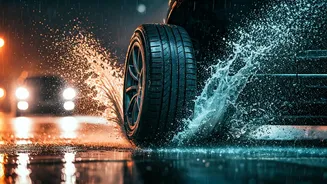
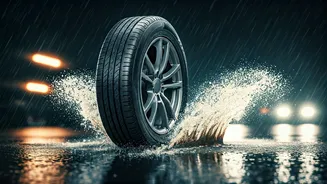
Hydroplaning is when a layer of water builds up between your tires and the road surface, leading to a complete loss of steering and braking control. It can happen at speeds as low as 35 mph if the conditions are right. The number one cause is speed. The easiest trick to avoid it is to simply slow down. Reduce your speed by at least a third in heavy rain. If you do feel the car start to hydroplane—the steering will feel light and the car may pull—do not slam on the brakes or jerk the wheel. Instead, ease your foot off the accelerator and steer gently in the direction you want the car to go until you feel the tires regain traction.
5. Never Use Cruise Control in the Rain
Cruise control is a fantastic tool for long, dry highway trips. In the rain, it's a hazard. The system is designed to maintain a constant speed, and if you start to hydroplane, it will keep the wheels spinning at the set rate. This can prevent you from feeling the initial loss of traction and can make the situation worse when the tires suddenly regain their grip, potentially causing you to lose control. Always keep your foot on the pedal in wet conditions to maintain full, responsive control of your vehicle's speed and acceleration.
6. Look Two Cars Ahead, Not Just One
Following distances are critical in the rain, as stopping takes much longer on slick surfaces. The typical 'three-second rule' should be doubled to at least six seconds. But here's a pro-driver trick: don't just watch the taillights of the car directly in front of you. Train your eyes to look further down the road, to the car two or even three vehicles ahead. This gives you a precious extra few seconds of warning if someone brakes suddenly, allowing you to react smoothly instead of panicking. You'll see patterns in the flow of traffic, not just a single red light.