








Deconstructing the ‘Lazy’ Label
Let’s get the central premise out of the way: what the headline calls “lazy” is what user experience (UX) designers call “frictionless.” This isn’t about an unwillingness to work; it’s an intolerance for inefficiency. Gen Z and younger Millennials are
the first generations to grow up in a world where you can summon a car, a meal, or a date with a few taps on a screen. For them, a complicated, multi-step process isn’t a charming quirk of the old world—it’s a design flaw. Legacy financial institutions were built on paper, phone calls, and in-person meetings. Their digital portals often reflected this clunky, bureaucratic history. A new wave of fintech apps saw this not as a tradition to uphold, but as a massive market opportunity. By building platforms that align with the digital-native expectation of speed and simplicity, they’re not catering to laziness. They’re meeting a new, and arguably higher, standard for usability. The goal is to remove every possible barrier between a user’s intent and the final action, whether it's buying a stock or opening a mutual fund.
Anatomy of a Frictionless App
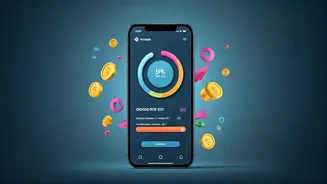
So, what do these “optimized” designs actually look like? It starts with the onboarding. Instead of dense forms, new apps use sleek, step-by-step interfaces that take minutes, not hours, to complete. Once inside, the design philosophy of radical simplicity continues. Data visualization is a key area. Forget intimidating candlestick charts and walls of financial ratios. Modern apps favor clean line graphs showing portfolio value over time, with gains and losses displayed in clear, easy-to-read dollars and percentages. The interface is often gamified. When Robinhood famously used digital confetti to celebrate a user’s first trade, critics decried it as turning serious investing into a game. But from a design perspective, it’s classic behavioral psychology: positive reinforcement to encourage engagement. Actions are reduced to a minimum. A stock purchase that once required navigating multiple menus is now a 'swipe to buy' gesture. It’s the Amazon '1-Click' patent applied to financial assets.
Micro-Investing and Fractional Shares
Perhaps nothing embodies this shift better than the popularization of micro-investing and fractional shares. The traditional barrier to owning a piece of a company like Amazon or Google wasn't just complexity; it was cost. With shares trading for thousands of dollars, many young investors were priced out. Fractional shares, a feature pioneered by modern apps, demolish this barrier by allowing users to buy a slice of a share for as little as one dollar. This isn't about being too 'lazy' to save for a full share. It’s a pragmatic solution to a real-world problem. It makes diversification accessible on a small scale and lowers the psychological hurdle to getting started. Apps like Acorns take this even further with their 'round-up' feature, which automatically invests spare change from daily purchases. This is the ultimate in frictionless design: investing that happens in the background, requiring zero active decisions or effort from the user. It’s investing as a utility, seamlessly integrated into daily life.
The Power of Social Proof
Another core feature of these new platforms is the integration of social elements. Apps like Public.com and eToro have built-in social feeds where users can see what their friends or prominent investors are buying and selling. This serves a critical function: it combats decision paralysis. For a new investor, the sheer number of choices can be overwhelming. Seeing that a trusted source has invested in a particular ETF or stock provides a powerful mental shortcut. This isn’t about blindly following the herd. It’s about using social proof as a tool for discovery and validation. Investing has historically been a solitary, often intimidating, activity. By making it social and transparent, these apps are transforming it into a collaborative one. This community layer provides support, builds confidence, and, once again, removes a significant point of friction—the fear of making the 'wrong' choice alone.