




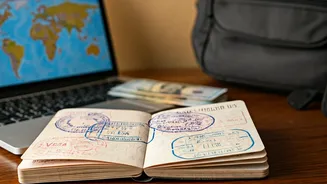


The New Rulebook: Europe's Big Change
The most significant 'level up' in this new game is coming from Europe. For years, Americans could visit 27 countries in the Schengen Area—think France, Italy, Spain, Germany—for up to 90 days with no prior paperwork. That’s changing. Starting in mid-2025,
U.S. citizens will need to apply for an ETIAS (European Travel Information and Authorisation System) waiver before they go. It isn't a full-blown visa, but it’s a mandatory pre-authorization that involves an online application and a small fee (around €7). The goal, according to the EU, is to strengthen security by pre-screening travelers who don't need a visa. For travelers, it’s a new administrative hurdle, a 'quest' you must complete before your trip can even begin. Forget to do it, and you won’t be allowed to board your flight. This single change fundamentally alters the spontaneous, paperwork-free European vacation that Americans have long taken for granted.
Pop-Up Challenges: The Brazil Case
If ETIAS is a predictable new rule, other countries are introducing 'pop-up challenges' that require more agility. Take Brazil. For years, Americans needed a visa. Then, in 2019, Brazil waived the requirement to boost tourism. Travelers rejoiced. But in 2023, the country announced it was reinstating the visa requirement, only to postpone the change multiple times. As of spring 2025, Americans will once again need to apply for an e-visa to visit. This on-again, off-again policy creates uncertainty. It means that a trip planned six months in advance might suddenly have a new, time-consuming requirement. It rewards travelers who stay on top of diplomatic news and penalizes those who assume the rules are static. This is the part of the game that feels like a surprise round, where the rules can change mid-play, forcing you to adapt your strategy on the fly.
Player Strategy: Power-Ups and Cheat Codes
As the game gets more complex, savvy travelers are developing new strategies. Think of them as 'power-ups' for navigating the new world of travel. The most basic is simply staying informed, setting alerts for destination-specific news from the State Department or using apps that track visa requirements. Another strategy is 'visa stacking,' where long-term travelers or digital nomads plan their routes to maximize their time in visa-free zones before 'cooling down' in a country with different rules. For instance, after spending 90 days in the Schengen Area, a traveler might head to the U.K. or Balkan countries like Albania, which have their own separate entry policies. Some are even investing in so-called 'golden passports' through citizenship-by-investment programs, though this is an extreme move available only to the wealthy. For most, the best 'cheat code' is simply planning further ahead and treating the visa application process as a non-negotiable first step in their travel checklist, right alongside booking flights.
Why the Game Changed
So, why is this happening now? It’s not personal; it’s geopolitical and economic. The three main drivers are security, data, and revenue. Post-9/11 security concerns have only grown, and countries want to know who is crossing their borders before they arrive. The ETIAS system, for example, will cross-reference applicant data with security databases like Interpol. Secondly, this data is valuable for tracking tourism trends and migration patterns. Finally, there's the money. While the fee for an ETIAS is small, multiply it by millions of visitors, and it becomes a significant source of revenue. For many countries, charging for an e-visa is a relatively easy way to fund their tourism boards or border security infrastructure. The U.S. has been doing this for years with its own ESTA program for visa-waiver countries, so in a way, the rest of the world is simply catching up.