




From Performance to Practicality
For years, the image of yoga projected on social media and in magazines has been one of hyper-flexibility. Advanced practitioners folding themselves into seemingly impossible shapes became the visual shorthand for mastery. But a growing consensus among
teachers and students is pushing back against this “performance” mindset, reframing the practice not as a quest for extreme poses, but as a tool for sustainable, everyday wellness. This year’s dominant theme is a quiet revolution: functional fitness. The new goal isn’t to perfect a handstand, but to be able to pick up your grandkids, carry groceries without tweaking your back, and get up off the floor with ease well into your golden years. It’s about building a body that serves you, not one that simply performs.
Why the Shift to 'Forever Fitness'?
Several factors are driving this evolution. First, a generation of dedicated yogis is getting older and realizing that a practice focused solely on deep stretching can sometimes lead to joint instability and repetitive strain. Modern science and a deeper understanding of biomechanics have also played a role. Physical therapists and trainers now recognize that mobility—strength through a full range of motion—is often more beneficial for long-term health than passive flexibility. This has led to an infusion of principles from physical therapy and functional strength training into the yoga studio. The focus is shifting from how a pose looks to how it feels and what it does for the body’s fundamental movement patterns: pushing, pulling, squatting, and carrying.
What Functional Yoga Looks Like
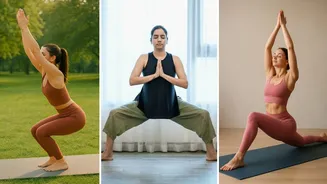
So, what does this look like in a class? It’s often less about holding static poses for long periods and more about dynamic, fluid movement. You might find more emphasis on building core strength to support the spine, exercises that improve balance, and movements that challenge your joints in a safe, controlled way. A functional yoga class might incorporate props like blocks and bands not to go deeper into a stretch, but to build strength and awareness. Instead of pushing to the absolute limit of your flexibility, the instructor will encourage you to find a range of motion that is both challenging and sustainable. The language changes, too. You’ll hear less about “perfecting” a pose and more about “exploring” movement and “listening to your body.”
How to Find Your Sustainable Practice
If you’re interested in exploring this approach, you don’t need to abandon your current practice. Instead, you can start by shifting your mindset. Focus on stability before flexibility. Ask yourself: “Is this movement helping me build strength and control, or am I just hanging on my joints?” When looking for a new class or teacher, seek out descriptions that use words like “mobility,” “functional movement,” “sustainable yoga,” or “yoga for longevity.” Don't be afraid to talk to an instructor before class. Ask them about their philosophy on movement and how they approach injuries and modifications. A good teacher in this style will be more interested in helping you build a practice that will last a lifetime than in pushing you into an impressive-looking shape for a single moment.