






The Creeping Problem We Ignore
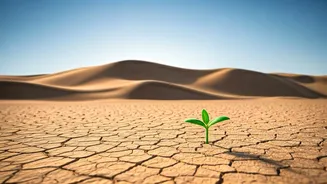
First, let's talk about the enemy: desertification. It’s not about deserts naturally expanding; it’s about land degradation in arid and semi-arid regions, often fueled by human activity like overgrazing, deforestation, and unsustainable agriculture, then
amplified by climate change. Productive land turns to dust, threatening food security, displacing communities, and kicking up massive dust storms that can affect air quality thousands of miles away. In the U.S., parts of the Southwest and the Great Plains are at high risk, haunted by the memory of the 1930s Dust Bowl. For decades, the conventional thinking was to build concrete walls, plant non-native trees in rigid grids, or use chemical sprays to hold the soil down—expensive, often brittle solutions that fought against nature rather than working with it.
An Unlikely Hero: The Dune Itself
Here’s where the story gets interesting. Instead of fighting the sand, scientists and land managers are starting to use it. The idea is to strategically build or stabilize sand dunes to act as living, self-repairing barriers. Think of it as fighting fire with fire. A shifting barchan dune might look like a destructive force, rolling over anything in its path. But if you can anchor it, you can turn that mountain of sand from a liability into an asset. This is the core of the 'Sam Dunes' concept—a nickname for a strategy that uses Sand Accumulation and Management (SAM) to create protective landforms. It’s a brilliant pivot from brute-force engineering to ecological aikido, using the desert’s own momentum against itself.
How to Tame a Mountain of Sand
So how do you stop a dune from moving? You give it an anchor. The process often starts with simple, low-tech structures like checkerboard fences made of straw or sticks. These fences slow down the wind at ground level, causing blowing sand to drop and accumulate in a predictable pattern. As the sand piles up, a new, artificial dune is born. The crucial next step is vegetation. Hardy, drought-resistant grasses and shrubs are planted on the newly formed dune. Their roots weave through the sand, creating a dense web that holds everything in place. This transforms a transient pile of sand into a stable, vegetated landform known as a foredune. This green-capped dune now acts as a massive wall, trapping sand blowing in from the desert and protecting the more fertile land behind it. It's a nature-based solution that becomes stronger and more integrated with the ecosystem over time.
A Global Strategy with Local Impact
This isn’t just a theoretical concept. China has been implementing this strategy on a colossal scale as part of its 'Green Wall' project to halt the expansion of the Gobi Desert, creating thousands of square miles of checkerboard fences and stabilized dunes. In coastal areas around the world, including along the U.S. Atlantic and Gulf Coasts, dune restoration is a primary method of defense against storm surges and coastal erosion. A healthy dune system can absorb the brunt of a hurricane’s power far more effectively than a concrete seawall. By applying these same principles inland, we can protect vital infrastructure, agricultural land, and communities from the slow, creeping crisis of desertification. It’s a versatile tool that uses ecological principles to solve an engineering problem, proving that the best solutions are often the ones that were right in front of us all along.