





The Festival of Chariots
Rath Yatra, which translates to "Chariot Journey," is an ancient Hindu festival dedicated to Lord Jagannath, a form of the deity Vishnu. Held annually in the city of Puri in the eastern state of Odisha, the event celebrates Jagannath's journey, along
with his siblings Balabhadra and Subhadra, from their home temple to their aunt's temple about two miles away. This is no ordinary procession. It’s one of the few occasions where deities, typically confined to the inner sanctum of a temple, are brought out into the open for public viewing, or darshan. For millions of devotees, this is a deeply profound opportunity to connect with the divine in a tangible, public way. For a culture lover, it's a window into a living tradition that has remained vibrant for centuries.
The Stars of the Show: Three Towering Chariots
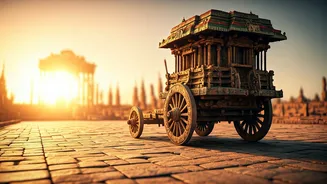
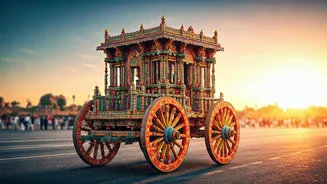
The centerpiece of the festival is, without a doubt, the three colossal chariots. These are not parade floats; they are mobile temples, built fresh every year by a dedicated community of artisans using traditional techniques passed down through generations. Lord Jagannath’s chariot, Nandighosha, stands roughly 45 feet tall, with 16 massive wheels and a striking red and yellow canopy. His brother Balabhadra's chariot, Taladhwaja, is covered in red and green, while their sister Subhadra's, Darpadalana, is draped in red and black. Watching these structures come together in the weeks before the festival is a spectacle in itself, but seeing them lumber through the packed streets, propelled by the sheer force of human devotion, is an unforgettable sight.
A Symphony of Sound and Devotion
The atmosphere of Rath Yatra is a complete sensory immersion. The air is thick with the scent of incense, the rhythmic clang of gongs and cymbals, the blowing of conch shells, and the collective chant of millions of voices. The main thoroughfare, known as the Bada Danda or Grand Road, transforms into a sea of humanity. Devotees surge forward, hoping for the chance to grasp one of the thick ropes and help pull the chariots—an act believed to cleanse sins and bestow blessings. The energy is electric, a powerful mix of spiritual fervor, communal celebration, and raw, visceral effort. It’s a powerful display of faith that transcends language and cultural barriers.
The Nine-Day Celebration
While the main procession is the highlight, Rath Yatra is actually a nine-day affair. After reaching the Gundicha Temple, the deities reside there for a week. During this time, the temple and its surroundings are filled with cultural programs, religious discourses, and feasting. The return journey, known as Bahuda Yatra, is another major event, drawing massive crowds once again. This extended timeline offers visitors a chance to experience different facets of the celebration, from the chaotic energy of the main procession to the more intimate festivities that follow. The festival's dates are determined by the lunar calendar, usually falling in late June or early July, making it the definitive reason for any culture seeker to mark their calendar for Puri at this time of year.
More Than a Festival
To attend Rath Yatra is to witness more than just a colorful parade. It is to step into a tradition that is both deeply personal and epically public. It’s an opportunity to see how faith can mobilize millions and how ancient craftsmanship continues to thrive in the modern world. For the American traveler seeking experiences that are authentic, transformative, and visually stunning, Puri’s Rath Yatra checks every box. It’s not just an event to be observed; it's an overwhelming, awe-inspiring cultural phenomenon to be felt.