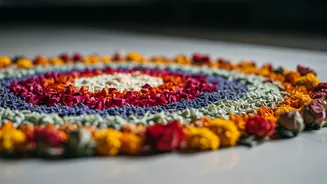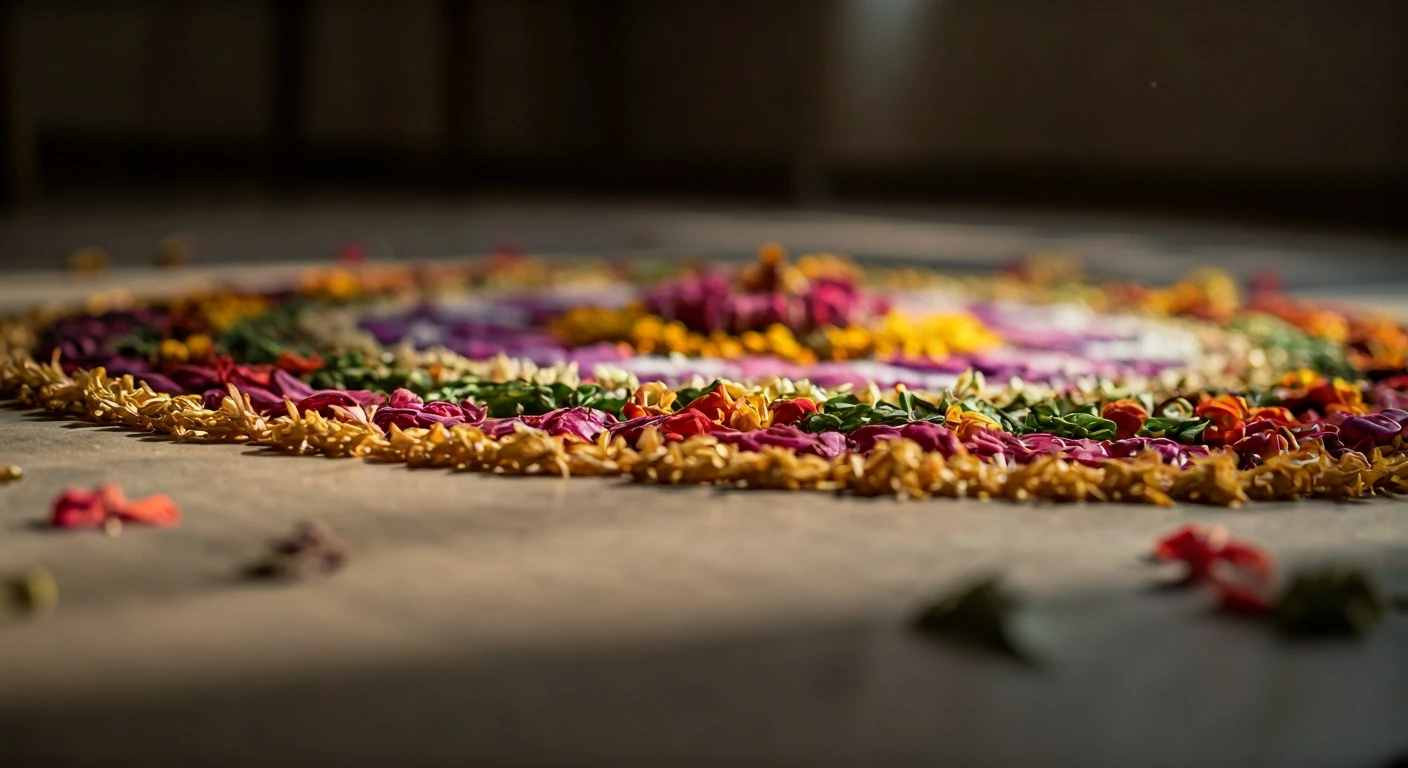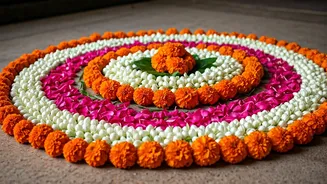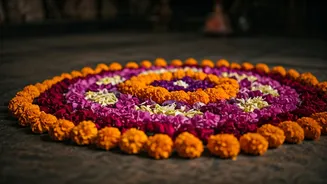





The Spirit of Rangoli
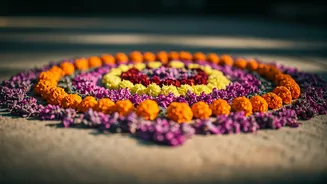
Before you gather your first petal, it’s helpful to understand the beautiful tradition you’re embracing. Rangoli is an art form originating from the Indian subcontinent, in which patterns are created on the floor or a tabletop using materials like colored
rice, sand, powders, or flower petals. Traditionally made during festivals like Diwali, these vibrant designs are thought to bring good luck and serve as a warm welcome to guests and deities. While traditional rangolis are rich with cultural and religious symbolism, the practice has also evolved into a celebrated form of creative expression. Our approach honors this spirit by adapting the medium to our local environment. By using dried, seasonal flowers from our own gardens or local sources, we can create a modern, eco-conscious version that’s both a nod to a beautiful tradition and a celebration of our own natural surroundings. The key is impermanence; a rangoli is not meant to last forever, making it a perfect zero-waste activity.
Gathering Your Seasonal Palette
The heart of a zero-waste rangoli is its materials. Instead of buying new, look to what nature provides. The goal is to collect and dry flowers, leaves, and other botanicals that are available locally during the current season. **What to Collect:** * **Spring:** Look for fallen cherry or crabapple blossoms, forsythia, pansies, and bright green leaves. * **Summer:** This is the season of abundance. Collect petals from marigolds, zinnias, cosmos, roses, and lavender. Clover flowers and colorful leaves work beautifully too. * **Fall:** The palette shifts to richer hues. Think chrysanthemum petals, fallen maple leaves in reds and oranges, crushed brown oak leaves, and small acorns or pinecones for texture. * **Winter:** Even in colder months, you can find materials. Use dried grasses, evergreen needles, red winterberries (use caution if you have pets or small children), and dried statice or strawflower from the previous season. **How to Dry Your Flowers:** The easiest method is air-drying. Simply tie small bunches of flowers and hang them upside down in a dark, dry, and well-ventilated area for two to three weeks. For individual petals or delicate blossoms, you can press them between the pages of a heavy book (with parchment paper to protect the pages) or lay them on a screen in a single layer to dry.
Designing Your Floral Masterpiece
With your dried materials ready, it’s time for the creative part. Find a suitable location, like a front porch, a corner of a patio, or even a large tray or piece of cardboard indoors if you’re concerned about wind. 1. **Start with a Simple Base:** You can go freehand, but if you’re new to rangoli, it helps to create a simple guide. Use a piece of chalk to lightly sketch a geometric shape—a circle, a square, or a star—as your boundary. You can also create a 'dot grid' with chalk to guide a more intricate, symmetrical pattern. 2. **Outline Your Design:** Begin by using your most abundant material, like crushed dried leaves or a common petal color, to create the main outlines of your design. This is similar to drawing the lines in a coloring book. Think in concentric circles, geometric lines, or symmetrical floral shapes. 3. **Fill with Color and Texture:** Now, fill in the sections of your outline with different colored petals. This is where your artistry shines. Arrange petals in gradients, create contrasting color blocks, or make small mounds of a single color. Use whole flower heads like dandelions or small marigolds as central focal points. Don't be afraid to incorporate different textures with twigs, pine needles, or seeds. 4. **Embrace Imperfection:** Remember, this is a meditative, personal process. There’s no right or wrong way to do it. The goal is not perfection but participation in a creative, natural act.
The Art of Letting Go: Zero-Waste Cleanup
A core tenet of this practice is its temporary nature. A floral rangoli is a beautiful, fleeting moment, a gift to the senses that isn't meant to be permanent. When the wind starts to scatter your creation or you’re ready for a change, the cleanup process is what makes this a truly zero-waste activity. Resist the urge to just sweep it into the trash. Because you used only natural, organic materials, your entire rangoli is compostable. Gently sweep the dried petals, leaves, and twigs into a dustpan. You can then add them directly to your compost bin or pile, where they will break down and return to the earth, enriching the soil for next year’s flowers. Alternatively, you can scatter the materials in a garden bed or a wilder part of your yard, allowing nature to reclaim them. This final step completes the cycle, turning a piece of art back into a piece of the ecosystem.