

The Queen of the Hills Comes Alive
Each year, as summer temperatures climb across the Indian plains, the Shimla Summer Festival transforms the town’s famous Ridge and Mall Road into a vibrant stage. This isn't a single-venue event; it's an atmospheric takeover. The festival, typically
held in early June, fills the town's colonial-era promenade with a kaleidoscope of activity. You’ll find flower shows bursting with rhododendrons and lilies, local artisans selling intricately carved wooden crafts, and food stalls offering everything from steamy momos to spicy chaat. The heart of the festival is its cultural programming. Evenings are punctuated by performances from folk dance troupes from across Himachal Pradesh, their colorful costumes swirling against the backdrop of neo-Gothic architecture. It’s a sensory feast where the sounds of traditional Himachali music blend with the excited chatter of families and tourists, all soaking in the mountain air and festive spirit.
A Summer Capital's Ghost
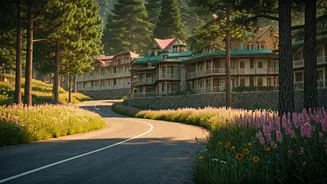
To understand the festival’s deep-seated nostalgia, you have to understand Shimla itself. This isn't just any mountain town; it was the official summer capital of British India. From the mid-1860s until 1947, the entire colonial administration would migrate here from Calcutta, and later Delhi, to escape the oppressive summer heat. This history is etched into every corner of the city. The Viceregal Lodge, a magnificent Scottish Baronial mansion, once housed the Viceroy of India and hosted pivotal political meetings. The Gaiety Theatre, with its plush velvet seats, emulated London’s West End. Christ Church, with its stained-glass windows, stands as a landmark on The Ridge. These “hill stations” were enclaves of British life, designed to be little slices of England in the Himalayas. The nostalgia felt today isn't necessarily for the colonial regime, but for the distinct aesthetic and the romanticized idea of a slower, cooler, more elegant era that this architecture represents.
Nostalgia with a Modern Twist
What makes the Shimla Summer Festival so compelling is how it navigates this complex legacy. The nostalgia is undeniable—people flock here for the colonial charm—but the festival itself is a distinctly Indian affair. It’s a reclamation of space. The same promenade where British officers and their wives once strolled is now filled with Indian families creating new memories. The main stage features Bollywood singers and local Himachali bands, not British orchestras. While the backdrop is colonial, the soul of the event is rooted in modern Indian culture and regional pride. The festival is a living dialogue between past and present. It acknowledges the historical architecture that makes Shimla unique while filling it with a cultural identity that is entirely its own. Visitors aren't just consuming a colonial fantasy; they are participating in a celebration of what Shimla has become: a beloved Indian holiday destination that wears its layered history with pride.
More Than Just a Memory
For any American visitor, the experience is like stepping into a Merchant Ivory film, but with a vibrant, contemporary soundtrack. The feeling is amplified by a ride on the Kalka-Shimla Railway, a UNESCO World Heritage Site. This “toy train” winds its way through over 100 tunnels and across 800 bridges, chugging slowly up the mountainside in a feat of engineering that has changed little in over a century. Walking through Shimla during the festival, you feel the past’s presence not as a ghost, but as a foundation. You can browse for books in shops that have been there for decades, sip tea overlooking the valley, and watch the world go by from a bench on The Ridge, just as people have done for 150 years. The festival crystallizes this feeling, concentrating the town’s unique blend of natural beauty, colonial history, and lively Indian culture into one unforgettable week.