





It’s Not the Big Rocks
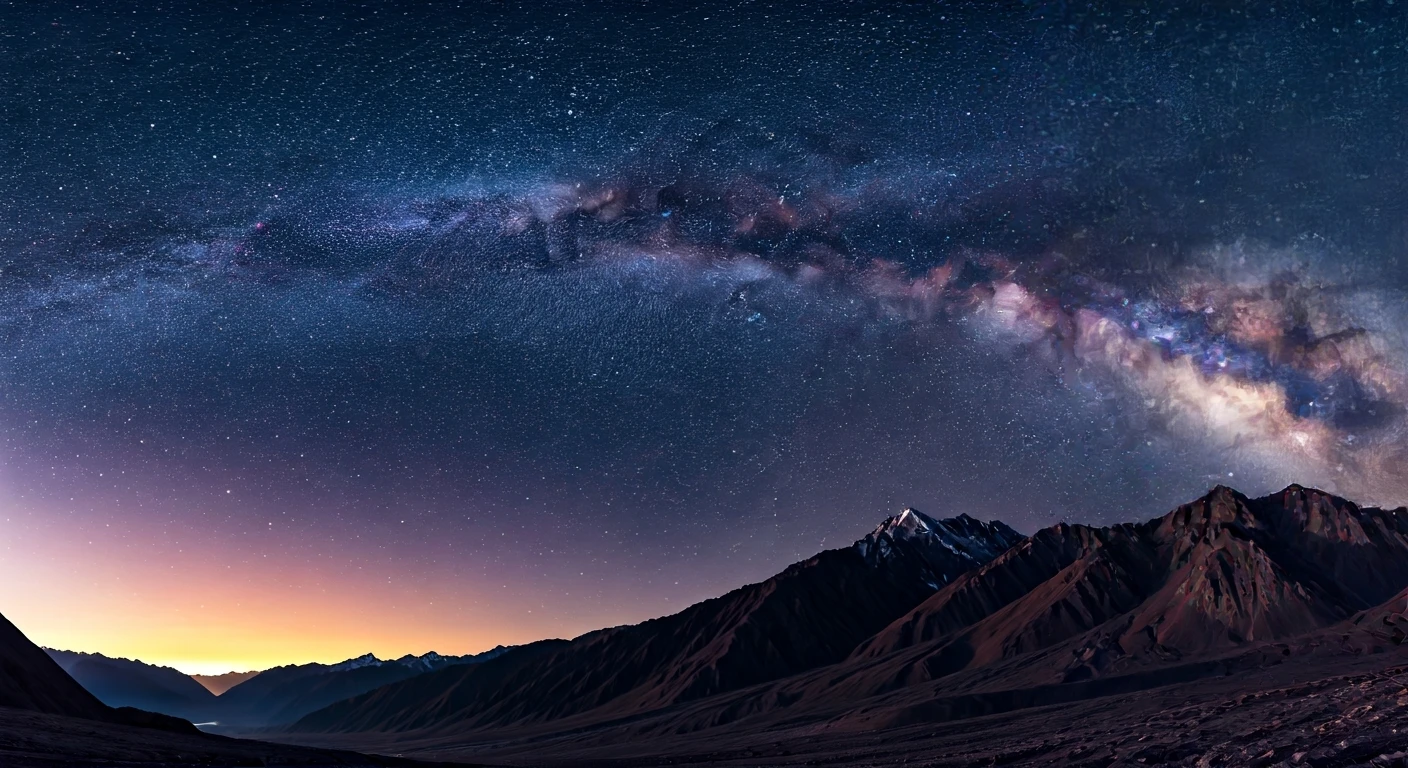
First, let's clear up a common misconception. The spectacular, fiery streaks we call “shooting stars” are typically caused by particles no bigger than a pebble burning up in our atmosphere. They pose zero threat to us on the ground. But in the vacuum
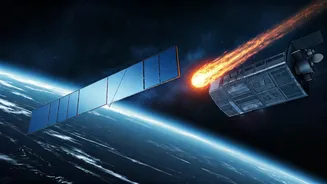
of space, where our critical infrastructure lives, the story is very different. The primary danger isn't from the rare, large meteoroid that would cause a catastrophic, movie-style explosion. Instead, the real problem is the constant, high-speed drizzle of tiny particles, known as micrometeoroids. Most are no larger than a grain of sand or a fleck of paint. A typical meteor shower, which occurs when Earth passes through the debris trail left by a comet or asteroid, can contain trillions of these tiny projectiles.
The Physics of a Cosmic Bullet
So, how can a grain of sand possibly be a threat to a multi-ton satellite? The answer is speed—or more accurately, hypervelocity. Objects in Earth's orbit, including micrometeoroids from a shower, travel at mind-boggling speeds, often in excess of 17,000 miles per hour. When two objects collide at these speeds, the kinetic energy released is enormous. A tiny aluminum sphere, just a few millimeters wide, can impact with the force of a bowling ball traveling at 60 miles per hour. It doesn't just dent the surface; it creates a small, explosive crater, vaporizing part of the target and the projectile itself. This isn't like a rock hitting your windshield; it's more like a tiny, targeted bomb going off at the point of impact.
A Death by a Thousand Cuts
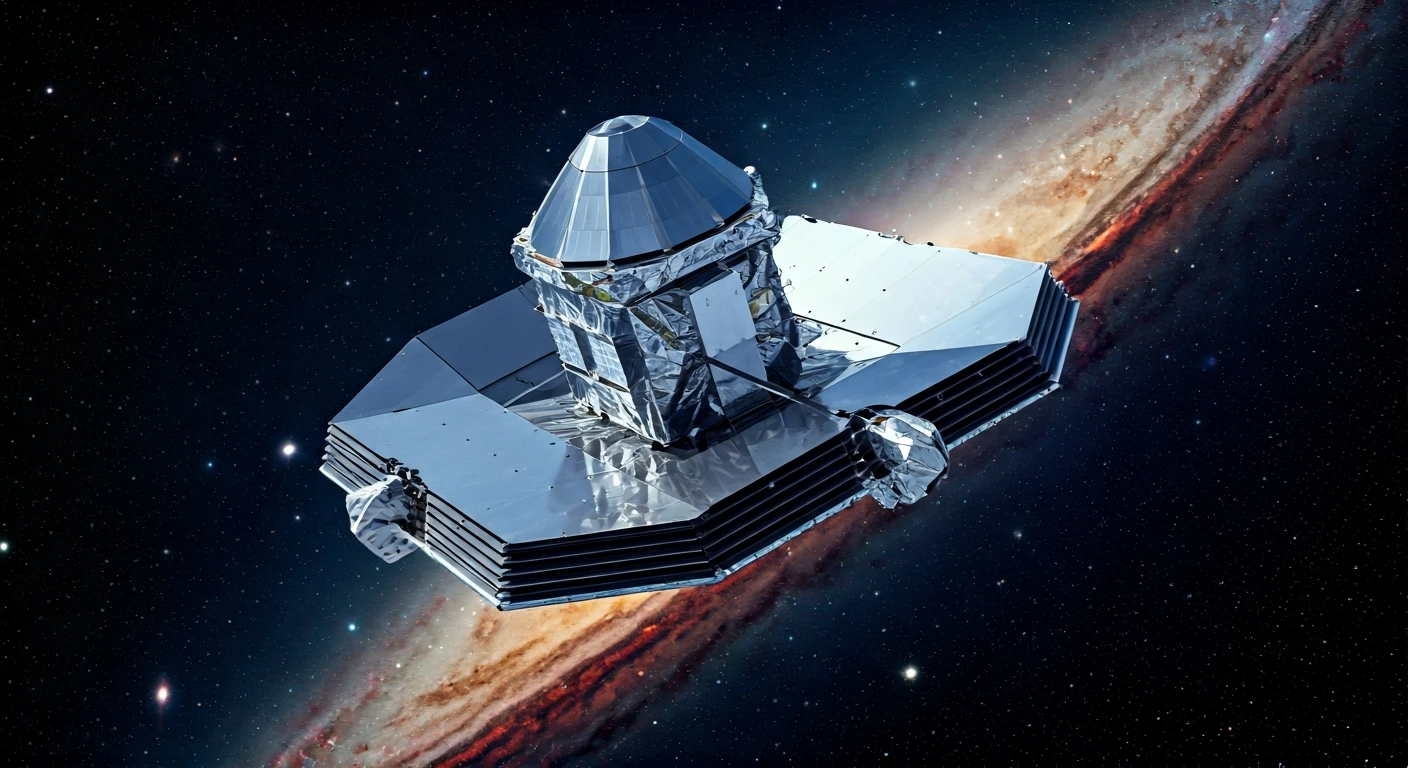
While a direct hit on a critical component from a slightly larger particle could disable a spacecraft instantly, the more common threat is a slow, grinding degradation. NASA engineers sometimes refer to this as “cosmic sandblasting.” Over years, the constant peppering of micrometeoroids pits and erodes surfaces. Solar panels, the lifeblood of any spacecraft, gradually lose their ability to generate power as their surfaces are scarred. Sensitive optical instruments, like the lenses on spy satellites or space telescopes, can have their surfaces fogged or damaged, reducing their effectiveness. Sometimes, an impact can create a cloud of plasma that shorts out nearby electronics, causing phantom glitches or permanent failure. This cumulative damage is a primary factor in limiting the operational lifespan of satellites and the International Space Station (ISS).
How NASA Plays Defense
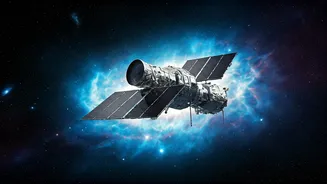
Fortunately, this isn’t a problem NASA simply hopes to avoid. The agency employs a multi-layered defense strategy. First is forecasting. NASA’s Meteoroid Environment Office (MEO) at Marshall Space Flight Center models the density of meteoroid streams, predicting when and where showers will be most intense. This gives mission controllers advance warning to take precautions. For high-value assets like the ISS and the Hubble Space Telescope, this might mean orienting the craft to present its most heavily armored side to the incoming stream, effectively turning its shoulder to the storm. In some rare cases, a spacecraft might even perform a small orbital maneuver to get out of the way. The most crucial defense, however, is built-in. Most spacecraft are equipped with Whipple shields—a type of spaced armor. It consists of a thin outer plate designed to shatter an incoming particle, and a thicker inner wall placed inches behind it to catch the resulting spray of smaller fragments, protecting the craft’s vital systems.