






Why Your Cat Craves the High Ground
To a cat, height equals safety and control. In the wild, their ancestors climbed trees to scan for prey and avoid predators. This instinct remains deeply ingrained in our domestic companions. When your cat hops onto the kitchen counter or the top of a bookcase,
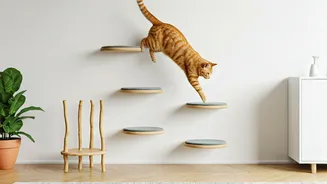
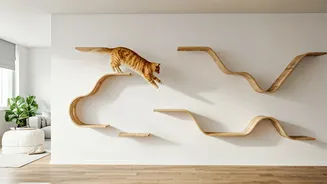
they aren't just being mischievous; they're seeking a vantage point. Providing designated vertical spaces, like wall-mounted paths and perches, fulfills this fundamental need. It gives them a secure place to observe their territory, retreat from household commotion (like a vacuum cleaner or an energetic toddler), and feel like the true monarch of their domain. A cat with access to vertical space is often a more confident, less stressed cat.
Planning Your Feline Superhighway
Before you start drilling, take a moment to think like a cat. A successful wall path isn't just a random collection of shelves; it's a functional highway with a purpose. Look at your apartment from your cat’s perspective. Where do they like to hang out? A path that connects a cozy napping spot to a window with a view of the birds is far more appealing than one leading to a blank wall. Ensure there are multiple entry and exit points so your cat never feels trapped, especially in a multi-cat household where disputes can arise. The path should flow naturally, with shelves spaced appropriately for comfortable leaps—not too close to be boring, but not so far as to be dangerous. Aim for a mix of long pathways for 'traveling' and wider perches for 'destination' lounging.
Choosing the Right Materials
The market for cat-centric wall furniture has exploded, offering everything from minimalist floating shelves to elaborate, pre-designed kits. You can also go the DIY route with sturdy wooden planks from a hardware store. Whatever you choose, prioritize function and safety. The surface of the shelves is crucial. Bare, lacquered wood can be slippery and uninviting. Opt for shelves made of solid, untreated wood, or cover them with a non-slip material. Tightly woven, low-pile carpet remnants, cork, or sisal rope are excellent choices. They provide essential grip for confident climbing and double as scratching surfaces, which can help spare your sofa. Look for rounded corners to prevent injuries and ensure any brackets are low-profile or hidden to avoid snags.
Installation 101: Safety First
This is the most critical step. A poorly installed shelf is a serious hazard to your pet and your walls. The golden rule of mounting anything heavy is to anchor it directly into wall studs. Studs are the vertical wooden beams that make up your wall's frame. Use a stud finder to locate them. If your desired path doesn't align perfectly with the studs, use high-quality drywall anchors rated to hold significantly more weight than your cat. When in doubt, always choose the stronger anchor. Use screws that are long enough to securely penetrate the stud or fully engage the anchor. Once a shelf is installed, test it rigorously. Press down on it firmly, mimicking the force of a cat landing a jump. It should feel completely solid, with no wobble or give.
Making It a Destination, Not Just a Path
Once your highway is built, the final touch is to make it an irresistible part of your cat’s world. Turn a wide perch near a sunny window into a five-star napping spot by adding a small, secure bed. Place a small dish of their favorite treats on a destination shelf to encourage exploration. Integrating elements of play, like a dangling toy near a perch, can also increase engagement. By transforming these paths from simple transit routes into functional spaces for resting, playing, and observing, you enrich your cat's environment exponentially. This mini-renovation doesn't just add decor to your walls; it adds a whole new dimension of happiness and well-being to your feline friend's life.