



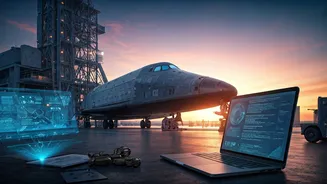


The New Space Race is Commercial
For decades, a career in space meant one thing: working for the government. NASA was the only game in town, a vast and often slow-moving bureaucracy. Today, the landscape is radically different. The rise of private companies like SpaceX, Blue Origin,
and Rocket Lab has transformed the industry into a dynamic, fast-paced sector that looks a lot more like Silicon Valley than a federal agency. This commercialization has created a surge in demand for engineers, software developers, and technicians. Students now see a direct and exciting path from a university degree to a job at a company that is visibly and consistently making history, whether by launching astronauts, deploying satellite constellations, or perfecting reusable rockets. The 'Elon Musk effect' is real; it has made aerospace cool, innovative, and accessible in a way it hasn't been since the Apollo era, promising not just a job, but a high-stakes adventure.
It's Not Just About Being an Astronaut
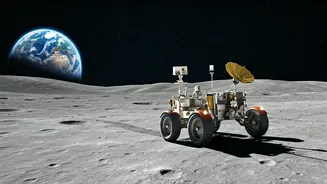
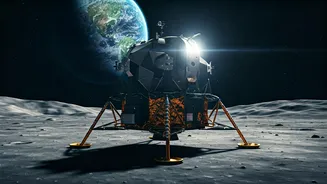
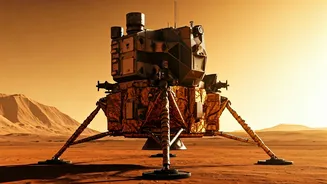
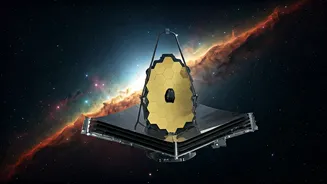
The classic image of a space career—the lone astronaut in a bulky white suit—is deeply ingrained in American culture, but it's also profoundly misleading. The modern space industry requires an incredibly diverse range of skills, and students are taking notice. The firehose of data from the James Webb Space Telescope requires armies of data scientists and astrophysicists to interpret it. Building rovers for Mars demands cutting-edge robotics and mechanical engineering. The explosion in satellite launches necessitates experts in orbital mechanics, communications technology, and even space law to manage traffic and debris.This diversification opens the door to students who might not have seen a place for themselves in the old aerospace model. A talented coder can write the guidance software for a lunar lander. A materials scientist can develop the next generation of heat shields. A policy expert can help shape the international treaties governing asteroid mining. The field is no longer a narrow path for aspiring pilots; it's a sprawling ecosystem for nearly every STEM discipline.
A Constant Stream of 'Wow' Moments
It’s hard to commit your life to a field that feels static. Fortunately, space science is currently delivering a nearly continuous stream of awe and inspiration. The first jaw-dropping images from the Webb Telescope weren't just scientific discoveries; they were global cultural events that dominated social media and the news for days. The Perseverance rover trundling across the Martian landscape, sending back high-definition panoramas of an alien world, makes the abstract tangible. The Artemis program's goal of returning humans to the Moon provides a clear, compelling narrative of human achievement.This steady drumbeat of progress and wonder serves as a powerful recruitment tool. It keeps the field in the public eye and reinforces its importance. For a young person choosing a major, these moments provide powerful evidence that space science is not a relic of the past but a vibrant, active frontier where fundamental discoveries are still being made.
A Search for Mission-Driven Work
Beyond the high-tech glamour and thrilling launches, many students are drawn to space science because it offers a sense of purpose. This is a generation deeply concerned with existential challenges, and space offers a unique platform from which to address them. Climate scientists rely on Earth-observation satellites to monitor melting ice caps, deforestation, and atmospheric changes. The search for exoplanets and extraterrestrial life speaks to a fundamental human desire to understand our place in the cosmos. Developing technologies for in-space manufacturing or sustainable long-duration life support could have profound implications for life on Earth.Choosing to study space science is, for many, a decision to work on big problems. It’s a field that combines rigorous intellectual challenges with the potential to contribute to the long-term survival and understanding of our species. In an era of uncertainty, the chance to work on something so clearly monumental holds a powerful appeal.