







The King of Fruits Goes Global
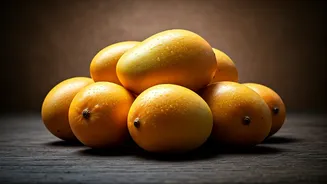
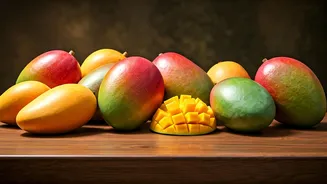
When we talk about mangoes, we're really talking about India. The country produces a staggering 40-50% of the world's entire mango supply, a scale that dwarfs any other nation. For context, that’s over 20 million metric tons a year. For centuries, this
bounty was a national treasure largely kept at home. The logistical nightmare of shipping a delicate, highly perishable fruit, combined with complex trade regulations, meant the legendary Indian mango experience was reserved for those on the subcontinent. But that's changing. India is getting serious about leveraging its most famous agricultural asset. This isn’t just about exporting more fruit; it's about exporting a premium brand. “Mango power” refers to this strategic blend of immense production scale and the almost mythical reputation of its prized varieties, turning a simple fruit into a high-value commodity and a potent symbol of India's growing economic confidence.
From Local Treasure to Global Commodity
So why are we hearing about this now? For American consumers, the story starts with a trade barrier. For nearly two decades, Indian mangoes were effectively banned from the U.S. due to concerns about pests like fruit flies. The breakthrough came when regulators agreed on a solution: irradiation. This process, which uses radiation to kill any pests without harming the fruit, finally opened the door for Indian mangoes to legally enter the American market. After a pandemic-induced pause disrupted inspections and halted trade, the flow resumed in 2022. This reopening created a surge of interest and investment. Indian exporters and their American partners began rebuilding sophisticated, temperature-controlled supply chains. Suddenly, the U.S. market, which had been dominated by mangoes from Mexico and Latin America, was being introduced to the complex, aromatic flavors of Indian varieties that were previously the stuff of legend.
The Alphonso and the Art of the Deal
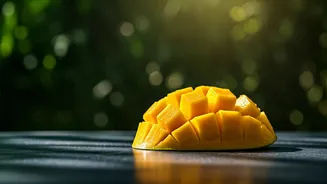
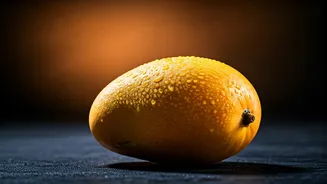
Not all mangoes are created equal. At the heart of India's mango power is the Alphonso, often called the “king of mangoes.” Grown primarily in a specific coastal region of western India, the Alphonso is to mangoes what a fine Bordeaux is to wine. It’s less about simple sweetness and more about a complex, creamy, almost floral flavor profile. Its limited geographic origin and short season make it incredibly sought-after—and expensive. Getting a box of perfect Alphonsos from a farm in Ratnagiri to a Whole Foods in Ohio is a minor miracle of modern logistics. The fruit must be picked at the perfect moment, transported to an irradiation facility, carefully packed, and air-freighted across the world—all within days. This process can make a single Alphonso mango cost upwards of $5-$7 in a U.S. store. Yet people pay it. The willingness of consumers to pay a premium for this specific taste experience is a testament to the power of India’s mango brand.
More Than Just a Fruit
This is where business intersects with culture. For India, exporting mangoes isn't just about revenue; it’s a form of “gastro-diplomacy.” Much like Japan used sushi and South Korea leveraged K-pop, India is using its most beloved fruit as a cultural ambassador. Every box of prized Kesar or Banganpalli mangoes that lands in a foreign market is a soft-power victory, a delicious introduction to Indian culture that bypasses politics and speaks directly to the senses. This strategy is often called “mango diplomacy.” Indian leaders have historically gifted boxes of their best mangoes to foreign heads of state. Now, that same charm is being deployed on a commercial scale. As India aims to become a $5 trillion economy, building “Brand India” is crucial. The mango, a symbol of sunshine, joy, and abundance, is proving to be one of its most effective and universally understood marketing tools.