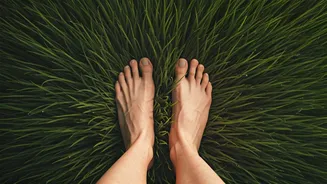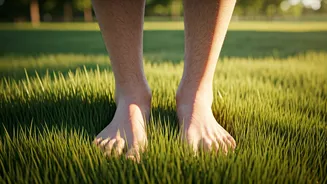








The Core Idea: What Is 'Grounding'?
At its heart, this practice is a form of what many call 'grounding' or 'earthing.' The concept suggests that direct physical contact with the vast surface of the Earth can help stabilize our own physiology and calm our minds. While scientific research
into the specific electrical effects of grounding is still emerging and debated, the core components of the practice—walking, being in nature, and paying attention to your body—are all well-established stress relievers. Think of it less as a miracle cure and more as a powerful, intentional act of disconnecting from digital noise and reconnecting with the physical world. It’s an invitation to step away from the relentless pace of email chains and Zoom calls and into a simpler, more immediate reality.
Why Grass? The Power of Green Space
There's a reason a walk in the park feels different from a walk down a concrete sidewalk. Exposure to nature, often called 'green therapy' or 'ecotherapy,' is proven to lower cortisol (the stress hormone), reduce blood pressure, and decrease rumination—that cycle of negative thoughts that often follows a tough day at work. The soft, yielding texture of grass provides a unique sensory input that hard surfaces can't match. The color green itself is associated with tranquility and has been shown to have a restful effect on the human eye. Combining these elements turns a simple walk into a multi-sensory experience that actively pulls your attention away from internal worries and toward your external environment.
Why Barefoot? A Sensory Awakening
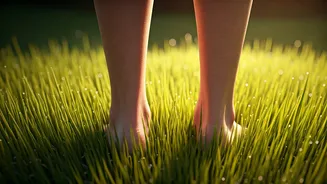
Our feet are incredibly sensitive, packed with thousands of nerve endings that we typically shield inside socks and shoes. Walking barefoot, especially on a varied natural surface like grass, reawakens this sensory system. You feel the coolness of the morning dew, the soft prickle of a clover, and the supportive give of the soil beneath. This flood of new sensory information requires your brain to focus on the present moment, acting as a natural form of mindfulness. It interrupts the mental loops of 'what-ifs' and 'should-haves' from your workday. Physiologically, walking barefoot can also improve your proprioception—your sense of body position—and may help strengthen the small muscles in your feet and ankles that are often underused in modern footwear.
Why Rhythmic? Finding Your Meditative Pace
The 'rhythmic' component is the final, crucial piece of the puzzle. It transforms a simple stroll into a moving meditation. The goal isn't to get anywhere quickly; it's to find a steady, repeatable pace. Left, right, breathe in, breathe out. This predictable cadence has a lulling effect on the nervous system, similar to a rocking chair or a gentle beat of music. It creates a state of flow where you are fully immersed in the activity. By coordinating your breath with your steps—for example, inhaling for three steps and exhaling for three steps—you can deepen the meditative quality and actively regulate your body's stress response. This rhythm becomes an anchor, holding your attention and quieting the frantic chatter of the mind.
How to Start Your Practice
Getting started is as simple as it sounds. Find a safe, clean patch of grass—your backyard, a local park, or any green space where you feel comfortable. Before you kick off your shoes, do a quick visual scan for any sharp objects like rocks, glass, or litter. Start with just five to ten minutes. Stand still for a moment and just feel the grass under your feet. Then, begin walking at a slow, deliberate pace. Focus on the sensation of your soles connecting with the earth. Try to sync your breathing with your steps. Don't force it; just find a rhythm that feels natural. You don't need any special gear or training—just a willingness to slow down and be present.