




Decode the 'Percent Chance of Rain'
That little number next to the raindrop icon is one of the most misunderstood metrics in modern life. If you see a 40% chance of rain, it doesn’t mean it will rain for 40% of the day, or that the rainfall will be at 40% intensity. It means there is a 40% probability
that *any* measurable amount of rain will fall at *any single point* within the forecast area. It’s a calculation of confidence multiplied by coverage area. So, a forecaster might be 80% sure that 50% of your county will see rain, which works out to a 40% chance for your specific location. This is why you can have a high percentage and see nothing, or a low percentage and get soaked. The takeaway? Use it as a risk assessment tool. A 20% chance means you should have a backup plan. An 80% chance means you should probably activate it.
Respect the Forecast's Expiration Date
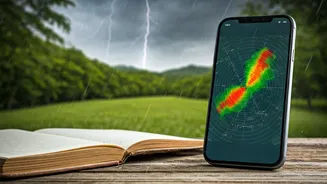
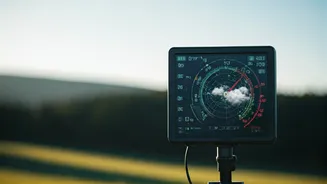
Meteorologists are wizards, but they aren’t fortune tellers. The atmosphere is a chaotic system, and small, unpredictable changes can have massive effects over time—the famed “butterfly effect.” As a rule of thumb, a weather forecast is highly reliable within a 24- to 48-hour window. Accuracy remains fairly strong out to about 5 days. Beyond that, you enter the realm of educated guesswork. A 10-day forecast isn’t predicting a specific outcome; it’s identifying a potential trend. That distant sunny icon for next Saturday is really saying, “Conditions might be favorable for a high-pressure system to be in the area.” It's useful for big-picture planning (like deciding whether to even consider a beach trip), but don’t book a non-refundable outdoor venue based on it. For day-of precision, nothing beats watching the live radar.
Look Beyond Your Phone's Default App
Not all forecasts are created equal because they aren't all built the same way. Most weather apps pull data from a handful of major global computer models. The two most famous are the American GFS (Global Forecast System) and the European ECMWF (often just called the “Euro” model). Historically, the Euro model has had a slight edge in accuracy, but both are constantly improving. Your phone’s default app might use one, the other, or its own proprietary blend. For important plans, it’s wise to become a “forecast aggregator.” Check a couple of different sources. If the app from The Weather Channel and the forecast from your local TV news station (which often has meteorologists interpreting the models) are in general agreement, your confidence can be higher. If they diverge wildly, it signals that the atmospheric setup is unpredictable and you should plan for multiple possibilities.
Think in Ranges, Not Absolutes
When a forecast predicts a high of 75°F, it's not a guarantee etched in stone. It's the most likely outcome in a range of possibilities. A better way to mentally process this is to think of it as “mid-70s.” The actual temperature could easily be 72°F or 78°F depending on cloud cover, wind, and other variables that are difficult to pin down perfectly. The same goes for timing. A forecast calling for “afternoon showers” means rain is likely between 1 p.m. and 5 p.m., not that it will start precisely at 1:01. By embracing this mindset of ranges and probabilities, you can build more resilient plans. Instead of just bringing shorts, maybe you also pack a light jacket. Instead of planning an intricate five-course barbecue, you have a menu that can easily be moved indoors if needed.
Master Your Local Microclimate
A regional forecast covers a large area, but weather can be intensely local. If you live near a large body of water, in the mountains, or even in a dense urban center, you're living in a microclimate. A lake breeze can keep the coast 10 degrees cooler than inland areas just a few miles away. A valley can trap cool air at night, while a mountain slope can generate its own clouds and showers (a process called orographic lift). Cities, with their vast stretches of asphalt and concrete, create “urban heat islands” that make them several degrees warmer than surrounding suburbs. The best forecasters on Earth can’t model every single one of these variations with perfect accuracy. Pay attention to the patterns where you live and play. You’ll soon become your own best expert on how the official forecast needs to be adjusted for your specific park, beach, or backyard.