



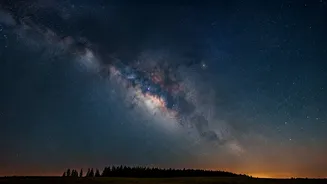


Why This Celestial Dot Matters
In a world of constant notifications and demands on our attention, there is something profoundly grounding about looking up at the cosmos. Spotting a planet with your own eyes is a direct connection to the vast, clockwork mechanics of our solar system.
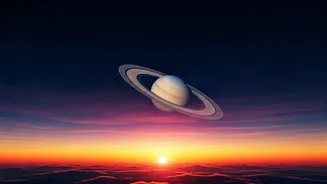
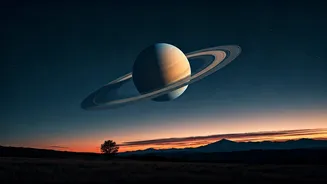
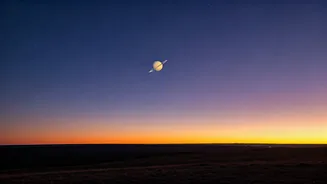
Saturn, the sixth planet from the sun, is an icon. We all know it from textbooks and stunning NASA images, a gas giant girdled by magnificent rings of ice and rock. While you won't see those rings without a powerful telescope, knowing that the faint, unwavering point of light you're looking at *is* that very world is a special kind of magic. It’s a moment of perspective—a quiet reminder that you are on a planet, looking at another planet, across hundreds of millions of miles of space. It’s a five-minute celestial meditation that costs nothing but a bit of lost sleep.
Your Pre-Dawn Viewing Window
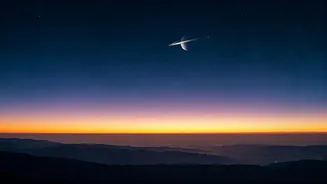
Timing is everything in amateur astronomy. For this viewing opportunity, you’ll want to set your alarm for about 90 minutes before your local sunrise. This gives you the perfect window: the sky will be dark enough for the planet to stand out, but the approaching dawn will make the horizon easier to navigate. Wait too long, and the rising sun will wash Saturn from view. Start too early, and it might still be too low to the horizon. A great way to prepare is to check your local weather app for the exact sunrise time the night before and then subtract 90 minutes. Pour a cup of coffee, grab a jacket, and step outside into the quiet stillness of the morning twilight. The best viewing period will last for about 45 to 60 minutes, giving you plenty of time to find your celestial target.
Where to Point Your Gaze
Location, location, location. You don’t need to drive to a remote mountaintop, but a little planning helps. Your primary goal is a clear, unobstructed view of the southeastern sky. This means finding a spot away from tall trees, buildings, or hills in that direction. If you live in a city, the glow of streetlights can make stargazing tricky. Try to find a local park, a quiet street, or even just the side of your house that faces away from the brightest lights. The key is to let your eyes adjust to the darkness. Step outside and wait five to ten minutes without looking at your phone. This allows your pupils to dilate, making you much more sensitive to faint celestial light. You'll be amazed at what emerges from the darkness once your eyes have adapted. Saturn will be hanging relatively low, so a clear horizon is your best friend.
Identifying the Ringed Giant
So, you're outside, your eyes are adjusted, and you're looking southeast. How do you know which dot is Saturn? Here are two key identifiers. First, its color. As the headline suggests, Saturn has a distinct pale, yellowish-white hue. It’s not as brilliantly red as Mars or as dazzlingly white as Venus, but a steady, creamy yellow. Second, its light. Stars twinkle, but planets shine. This is because stars are so far away that they are essentially points of light, easily disturbed by Earth’s atmosphere. Planets are much closer, appearing as tiny disks, so their light is more stable and less prone to twinkling. Scan the southeastern sky for a moderately bright “star” that isn’t twinkling and has that signature yellowish color. That’s your target. Using a simple stargazing app on your phone (in night mode, to preserve your night vision) can also confirm you’re looking at the right object.
Leveling Up: Binoculars and Beyond
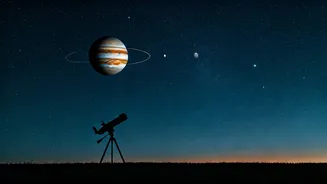
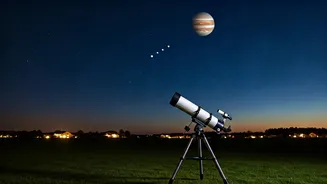
While seeing Saturn with the naked eye is a treat in itself, even a small amount of magnification can enhance the experience. If you have a pair of binoculars—any standard pair will do—prop your elbows on a steady surface like a car roof or a fence post to minimize shaking. When you look at Saturn through them, you won't see the rings clearly, but you may notice that the planet appears slightly elongated or oval-shaped. That subtle distortion is caused by the rings! You're not just seeing a point of light anymore; you're seeing the shape of a world. For those with a beginner telescope, even a small one can provide a breathtaking view. With a magnification of just 25x or more, you should be able to resolve the rings as a distinct structure separate from the planet—a truly unforgettable sight that can turn a casual glance into a lifelong passion.