



The Roaring Overture
Forget manicured pathways and placid tour buses. Reaching Dudhsagar Falls during the monsoon is an adventure in itself. Located inside the Bhagwan Mahaveer Sanctuary and Mollem National Park in Goa, the falls are inaccessible by conventional vehicles
for a reason. The unpaved track is a series of river crossings, muddy inclines, and dense forest canopies that swallow the sky. Your convoy of jeeps becomes a team, drivers expertly navigating the terrain as cheeky monkeys watch from the branches. The air is thick, humid, and smells of wet earth and wild vegetation. This 45-minute safari isn't a mere transfer; it’s a deliberate, rugged prelude that strips away the polish of modern tourism and prepares you for something raw and elemental. By the time you disembark, you don't feel like a tourist—you feel like an explorer who has earned the view.
A Sea of Milk
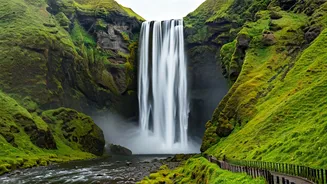
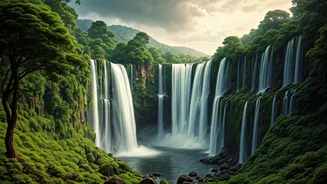
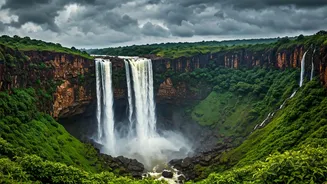
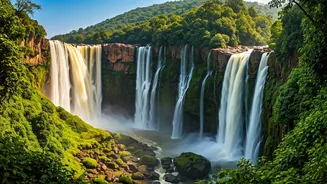
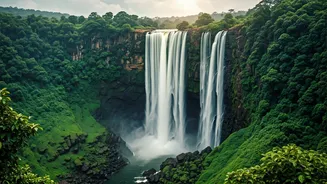
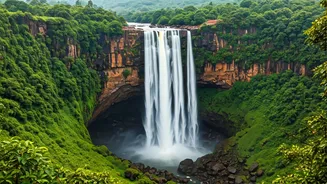
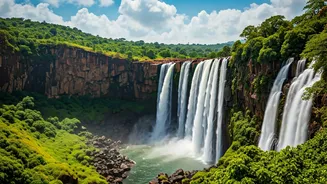
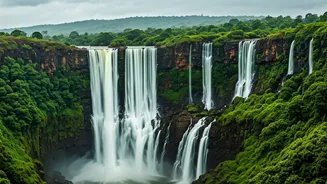
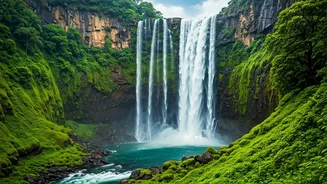
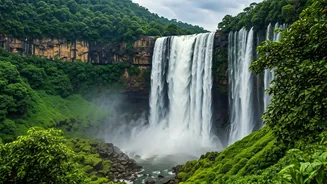
After a short trek from the jeep drop-off point, you hear it before you see it: a deep, percussive roar that vibrates through the ground. Then, through a clearing in the trees, it appears. Dudhsagar, which translates to “Sea of Milk,” is not a delicate cascade. It is a four-tiered behemoth of furious white water, thundering down a 1,017-foot rock face. During the monsoon, fed by the relentless rains, the falls are at their most formidable. The sheer volume of water is staggering, creating a spectacle of power and spray that seems to defy gravity. The water isn't clear; it’s a churning, opaque white, thick with force and momentum. It's this milky appearance that gives the falls its name, looking less like water and more like a colossal amount of milk being poured from the heavens.
The Cinematic Railway Bridge
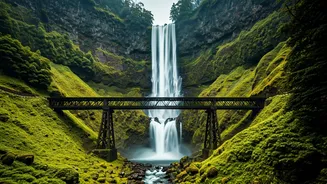
As if the falls themselves weren't dramatic enough, an active railway line cuts directly across its face. The Mandovi River, which feeds the falls, is bisected by a stone arch bridge that looks like a relic from another era. This intersection of industrial engineering and untamed nature creates one of the most iconic and photographed sights in India. Hearing the distant horn of an approaching train adds a layer of anticipation to the experience. Then, a brightly colored locomotive slowly chugs across the bridge, momentarily disappearing into the spray before emerging on the other side. It’s a surreal, cinematic moment—a tiny symbol of human persistence dwarfed by the overwhelming force of the natural world. For many, capturing this shot is the pinnacle of the visit, a perfect composition of movement, nature, and history.
Why the Monsoon Is Worth It
Visiting Dudhsagar outside the monsoon season is an entirely different experience. From late October to May, the “Sea of Milk” is reduced to a few gentle streams trickling down the rock face. The river crossings are dry, and the jungle is less vibrant. It’s pleasant, but it’s not epic. The monsoon, from June to September, is when the falls truly come alive. The challenges of the journey—the rain, the mud, the bumpy ride—are not drawbacks; they are essential components of the adventure. The reward is a force of nature at its absolute peak, a sensory overload of sound, sight, and spray. While swimming in the plunge pool at the base is often restricted during peak flow for safety reasons, witnessing the falls in their full, raging glory is an experience that stays with you. It’s a reminder that sometimes, the most magnificent beauty is found in the most turbulent conditions.