



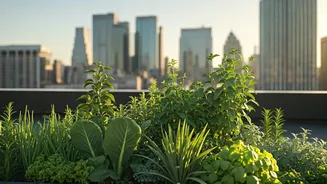


1. Create Distinct 'Rooms'
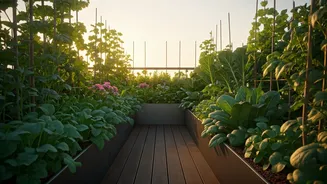
The key to a sanctuary is intentional design, not just a random collection of pots. Treat your rooftop like an open-plan room and create zones for different activities. Use larger planters, a section of decking, or an outdoor rug to visually separate
the 'kitchen' (your primary vegetable beds) from the 'lounge' (a comfortable seating area). This approach creates a sense of order and purpose. A small bistro table and two chairs can form a dining nook, while a single comfortable armchair in a corner can become a reading spot. By defining these areas, you give the space a logical flow that invites you to linger, rather than just pop up to water the plants.
2. Layer with Verticality
Urban gardens are often short on square footage, so think up. Vertical gardening is not only efficient, it’s essential for creating a lush, enveloping atmosphere. Install trellises for climbing plants like beans, cucumbers, and passionflower. Attach wall-mounted planters for herbs and strawberries, creating a living wall of color and fragrance. Hanging baskets filled with cherry tomatoes or trailing flowers add another layer of visual interest. This verticality draws the eye upward, making the space feel larger and more secluded, as if you’re enclosed in your own private green world rather than just sitting on a flat roof.
3. Mix Edibles with Ornamentals
An aesthetic garden rarely consists of straight, utilitarian rows. The most beautiful rooftop sanctuaries blend form and function by mixing edible plants with purely ornamental ones. Plant flowering herbs like lavender, rosemary, and chives alongside your vegetables. Their flowers attract pollinators, which benefits your produce, and they add texture and color. Tuck marigolds around your tomato plants—they’re known to deter pests and provide a pop of orange. A border of vibrant coleus or sweet potato vine spilling over the edge of a container can elevate a simple kale patch into a design feature. This polyculture approach looks more natural and feels more like a garden than a farm.
4. Curate Your Containers
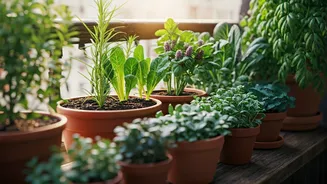
On a rooftop, your planters are your garden's architecture and furniture. A jumble of mismatched plastic pots can look chaotic. Instead, be deliberate about your choices to create a cohesive aesthetic. For a modern, minimalist look, stick to a limited color palette with clean-lined containers made of metal, fiberglass, or concrete. For a more rustic, Mediterranean feel, use a variety of terracotta pots in different sizes. Wooden planter boxes can add warmth and are excellent for building raised beds. Grouping containers of similar materials or colors together creates a powerful visual statement and makes the entire layout feel more intentional and serene.
5. Add Elements of Comfort and Ambiance
A sanctuary is about feeling, not just looking. To complete your rooftop escape, add elements that enhance comfort and ambiance. Weather-resistant seating is a must, whether it’s a cushioned bench or a simple but stylish outdoor chair. Soft lighting transforms the space after sunset; solar-powered string lights or lanterns cast a warm, magical glow. Consider a small, self-contained water feature for the gentle sound of trickling water, which is excellent for masking city noise. These final touches are what turn a rooftop vegetable patch into a true haven you'll be drawn to day and night.
6. Start with a Practical Foundation
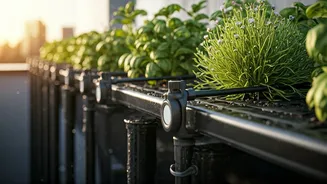
Before you buy a single plant, address the practicalities. First and foremost, consult a structural engineer or your building management to understand your roof’s weight-bearing capacity. Wet soil is incredibly heavy. Next, plan for water. A long hose connected to an outdoor spigot is ideal, but if that’s not an option, consider setting up a drip irrigation system connected to a rain barrel. Finally, assess your sun and wind exposure. Most vegetables need at least six hours of direct sun, but a windy rooftop can dry out and damage plants quickly. Using sturdy, heavy-bottomed pots and installing a windscreen can make all the difference in creating a garden that thrives.