






Myth: It’s Prohibitively Expensive
The belief that an African vacation requires a second mortgage is one of the biggest deterrents for potential travelers. And yes, if your dream is a week in a luxury tented camp in the Serengeti with private game drives, the cost can easily soar past
$10,000 per person. But that’s like judging all U.S. travel by the price of a penthouse suite in Manhattan. The reality is that Africa offers options for nearly every budget. In countries like Morocco, you can stay in beautiful, traditional riads for under $100 a night and eat fantastic meals for a few dollars. In South Africa, a favorable exchange rate for the U.S. dollar makes everything from world-class wineries in Stellenbosch to vibrant city life in Cape Town surprisingly affordable. Even in classic safari destinations like Kenya, you can find options beyond the high-end lodges. Look for reputable local tour operators offering small-group overland tours, stay in community-run guesthouses, or focus on a self-drive trip through a national park. The key is to look beyond the all-inclusive luxury packages often marketed in the West.
Myth: The Logistics Are a Nightmare
Navigating visas, flights, and ground transportation for a continent of 54 countries can sound daunting. But the infrastructure for tourism has improved dramatically. For Americans, many popular destinations have streamlined the process. Countries like Kenya, Tanzania, and Uganda offer e-visas you can apply for online, while others, such as South Africa, Botswana, and Morocco, offer visa-free travel for U.S. passport holders for short tourist stays. Flight connectivity has also gotten much better. While direct flights from the U.S. are still limited to a few major hubs, airlines like Ethiopian, Qatar, Emirates, and Turkish offer extensive networks across the continent with just one stop. Once there, budget airlines like Fastjet and Kenya Airways connect major cities, and in many countries, a well-established network of tour companies can handle all your ground transportation, making a multi-destination trip smoother than you’d imagine. You don’t need to be a seasoned logistical expert; you just need to do a little research.
Myth: It’s Universally Dangerous
News coverage often paints Africa with a broad, uniform brush of instability and conflict. This perception is perhaps the most unfair. Africa is a vast continent—more than three times the size of the United States—and generalizing its safety is like saying you shouldn't visit California because of crime rates in a city 2,000 miles away. Many of the continent's top tourist destinations are remarkably safe and stable. Rwanda, for example, is now considered one of the safest countries in Africa and is celebrated for its cleanliness and order. Botswana has a long history of political stability and a low crime rate. Of course, travelers should always exercise common sense, just as they would in Paris, Rome, or New York. It’s wise to check U.S. State Department travel advisories for specific regions, avoid overt displays of wealth, and listen to local advice. But the idea of an entire continent being a no-go zone is a fiction that keeps travelers from experiencing some of the most welcoming and secure places on Earth.
Myth: It’s Only for Safari and Wildlife
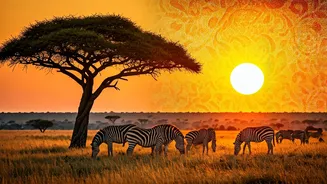
The classic safari is an incredible experience, but it’s just one piece of the African travel puzzle. The continent offers a staggering diversity of landscapes, cultures, and activities. You can explore the ancient wonders of Egypt, from the Pyramids of Giza to the temples of Luxor. Or get lost in the bustling medinas and spice markets of Marrakech in Morocco. For beach lovers, the turquoise waters and white sands of Zanzibar in Tanzania or the stunning coastline of Mozambique offer a paradise rivaling the Caribbean. Adventure seekers can hike Mount Kilimanjaro, go gorilla trekking in the misty forests of Uganda or Rwanda, or explore the otherworldly landscapes of Namibia’s Sossusvlei dunes. History buffs can trace humanity’s origins in Ethiopia’s rock-hewn churches and ancient obelisks. And foodies can dive into the complex flavors of Cape Town’s culinary scene or learn to cook traditional tagine in Fes. Limiting Africa to just wildlife is to miss the majority of what makes it so magical.