

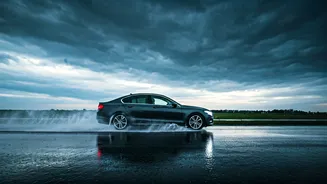


They Prep Before the First Drop
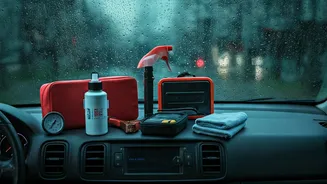
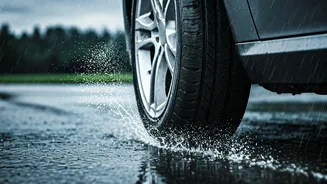
The smartest drivers rain-proof their car, not just their driving. This starts with two critical components: tires and wipers. Worn tires are the primary cause of hydroplaning. Use a penny to check your tread: if you can see all of Lincoln's head when
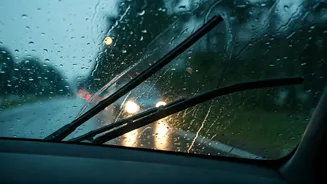
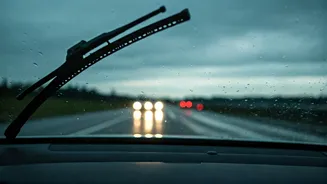
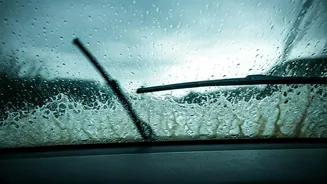
you place it upside down in the groove, your tires are dangerously worn and need replacement. Similarly, don't wait for your wipers to start streaking and smearing during a storm. Replace them every 6-12 months. For an extra edge, apply a hydrophobic glass treatment like Rain-X to your windshield. It causes water to bead up and fly off, dramatically improving visibility, especially at highway speeds.
They Master the Six-Second Rule
You learned the three-second rule for following distance in driver's ed, but that's for ideal, dry conditions. Rain dramatically increases your vehicle's stopping distance by reducing tire grip. Smart drivers double that buffer. To practice the six-second rule, watch the vehicle ahead of you pass a fixed object like a signpost or overpass. Then, start counting: "one-one-thousand, two-one-thousand..." If you reach the same object before you get to six, you're following too closely. This extra space is your best defense against sudden stops and gives you crucial time to react to hazards you might not see until the last moment.
They Know How to Handle a Hydroplane
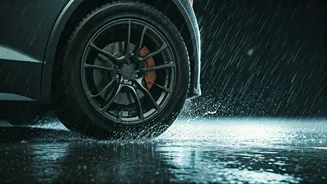
Hydroplaning—when your tires ride on a thin layer of water instead of the pavement—is terrifying because your steering and brakes become useless. The instinctive reaction is to slam on the brakes, but that's the worst thing you can do, as it can lock the wheels and send you into a skid. The correct, albeit counterintuitive, response is to remain calm. Ease your foot off the accelerator smoothly. Do not brake. Keep the steering wheel pointed straight ahead. As the car slows, the tires will regain contact with the road, and you will feel control return. The key is to make no sudden moves.
They Never Use Cruise Control
Cruise control is a fantastic tool for long, dry highway trips, but it's a major hazard in the rain. The system is designed to maintain a constant speed, and it will continue to apply the accelerator even when your car starts to hydroplane. This can cause the vehicle to suddenly accelerate and spin out of control once the tires lose traction. Driving in the rain requires constant, subtle adjustments to your speed based on water levels, visibility, and traffic. You need to be fully engaged, with your foot ready to manage the gas and brake pedals manually. Disengaging cruise control is one of the first things a savvy driver does when the skies open up.
They See and Are Seen
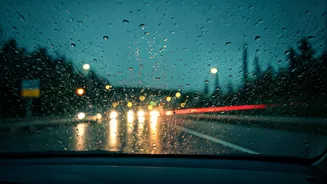
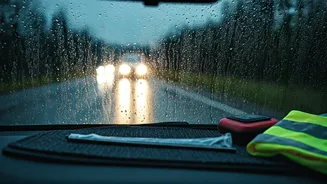
Visibility is a two-way street. Of course, you need your wipers and headlights on—in many states, it's the law to have your lights on when your wipers are in use. But smart drivers know not to use their high beams in heavy rain or fog. The bright light reflects off the water droplets, creating a wall of glare that actually reduces your visibility. Furthermore, they use their car's climate control system to their advantage. To quickly defog an interior windshield, turn on your air conditioning and direct the vents at the glass. The A/C acts as a dehumidifier, pulling moisture from the air far more effectively than heat alone.
They Read the Road's Surface
A wet road isn't uniformly dangerous. Experienced drivers are constantly scanning for changes in the road surface. They avoid driving in the outer lanes where water tends to pool. They also try to follow the tire tracks of the cars ahead of them, as the pavement there is often drier. Be especially wary during the first 10-15 minutes of a rainfall. This is when engine oil and grime on the asphalt mix with the water, creating an exceptionally slick surface before the rain has a chance to wash it away. Shiny, iridescent patches are a dead giveaway for this oily film.