








More Than Just a Smart Ring
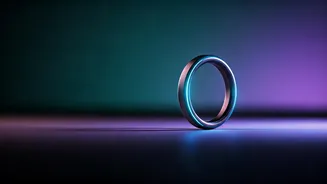
First, let's be clear: this isn't the clunky, notification-buzzing smartwatch you might be thinking of. These are sleek, screenless rings—like the globally recognized Oura or the homegrown Indian success story, Ultrahuman—designed for one purpose: to collect
high-fidelity data about your body. Worn 24/7, they track metrics far beyond simple step counts. We’re talking about sleep stages (deep, REM, light), heart rate variability (HRV), body temperature fluctuations, and respiratory rates. The ring then synthesizes this torrent of personal data into simple, actionable scores for sleep, recovery, and readiness. It’s a minimalist piece of hardware that delivers a maximalist view of your internal world, turning your body’s subtle signals into a daily dashboard for performance.
The New Face of Biohacking
The term “biohacker” might conjure images of Silicon Valley tech bros engaging in extreme fasts or fringe science experiments. But in India, the movement has a different flavor. For a growing cohort of young, ambitious professionals—software engineers, startup founders, and creative consultants—biohacking is less about radical intervention and more about data-driven self-optimization. It's a practical application of the 'quantified self' ethos. In a hyper-competitive environment where peak mental and physical performance is a non-negotiable asset, these rings provide a competitive edge. They answer questions like: “How did that late-night meeting affect my deep sleep?” or “Am I recovered enough for a high-intensity workout, or should I take it easy?” This approach treats the body not as a temple to be passively worshipped, but as a system to be understood, tweaked, and improved.
A Cultural Signal of Success
In a country where status symbols have traditionally been more conspicuous—luxury cars, designer logos, extravagant watches—the wellness ring is a quiet revolution. It’s a subtle but powerful signal. Wearing one says you’re not just successful, but you’re smart about it. It communicates that you value data, prioritize long-term health, and are part of a global, forward-thinking elite. The rise of Indian-born Ultrahuman has added a layer of national pride to the trend. Choosing Ultrahuman over a foreign competitor is a nod to India's burgeoning prowess in deep-tech and hardware manufacturing. For this generation, the ultimate flex isn’t just wealth; it's the disciplined pursuit of well-being, and the ring is the membership card to that exclusive club.
An Antidote to Modern Burnout
While the drive for performance is a huge factor, it’s not the whole story. The trend is also a direct response to the pressures of modern urban life in India. Long work hours, high-stress corporate cultures, and the constant connectivity of a digital-first economy are leading to unprecedented rates of burnout and lifestyle-related health issues. The wellness ring serves as a personal moderator—a data-driven conscience that encourages you to step back. It gamifies rest and recovery. Getting a high “readiness” score becomes a reward for making healthy choices, like skipping that late-night drink or prioritizing a full eight hours of sleep. In this sense, the ring is less a tool for hacking productivity and more a shield for preserving sanity and longevity in a world that never stops demanding more.