

The Taste of Childhood
For millions, the first taste of true independence wasn't a driver's license; it was being handed a few rupees to buy a snack after school. This is where the emotional scaffolding begins. Think of Parle-G, the simple, glucose biscuit that isn't just a cookie
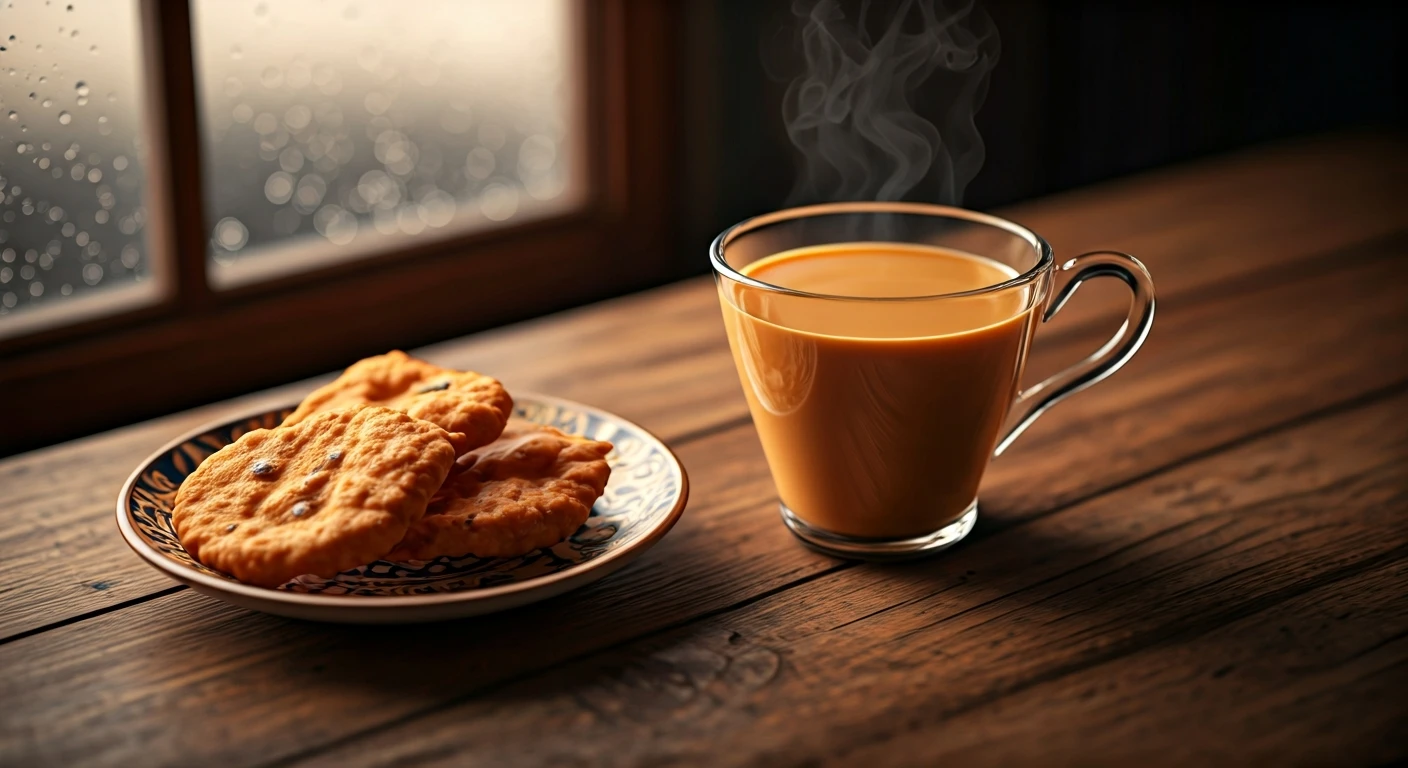
but a national treasure. Dipped in a steaming cup of chai, it becomes soft and yielding, a taste synonymous with morning rituals, grandmotherly affection, and the comforting quiet of a home. It's the edible equivalent of a hug. Then there’s the universe of 'chaat'—a category of savory street snacks that explodes with flavor. A plate of Bhel Puri, with its mix of puffed rice, tangy tamarind chutney, and crunchy sev (fried chickpea flour noodles), isn't just a snack; it's the taste of a bustling market, the sound of friends laughing, and the feeling of a carefree afternoon. These foods are imprinted on the palate during formative years, forever linking specific flavors to the foundational memories of growing up.
The Currency of Community
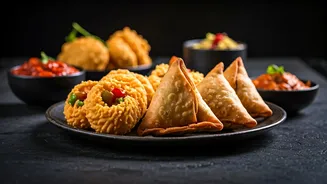
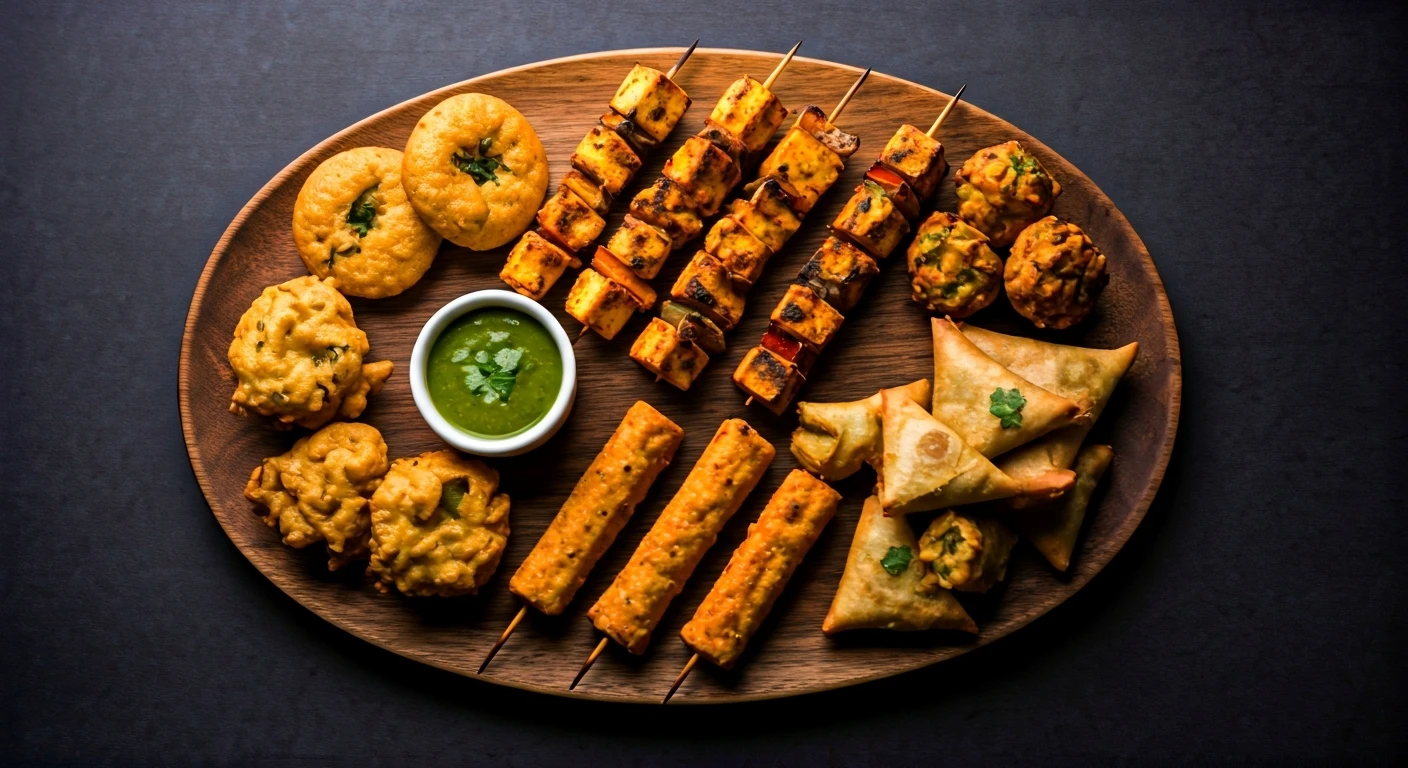
In the U.S., you might bring a bottle of wine to a party. In many Indian households, you arrive with a box of freshly fried samosas. The triangular pastries, filled with spiced potatoes and peas, are more than an appetizer; they are a social lubricant. The act of sharing a plate, of tearing into the flaky crust while debating whose local 'samosa-wala' makes the best ones, is a ritual of connection. They appear at birthdays, during cricket matches, and on rainy afternoons, their presence signaling a moment of shared indulgence and conversation. Pani Puri (or Golgappe, or Phuchka, depending on the region) takes this a step further. You don't eat Pani Puri alone. You stand with a group around a vendor, holding a small leaf-plate, as he deftly fills crispy, hollow spheres with potatoes, chickpeas, and spiced water. Each one is a single, bursting bite of flavor. The shared experience—the jostling, the rapid-fire requests for 'more spicy' or 'more sweet'—transforms snacking from a solitary act into a communal performance. It’s a snack built for togetherness.
The Comfort of a Journey
India's massive railway network has its own distinct culinary language, and snacks are its most fluent dialect. A long train journey is incomplete without them. Vendors patrol the aisles, their calls—“Chai! Samosa! Vada!”—becoming the trip’s soundtrack. Buying a 'bread cutlet' (a spiced potato patty sandwiched between slices of bread) or a warm 'vada pav' from a platform vendor during a brief station halt is a quintessential part of the experience. These snacks don't just quell hunger; they mark the passage of time and distance, their flavors becoming intertwined with the romance and gentle chaos of Indian travel. Even a simple bag of 'bhujia,' a salty, crunchy snack made from moth bean flour and spices, becomes a travel essential. It’s passed around a train compartment among family and even strangers, serving as an edible ice-breaker. The shared snack becomes a small gesture of trust and camaraderie, turning a train car of individuals into a temporary community.
The Quick-Fix for the Soul
Sometimes, the emotion a snack needs to satisfy is simple, immediate comfort. Enter Maggi 2-Minute Noodles. While a Swiss brand, Maggi has been so thoroughly adopted and adapted in India that it feels entirely native. For students in dorm rooms, young professionals in their first apartment, or anyone needing a fast, hot meal, Maggi is the answer. It’s the go-to sick-day food, the midnight study snack, and the first thing many people learn to 'cook.' The smell of the 'Masala' spice packet alone is enough to trigger a wave of nostalgia. Its genius lies in its simplicity and reliability—a warm, soupy, savory bowl that promises everything will be okay, at least for the next few minutes.