








What Is a Zen Garden?
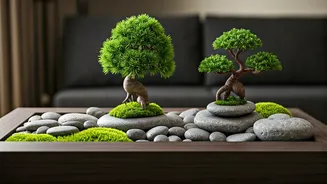
At its heart, a miniature Zen garden is a small-scale version of a traditional Japanese rock garden, or *karesansui*. These serene landscapes, which originated in medieval Japan with Zen Buddhist monks, use carefully arranged rocks, sand, and minimal
foliage to represent natural scenes like mountains, islands, and water. An indoor version brings this ancient contemplative practice into your home. It’s not just a piece of decor; it's an interactive tool for meditation and mindfulness. The simple components—a tray, sand, a few stones, and a small rake—work together to create a space dedicated to quiet reflection.
More Than Just Rocks and Sand
The true power of a Zen garden lies not in its appearance, but in the experience it provides. Engaging with it is a form of active mindfulness. The act of raking the sand into intricate patterns—lines representing water, circles around stones—requires focus. This simple, repetitive motion helps quiet the anxious, chattering part of your brain. It’s a sensory experience: the gentle scratching sound of the rake, the visual flow of the patterns, the cool smoothness of the pebbles. This process can help you enter a gentle “flow state,” where you are fully immersed in the present moment, temporarily setting aside daily worries and external pressures. It’s a physical anchor for your attention, making it an accessible entry point to meditation for those who find it difficult to simply sit still and quiet their thoughts.
Creating Your Personal Sanctuary
Building your own indoor Zen garden is a simple and rewarding project. You don’t need an expensive kit; the basic elements are easy to find. Start with a shallow tray or container—wood, ceramic, or even a sturdy picture frame with the glass removed will work. Fill it with fine-grain sand, which you can find at craft or pet stores. Next, select a few rocks or pebbles of varying sizes and textures. These are your “islands” or “mountains.” Choose stones that are visually appealing to you. You can add a single piece of faux bamboo or an air plant (like a Tillandsia) for a touch of green, but keep it minimal. The final, crucial piece is a small rake or stylus for drawing patterns in the sand. You can buy miniature rake sets or even use a simple fork or a pointed stick.
The Art of Mindful Raking
There are no rules for using your Zen garden. The goal is not to create a masterpiece, but to engage in the process. When you feel stressed or distracted, take a few minutes at your garden. Place your phone on silent. Begin by taking a few deep breaths. Then, pick up your rake and start to draw. You can create straight, flowing lines to mimic a river or concentric circles around a stone to suggest ripples in a pond. As you rake, focus on the physical sensation. Feel the handle of the rake and the resistance of the sand. If a thought or worry pops into your head, acknowledge it and gently return your focus to the pattern you’re creating. When you’re done, you can smooth the sand over and start fresh the next time. The impermanence is part of the practice—a reminder that thoughts and feelings, like patterns in the sand, come and go.