





A Sanctuary Above the Clouds
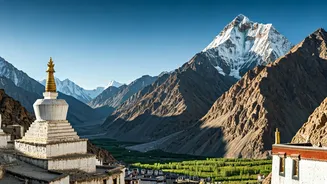
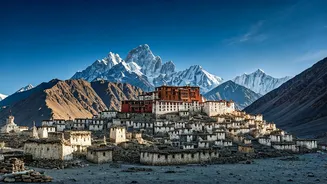
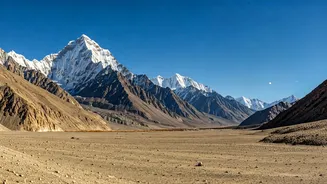
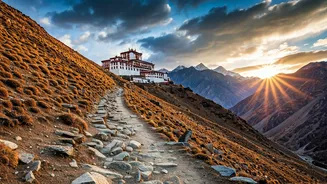
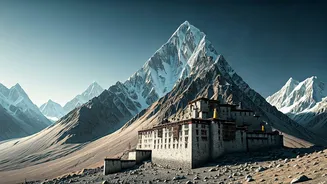
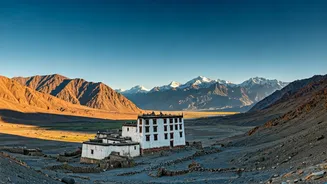
Getting to Hemis Monastery is part of its magic. Located about 25 miles from Leh, the capital of Ladakh, the journey takes you through a starkly beautiful, high-desert landscape. The monastery itself doesn't sit atop a dramatic cliff like some of its Himalayan
brethren. Instead, it’s nestled discreetly in a gorge, revealing itself almost as a surprise. Founded in the 17th century under the patronage of the Ladakhi king Sengge Namgyal, Hemis is the head monastery of the Drukpa Lineage, a major school of Tibetan Buddhism. This history imbues every stone and timber with a sense of profound heritage, making your arrival feel less like visiting a tourist site and more like stepping into a living, breathing chronicle of faith.
The Courtyard as a Beating Heart
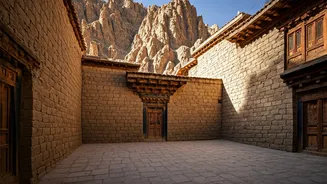
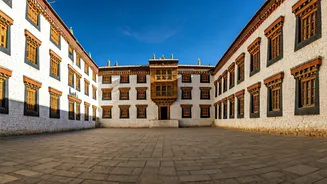
In many Western buildings, a courtyard is a pleasant but secondary feature—a place for a fountain or a bench. At Hemis, the main courtyard is the monastery's beating heart. This vast, rectangular space is where the sacred and the communal converge. It’s not a transitional area but a destination, designed to hold hundreds of monks and laypeople. The architecture intentionally directs all energy and focus inward, toward the center. Framed by two-story structures on all sides—the main prayer hall (Dukhang) and assembly halls—the courtyard serves as an open-air temple. It’s here that the famous Hemis Festival unfolds each summer, transforming the space into a vibrant stage for ancient ritual.
A Symphony of Color and Form
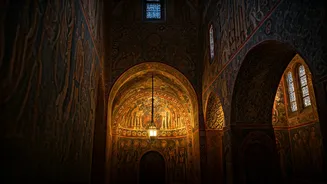
The architectural bliss comes from the stunning interplay of elements. The lower walls are whitewashed stone, grounding the structure in the earth. Above them, a riot of color and detail explodes. Intricately carved wooden balconies, pillars, and window frames—painted in deep reds, golds, blues, and greens—create a rich visual texture. These aren't merely decorative flourishes; they are symbolic. The murals depict deities, mandalas, and the life of Padmasambhava (Guru Rinpoche), the 8th-century master who brought Buddhism to Tibet. The colors themselves carry meaning: red for sacredness, white for purity, yellow for wisdom. Standing in the middle of the courtyard, surrounded by this visual language, you feel enveloped by a story that transcends words.
Designed for Ritual and Community
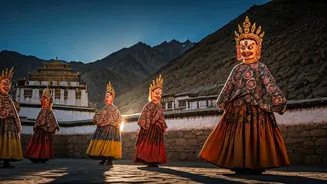
The genius of the design becomes most apparent during the Hemis Festival. The large, open flagstone floor becomes a sacred dance floor for the 'cham,' or masked dances, where monks embody deities to impart spiritual lessons. The surrounding wooden balconies, which feel so intimate and detailed up close, transform into perfect viewing galleries for onlookers. The acoustics of the enclosed space carry the sounds of long horns, cymbals, and drums, creating an immersive sensory experience. The architecture isn't just a backdrop for the ritual; it’s an active participant. It facilitates the gathering, frames the performance, and amplifies the spiritual energy of the event. It’s a space built for spectacle with a purpose.
The Beauty of Human Touch
Perhaps the most profound element of the courtyard’s bliss is its perfect imperfection. This is not the cold, precise geometry of a modern stadium. It's the work of generations of artisans. You can see the slight variations in the carvings, the patina of age on the painted wood, and the gentle wear on the stone floors from centuries of footsteps. This human touch gives the space a soul. It’s a reminder that this is a place of continuous practice, not a sterile museum piece. The architecture feels alive because it has been lived in, prayed in, and celebrated in for nearly 400 years. That history, baked into the very structure, is what elevates the experience from simply beautiful to truly blissful.