




A World Painted in Green
First, a quick geography lesson. Munnar isn't a single place but a town and hill station nestled in the Western Ghats mountain range in India’s southwestern state of Kerala, often called "God's Own Country." Situated at an altitude of around 5,200 feet,
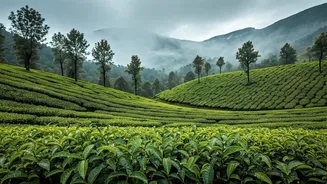
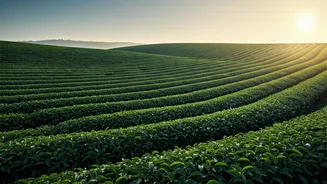
it was once the summer resort of the British Raj elite. Today, it’s a sprawling landscape of rolling hills carpeted with meticulously manicured tea plantations. The air is cool, crisp, and scented with the faint aroma of tea leaves and eucalyptus. Unlike the chaotic energy of India’s major cities, Munnar operates on a different rhythm—one dictated by mist-filled mornings, sun-drenched afternoons, and quiet, star-filled nights. The visual is staggering: a seemingly endless ocean of green, terraced with geometric precision, flowing over the curves of the mountains as far as the eye can see.
The Art of the Plantation
The “aesthetic” of Munnar is rooted in the very industry that defines it: tea. These aren’t just pretty fields; they are working plantations, some of which date back to the late 19th century. The largest player in the region, Tata Tea, even runs a museum where you can witness the journey of a tea leaf from bush to cup. But the real experience is driving or hiking through the estates. You’ll see tea-pluckers, mostly women, expertly gathering leaves with a skill passed down through generations. Their vibrant saris provide a stunning pop of color against the uniform green. Many estates, like the Kolukkumalai Tea Estate—one of the highest in the world—offer tours and tastings. Standing on a peak at sunrise, watching the clouds slowly burn off to reveal the emerald tapestry below, is a core memory for anyone who visits. It’s an immersion in a living, breathing agricultural landscape that feels both ancient and immaculately designed.
More Than Just Verdant Vistas
While the tea gardens are the main event, Munnar’s appeal is bolstered by its rich biodiversity and surrounding attractions. The region is a gateway to Eravikulam National Park, home to the endangered Nilgiri Tahr, a mountain goat native to the area. For those with a botanical interest, Munnar is famous for the Neelakurinji, a flower that blooms only once every 12 years, blanketing the hills in a spectacular blanket of purplish-blue. The next mass blooming is expected around 2030, making it a true bucket-list pilgrimage. Beyond nature, visitors can explore local spice gardens to see where cardamom, vanilla, and pepper grow, or trek to Anamudi Peak, the highest point in South India. This variety ensures that a trip to Munnar isn't a one-note experience; it’s a full-bodied adventure that engages all the senses.
Capturing the 'Aesthetic Goal'
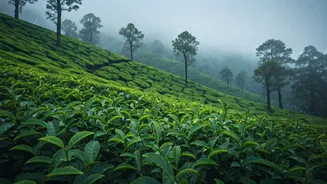
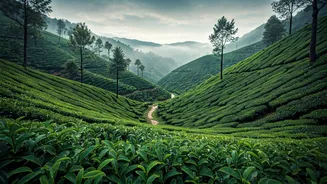
So why is this the *new* travel aesthetic goal? In an age of over-filtered perfection, Munnar offers something genuinely, overwhelmingly beautiful. It’s a photographer’s paradise, but not in a forced or artificial way. The 'perfect shot' isn't of a posed moment, but of the landscape itself. It’s the way the morning mist clings to the valleys, creating an ethereal, almost surreal atmosphere. It’s the golden hour light hitting the contoured ridges of the tea bushes, creating a play of light and shadow that looks like a painting. It’s the winding roads that snake through the hills, offering a new, breathtaking vista at every turn. For social media-savvy travelers, Munnar provides a backdrop that is both epic and serene—a quiet grandeur that stands out from the noise of typical travel content. It’s a visual that communicates peace, nature, and a journey to somewhere truly different.