





Ignoring the 'Stupid Motorist Law'
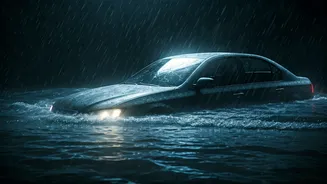
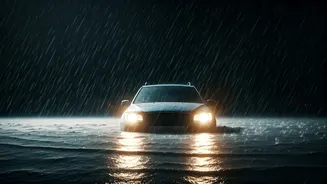
It’s the number one rule of monsoon driving, immortalized in Arizona’s famous “Stupid Motorist Law.” If you see a barricaded road or a flooded wash, do not attempt to drive through it. It’s impossible to judge the depth of moving water or the condition
of the road beneath it. A mere six inches of water can cause you to lose control, and just two feet can sweep most vehicles away, including SUVs and pickups. First responders are put at risk to rescue drivers who make this choice, and in states like Arizona, you could be billed for the cost of your own rescue. The official mantra is simple and effective: “Turn Around, Don’t Drown.”
Driving Too Fast on Slick Roads
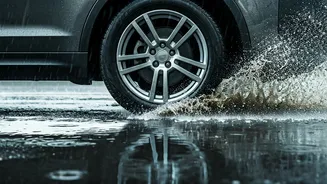
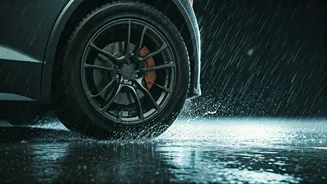
The first rain after a long dry spell is often the most dangerous. Weeks or months of oil, grease, and other fluids accumulate on the asphalt. When rain finally hits, it lifts this slick film to the surface before it can wash away, creating incredibly treacherous conditions. This is when hydroplaning is most likely. Hydroplaning occurs when a layer of water builds between your tires and the road, causing a loss of traction and steering control. Reducing your speed significantly is the only way to combat this. If you feel your car start to hydroplane, ease off the gas, do not slam on the brakes, and steer straight until you feel the tires regain contact with the road.
Panicking in a Dust Storm (Haboob)
A wall of dust, known as a haboob, can reduce visibility to zero in seconds. The instinctive but wrong reaction is to slow down dramatically or stop in a travel lane. This makes you a sitting duck for a rear-end collision. The correct procedure, promoted by the Arizona Department of Transportation, is “Pull Aside, Stay Alive.” Pull your vehicle as far off the pavement as possible, turn off all your lights (including headlights and brake lights), and take your foot off the brake. If your lights are on, other drivers might follow them, assuming you are in a travel lane, and crash into you. Wait for the storm to pass before re-entering the roadway.
Following Other Cars Too Closely
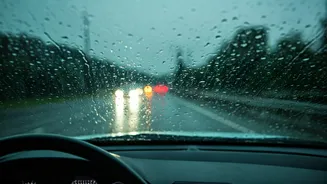
In perfect conditions, maintaining a three-to-four-second following distance is standard advice. During a monsoon downpour, you need to double that. Heavy rain severely limits visibility and increases your vehicle's stopping distance. Tailgating leaves you with zero margin for error if the driver ahead of you brakes suddenly for a flooded dip in the road or an unseen obstacle. Give yourself plenty of space—at least six to eight seconds of following distance—to see and react to hazards. This simple cushion of time and space is one of the most effective safety tools you have in bad weather.
Forgetting Basic Car Maintenance
Your car’s equipment is your first line of defense. The most common maintenance-related mistakes are worn-out tires and old windshield wipers. Tires with inadequate tread can't channel water away effectively, making hydroplaning almost inevitable. Check your tire pressure and tread depth before the season starts. Likewise, cracked or hardened windshield wiper blades won’t clear your view; they’ll just smear water across the glass, making a bad situation worse. A fresh set of wipers is an inexpensive and critical piece of safety equipment for monsoon season.
Using Cruise Control in the Rain
Cruise control is a fantastic tool for long, dry highway drives, but it’s a liability in wet weather. The system is designed to maintain a constant speed, and if you start to hydroplane, it will want to accelerate to compensate for the perceived slowdown when the tires lose traction. This can cause you to lose control completely. When the road is wet, your foot should be in charge of the accelerator, not the car’s computer. Disengaging cruise control allows you to make the subtle adjustments in speed necessary to navigate slick surfaces safely and feel the moment your tires begin to lose their grip.