






The Quest for Something Real
Let’s be honest about the 'sad wellness bowl.' It’s often a pile of quinoa, some wilted greens, a few chickpeas, and a protein source so lean it seems apologetic for existing. It’s food as fuel, food as obligation, food as a joyless transaction to get you
through an afternoon of Zoom calls. It’s the culinary equivalent of a minimalist condo with no art on the walls—clean, functional, and utterly devoid of personality. These bowls are products of a wellness culture that often mistakes restriction for virtue and photogenic aesthetics for actual flavor. Contrast this with a bowl of New England clam chowder on a brisk autumn day. It’s creamy, briny, and packed with tender clams and soft potatoes. It doesn’t just fill you up; it warms you from the inside out. It tastes like a specific place—the rocky shores of the Atlantic. It has a history, a point of view. It wasn’t engineered in a venture-backed fast-casual chain’s test kitchen; it was perfected over generations in coastal homes and seaside shacks. That authenticity provides a satisfaction that no amount of spiralized zucchini can replicate.
Flavor Is Not the Enemy
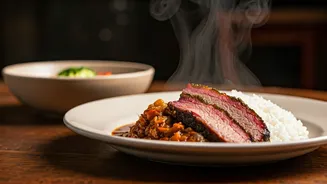
Somewhere along the line, the wellness movement convinced a lot of people that bold flavor was synonymous with being 'unhealthy.' Fat, salt, and spice—the holy trinity of deliciousness—were cast as villains to be avoided. The result is a landscape of meals that require a drizzle of expensive dressing just to be palatable. The sad wellness bowl is fundamentally timid. Now, think of Texas barbecue. Imagine a slow-smoked brisket, with its peppery bark and meltingly tender interior. The flavor isn’t an afterthought; it’s the entire point. It’s the result of time, technique, and a deep understanding of how to turn a tough cut of meat into something sublime. Or consider the complex fire of a proper Louisiana gumbo, with its dark roux, andouille sausage, and the 'holy trinity' of onion, celery, and bell pepper. These dishes aren’t afraid to be themselves. They are unapologetically rich, smoky, spicy, and deeply savory. They remind us that eating should be a celebration for the senses, not a punishment.
A Connection to Place and People
A grain bowl is a citizen of nowhere. You can get the same kale-and-farro concoction in Los Angeles, Chicago, or Boise. It’s a generic foodstuff, disconnected from local agriculture, climate, or culture. It’s culinary anonymity, assembled from a global supply chain and marketed with vague promises of 'vibrancy.' Regional food, by its very definition, is the opposite. It is intrinsically tied to a place and its people. Cincinnati chili tells a story of Greek immigrant ingenuity in the Midwest. A Sonoran hot dog speaks to the cross-border culture of Arizona and Mexico. Eating a Lowcountry boil in South Carolina isn't just a meal; it's a communal event that connects you to the coast, the shrimping industry, and a specific way of life. These dishes are edible history lessons. They carry the stories of migration, adaptation, and local pride. They are dishes that you share with family and friends, recipes passed down through generations, and the heart of countless community gatherings. A wellness bowl is eaten. A regional specialty is experienced.
The Joy of Honest Indulgence
This isn't a call to abandon all healthy habits. It’s a call to reconsider what 'well-being' truly means. Is it a rigid, ascetic discipline of bland inputs? Or is it a more holistic state that includes joy, pleasure, and cultural connection? The satisfaction from eating a truly great meal—one made with care and bursting with flavor—is a powerful form of wellness in itself. It nourishes the soul as much as the body. A sad wellness bowl might tick all the macronutrient boxes, but it rarely leaves you feeling genuinely happy. It’s a meal you endure. A plate of chicken-fried steak with gravy, on the other hand, is a meal you remember. It’s an indulgence, yes, but an honest one. It doesn’t pretend to be anything other than what it is: a hearty, comforting, and ridiculously delicious piece of American culinary heritage.