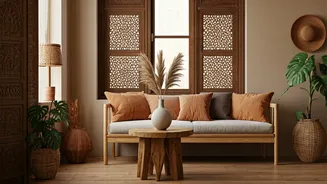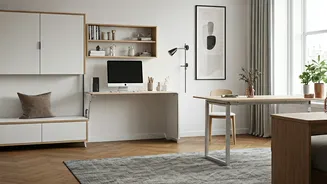

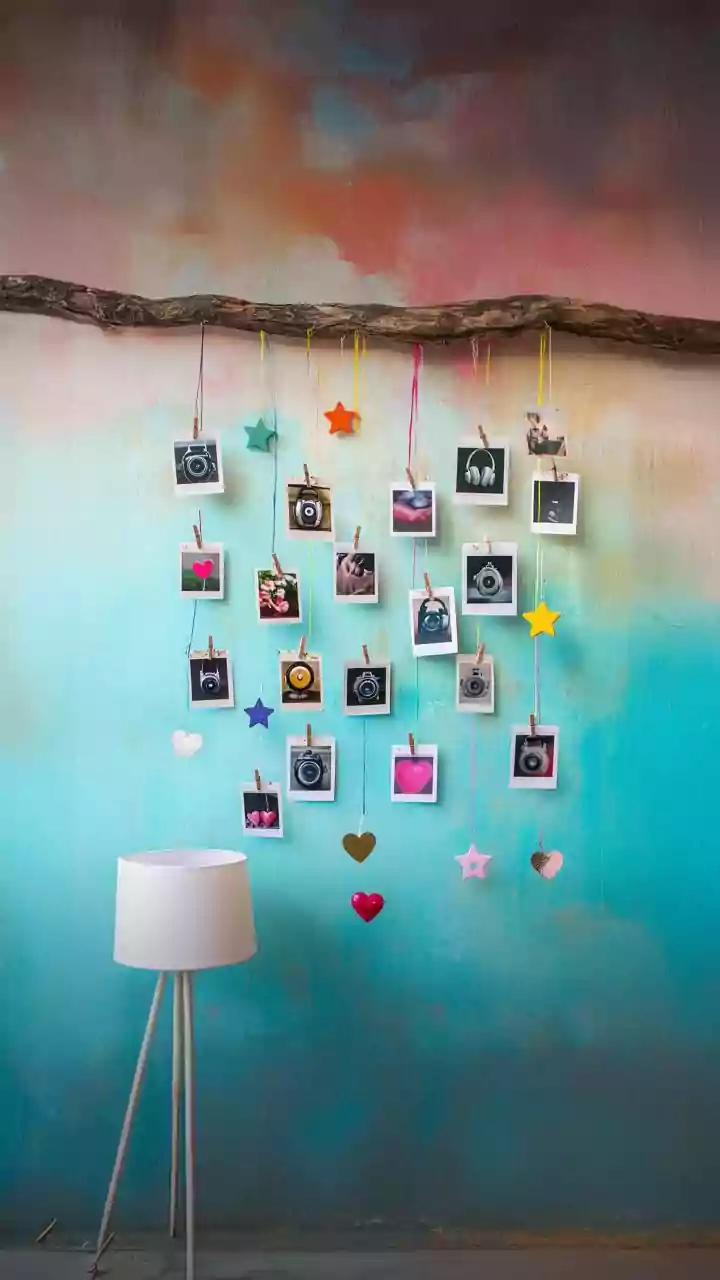
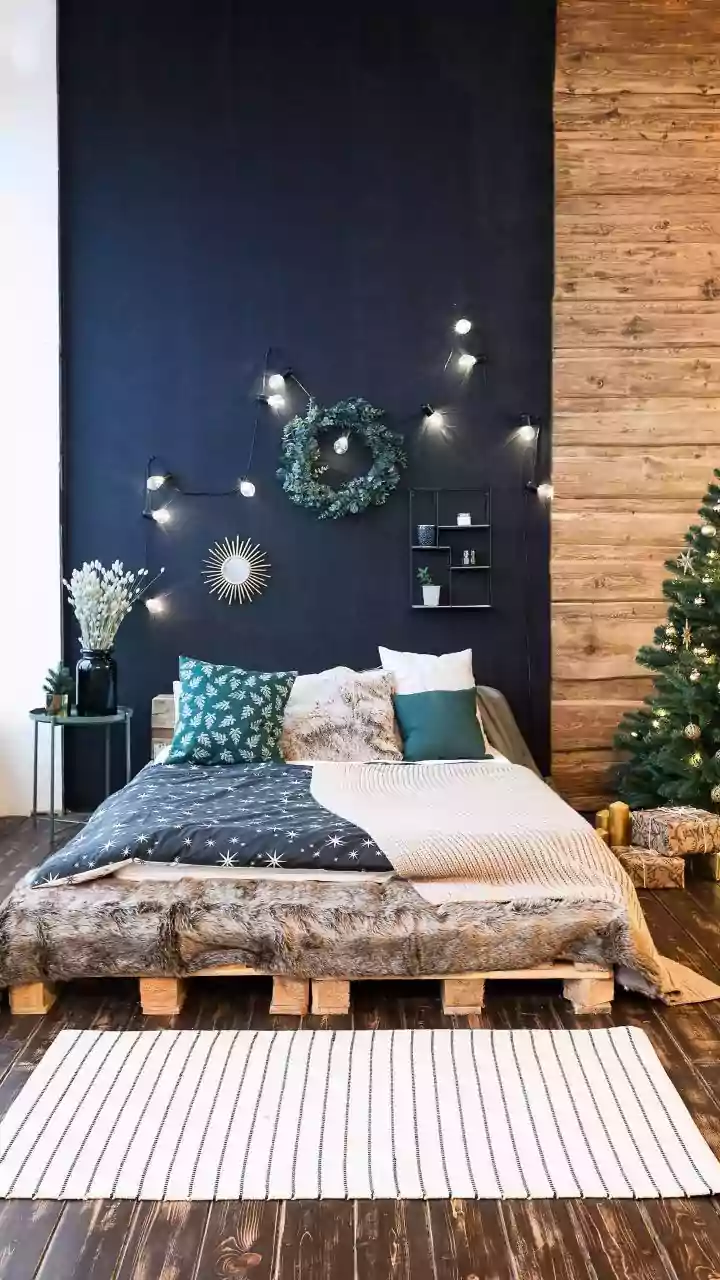
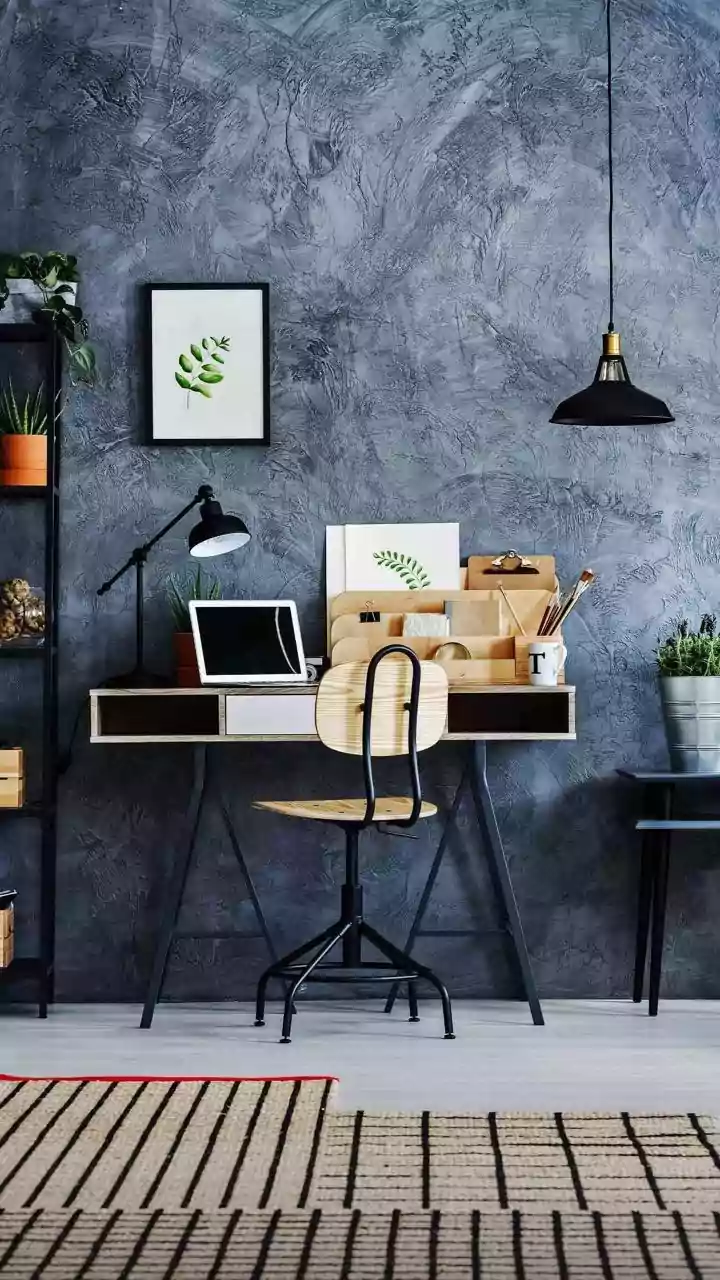
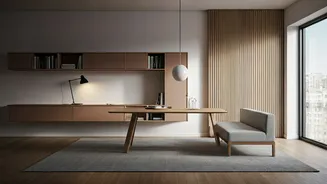

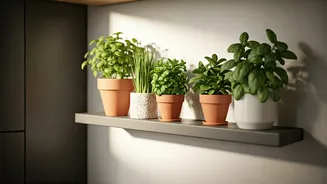
1. Master the Art of Zoning
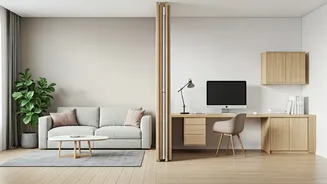
Your living room doesn't have walls to separate it from your dining room or office, so you have to create them visually. This is called zoning. The easiest way to do this is with area rugs. A rug under your sofa and coffee table carves out a distinct
“living zone.” A different, smaller rug might define your desk area. You can also use furniture placement to create invisible walls. Floating a sofa in the middle of a room, rather than pushing it against a wall, can create a natural walkway behind it, separating the lounge area from, say, a workout corner. Bookshelves placed perpendicular to a wall can also act as stylish, light-permitting room dividers, offering separation without sacrificing openness.
2. Invest in Double-Duty Furniture
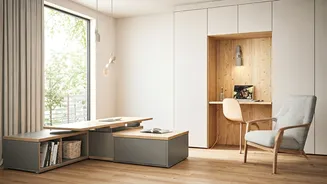
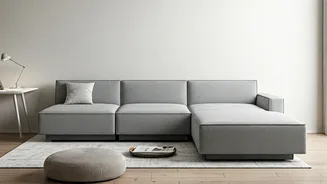
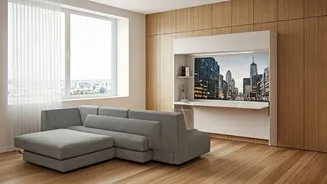
In a space where every square foot counts, every piece of furniture must earn its keep. Look for items that serve at least two functions. A storage ottoman can hold blankets, serve as a coffee table (with a tray on top), and provide extra seating. An extendable dining table can stay small for daily meals and expand to host friends. Sleeper sofas have improved dramatically in comfort and style, making them a viable primary couch and a guest bed. Think about coffee tables that lift to become desks, or beds with built-in drawers underneath. This isn't just about saving space; it's about building flexibility directly into your environment.
3. Get Smart with Vertical Space
When you can't build out, build up. Your walls are your most underutilized asset. Install floor-to-ceiling shelving to draw the eye upward and create an enormous amount of storage for books, decor, and bins. A well-placed floating shelf can become a minimalist nightstand, a charging station, or a place to display art without taking up floor real estate. Consider a pegboard system in your “office” zone for an adaptable way to store supplies. In the kitchen area, use a magnetic knife strip and hanging pot racks to free up precious counter and drawer space. Your floor plan is finite, but your wall space is a blank canvas.
4. Control Clutter with Smart Storage
A room's function is defined by what’s visible. When your work laptop is out, it's an office. When your yoga mat is unrolled, it's a gym. The key to seamless transitions is having an elegant and easy system for putting things away. This means choosing closed storage—cabinets, credenzas, and decorative boxes—over open shelving for unsightly items like cables, paperwork, and workout gear. A beautiful sideboard can hide your printer and office supplies, allowing the room to feel like a dining area in the evening. The mantra is: “a place for everything, and everything in its place.” When cleanup is quick, switching from “work mode” to “relax mode” becomes a simple, stress-free ritual.
5. Use Lighting to Change the Mood
Lighting is a powerful and often overlooked tool for defining a space. A single, harsh overhead light makes a room feel like a cafeteria. A layered lighting scheme, however, can create different moods and functional zones. Put your overhead light on a dimmer switch. Use a focused task lamp at your desk for work. Add a stylish floor lamp in your reading corner to create a cozy nook. Use warm, low-level table lamps in the evening to signal that it’s time to wind down. By simply flipping a few switches, you can transform the feel of the entire room, shifting its purpose from a bright, energetic workspace to a calm, intimate living area.