



What is the Rath Yatra?
At its heart, the Rath Yatra, or “Chariot Festival,” is one of the most important religious events in Hinduism. It takes place annually in the coastal city of Puri in the eastern state of Odisha. The festival honors the journey of Lord Jagannath—an incarnation
of Vishnu—along with his elder brother Balabhadra and younger sister Subhadra. For this one time each year, the deities leave the inner sanctum of the revered Jagannath Temple to travel in public, giving everyone, regardless of caste or creed, the chance to see them. This procession is not a parade; it is a sacred pilgrimage, a journey from their main temple to the Gundicha Temple, believed to be their aunt’s home, where they will rest for nine days.
The Chariots of the Gods
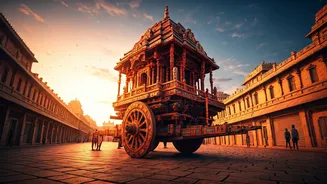
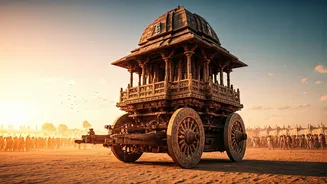
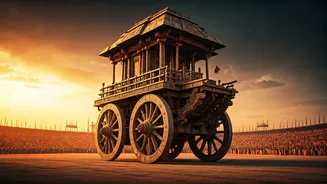
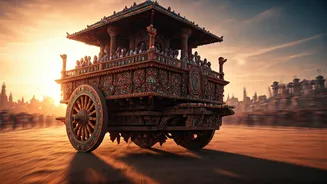
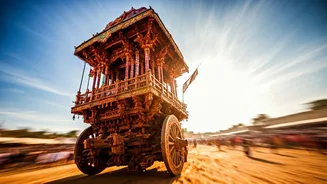
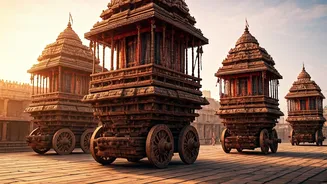
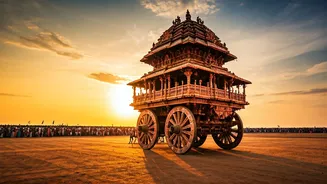
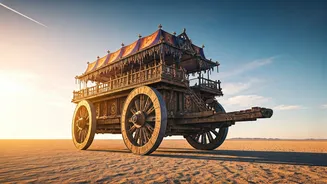
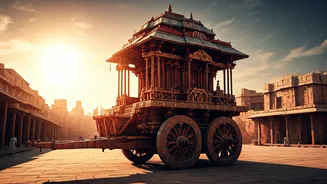
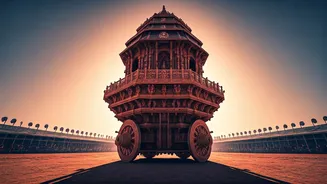
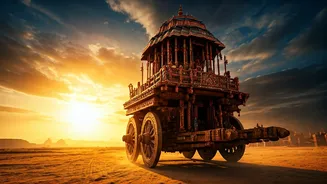
The centerpiece of the festival is the three colossal chariots, or “rathas.” These are not mere floats. Each one is a newly built architectural marvel, constructed over 42 days by a dedicated team of carpenters using traditional methods passed down through generations. Lord Jagannath’s chariot, Nandighosa, stands roughly 44 feet tall, with 16 massive wheels, and is draped in vibrant red and yellow fabrics. Balabhadra’s chariot, Taladhwaja, is covered in red and green, while Subhadra’s, Darpadalana, uses red and black. The sheer scale is breathtaking, and the craftsmanship is a testament to faith. On the day of the festival, these towering structures become the temporary, mobile homes for the deities, turning the city’s main thoroughfare into a sacred, moving spectacle.
A Journey Fueled by Devotion
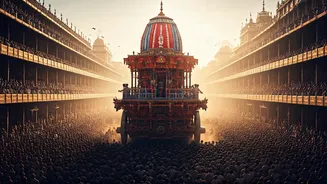
The engine of this festival is pure, unadulterated devotion. The chariots do not move on their own. They are pulled by thousands of devotees using long, thick coir ropes. The act of pulling the ropes is considered deeply auspicious, a service to the gods that can bring spiritual merit. The three-kilometer procession route, known as the Bada Danda or Grand Avenue, becomes a river of humanity. The air is thick with the sounds of chanting, the ringing of bells, and the clang of cymbals. The energy is electric and overwhelming. For pilgrims who travel from across India and the world, simply catching a glimpse of the deities on their chariots—an act known as darshan—is a profound moment of spiritual connection. This raw, collective expression of faith is what transforms a crowded street into a sacred space.
More Than a One-Day Event
While the main procession is the most famous part, the Rath Yatra is a nine-day affair steeped in ritual. After arriving at the Gundicha Temple, the deities reside there for a week. During this time, the temple becomes a focal point for prayers and cultural performances. The festival culminates in the Bahuda Yatra, the return journey, where the deities are pulled back to the main Jagannath Temple on their chariots. Even this return is filled with ceremony, including a stop where Lord Jagannath is offered a special sweet cake. The final rituals involve re-installing the deities in the main temple, concluding a cycle that is as much about community and tradition as it is about theology. It’s a living tradition that animates an entire city for more than a week.