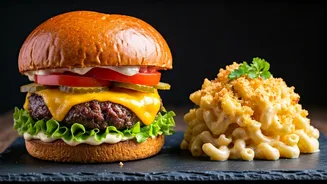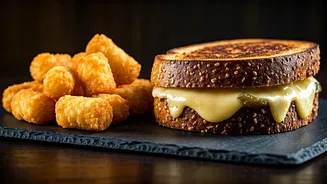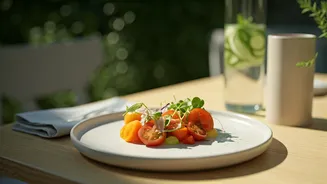

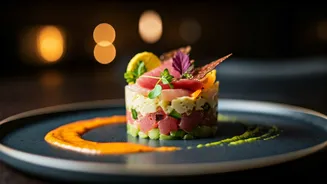
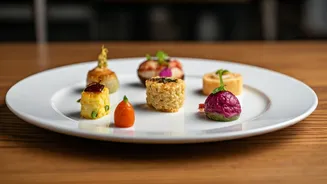
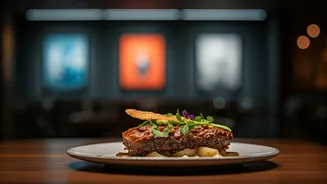


The End of Entrée Tyranny
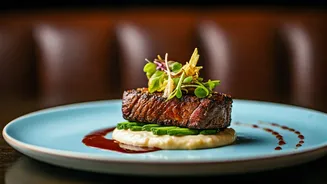
For decades, the restaurant menu was a straightforward contract. You chose one appetizer, one main course, and you were locked in. But in a world overflowing with choice, that commitment started to feel less like a treat and more like a trap. What if
you picked wrong? This is the core of what’s been called “entrée-FOMO”—the fear of missing out on all the other delicious possibilities on the menu. The small plates model shatters this paradigm. Instead of one big bet, you’re making several small, low-risk wagers. You can try the spicy tuna, the crispy Brussels sprouts, *and* the whipped ricotta toast. This approach caters directly to a modern consumer desire for personalization and control. It’s less about the chef’s singular vision for your plate and more about you curating your own culinary journey. Dining becomes an act of discovery, not just consumption. For a generation raised on endless scrolling and customizable everything, it’s a format that just makes intuitive sense.
Dining for the Instagram Feed
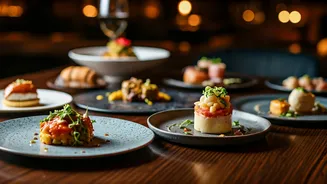
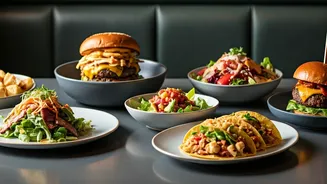
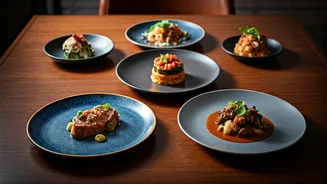
It’s impossible to talk about modern dining without talking about social media. A single, monolithic plate of brown food, no matter how delicious, doesn’t exactly pop on an Instagram feed. A table laden with four, five, or six different dishes, however, is a feast for the eyes. It offers color, texture, and a sense of abundance and variety. It tells a more compelling visual story.
Restaurants are keenly aware of this. A visually appealing spread of small plates is free marketing, shared across networks by diners eager to broadcast their excellent taste and fun-having. This has created a feedback loop: diners want shareable moments, and restaurants design menus that provide them. The result is an aesthetic shift toward meals that are inherently more photogenic, transforming the dinner table into a mini-photo shoot and every diner into a potential food influencer.
It’s About Connection, Not Just Consumption
Perhaps the most significant driver behind this shift is social. A table where everyone is silently focused on their own personal entrée creates invisible walls. A table built around shared plates forces interaction. It prompts conversation: “You have to try this,” “Pass the calamari,” “What was your favorite?”
The meal becomes a collaborative, communal event rather than a series of parallel, individual experiences. It slows down the pace of eating, encouraging people to linger and connect. In an increasingly digital and isolated world, the act of sharing food offers a tangible, real-world antidote. It’s a return to a more ancient form of eating, where the fire pit or the family pot was the center of social life. By breaking the entrée format, we’re not just changing what we eat; we’re changing how we eat together.
The Illusion of Control and Wellness
The small-plates trend also aligns perfectly with contemporary ideas about wellness and finance. Confronted with a giant plate of pasta, portion control is an exercise in pure willpower. With small plates, control is built into the format. You eat a little of this, a little of that. It feels less gluttonous and more like mindful sampling, even if the total caloric intake ends up being the same or higher.
There’s an economic psychology at play, too. A $38 steak can feel like a major commitment, but four $12 plates somehow feel more manageable and less extravagant. While diners often end up spending just as much, if not more, the lower price-per-item lowers the barrier to entry, making it feel like a more accessible way to experience a restaurant’s menu. It’s a win-win: diners feel they’re getting variety and value, while restaurants often see a higher per-person average.