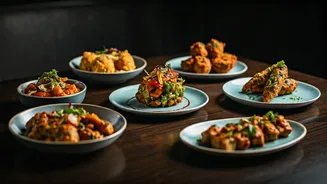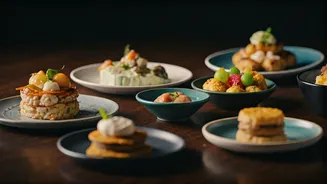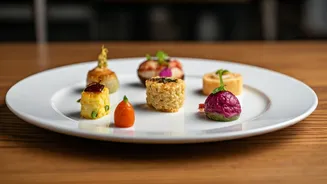




An Entire Meal on a Single Plate
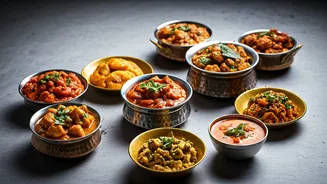
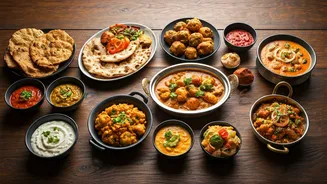
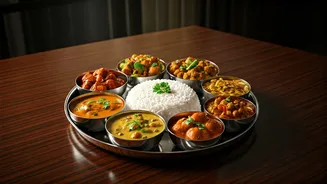
First, let's define our terms. A thali (Hindi for 'plate') is a traditional Indian meal format where a variety of dishes are served on a single platter, usually round and made of steel. In the center, you might have rice or flatbreads like roti or naan.
Surrounding it are a constellation of small bowls, called katoris, each holding a different component. A typical thali aims for a complete, balanced flavor profile, incorporating sweet, salty, sour, spicy, bitter, and astringent tastes. You might find a lentil dal, a vegetable curry, a yogurt raita, a tangy pickle, a crunchy papadum, and a small dessert—all in one go. It’s not a tasting menu or a random assortment; it’s a complete, harmonious meal curated for one.
Why It's Built for the Modern Diner
The thali format neatly solves several modern dining dilemmas. Americans have fallen hard for the 'small plates' concept, from Spanish tapas to Greek mezze, driven by a desire for variety. The thali delivers this variety without the logistical headache of ordering ten separate items for the table. It’s a self-contained tasting journey. Furthermore, in an age of customization, the thali offers a perfectly portioned, personal experience. You get to sample everything without committing to a massive, single-note entrée. This built-in portion control appeals to health-conscious diners and those looking to reduce food waste. It’s the antithesis of the oversized, everything-is-extra American plate, offering indulgence through diversity, not just volume.
Curation Over Endless Choice
It’s crucial to distinguish the thali from its chaotic cousin, the all-you-can-eat buffet. A buffet presents endless, often overwhelming, choice and encourages diners to pile their plates high. The result is frequently a mishmash of flavors that don't belong together. A thali, by contrast, is an act of curation. The chef has already made the decisions for you, carefully balancing textures, temperatures, and tastes to create a cohesive culinary narrative. This is a quiet luxury in a world saturated with choice. It allows the diner to simply trust the kitchen and enjoy the experience. This guided tour is a hallmark of high-end dining, but the thali makes it accessible, democratic, and deeply satisfying.
The Format's Future in America
So why is the thali poised for a breakout moment by 2026? Because its core principle—a curated, multi-item, single-person platter—is incredibly adaptable. Innovative Indian restaurants across the U.S. are already re-popularizing it, presenting beautiful, Instagram-worthy platters that tell a story of a specific region or culinary philosophy. But the format's potential extends beyond Indian cuisine. Imagine a 'Southern thali' with small bowls of mac and cheese, collard greens, pulled pork, cornbread, and a bite of peach cobbler. Or a 'deconstructed sandwich' thali, with separate components ready to be mixed and matched. As chefs and restaurateurs look for new ways to deliver exciting, memorable, and operationally efficient dining experiences, the thali format provides a brilliant template. It's structured yet flexible, traditional yet perfectly suited for the future of how we want to eat.