




Meet the Cosmic Powerhouse
Deep in the constellation Serpens Caput, about 2.4 billion light-years away, sits a quasar named PDS 456. A quasar is essentially the super-bright, hyperactive core of a young galaxy, powered by a gargantuan black hole feeding on a buffet of surrounding
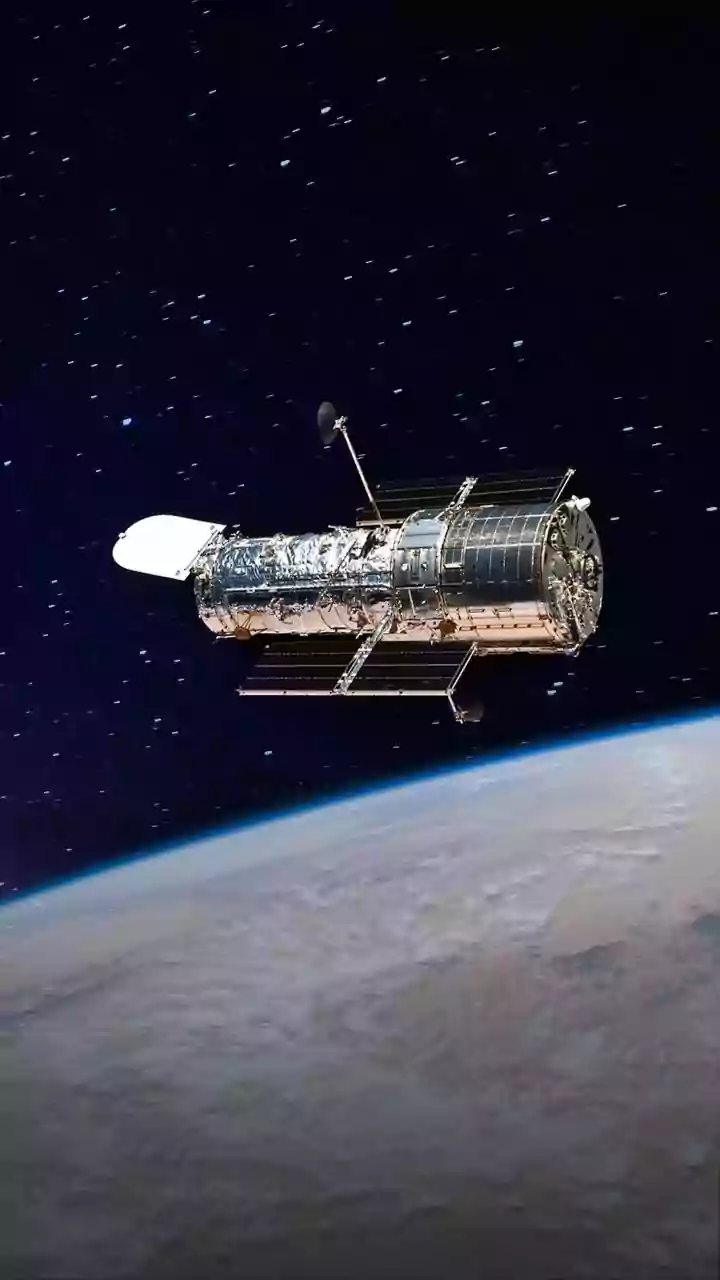
gas, dust, and stars. Think of it less as a gentle celestial object and more as a cosmic engine of unimaginable violence. Using data from NASA's NuSTAR and the European Space Agency's XMM-Newton space observatories, scientists detected something extraordinary being blasted away from PDS 456: a torrent of charged particles moving at mind-boggling speeds. This isn't a gentle breeze; it's a stellar gale of epic proportions, and it’s one of the most powerful of its kind ever observed.
What Is a Black Hole Wind?
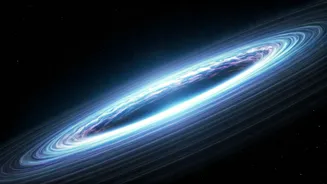
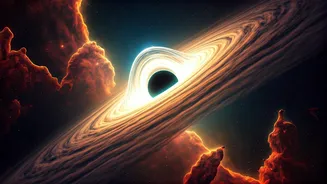
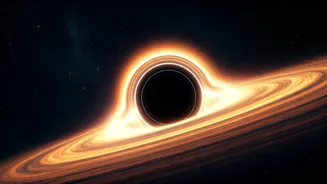
When you hear 'wind,' you probably think of air moving through the trees. A black hole wind is something else entirely. As a supermassive black hole pulls material toward it, not everything makes it past the point of no return. Instead, a massive, spinning platter of superheated gas and dust—called an accretion disk—forms around the black hole. This disk gets so hot and bright from friction and radiation that it can outshine its entire host galaxy. The intense radiation pressure acts like a firehose, blasting some of that material outward at incredible speeds before it ever gets consumed. This outflow is the 'wind.' In the case of PDS 456, this wind is nearly spherical, meaning it’s not just a narrow jet but a massive, expanding shell of energy pushing outward in almost all directions.
Just How Fast Is 'Record-Breaking'?
So, what does it mean to break a cosmic speed record? The wind from PDS 456 is traveling at up to 20% the speed of light. Let's put that in perspective. The speed of light is about 186,282 miles per second. This wind is rocketing outwards at over 37,000 miles *per second*. If it were on Earth, it could circle the equator nearly one and a half times in a single second. While other black holes have been seen shooting out narrow, focused jets of material at near light-speed, this type of broad, spherical outflow from PDS 456 is among the fastest and most energetic ever confirmed. Every second, this wind carries more energy away from the black hole than is emitted by more than a trillion suns. It's not just fast; it’s colossally powerful.
The Galaxy's Architect
This discovery is more than just a new entry in the cosmic record books. It provides a crucial key to a long-standing puzzle in astronomy: why aren't giant galaxies even bigger? Models suggest large galaxies should have many more stars than they do. The answer may lie in these ultra-fast outflows. A wind as powerful as the one from PDS 456 acts as a form of 'galactic feedback.' It's strong enough to blow away the galaxy's supply of cold gas, the raw material needed to form new stars. By clearing out the pantry, the hyperactive black hole effectively shuts down star formation in its own galaxy, regulating its size and growth. It’s a dramatic example of a black hole not just destroying things, but actively shaping the evolution of the entire galaxy it inhabits. It’s the ultimate cosmic balancing act, where the central engine determines the fate of a structure hundreds of thousands of light-years across.