




Capture More Than Just a Photo
We've all been there: standing in front of a magnificent landmark, we snap a dozen photos and move on, feeling like we’ve “captured” it. But have we really seen it? An art journal forces you to do something radical in the age of rapid-fire tourism: slow
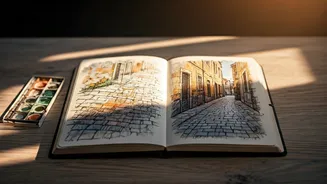
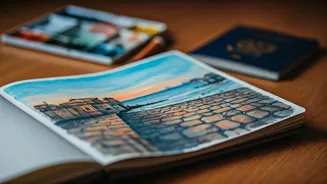
down. The five or ten minutes you spend sketching a doorway, a coffee cup, or a stranger’s hat requires a level of focused observation that a camera click simply can’t replicate. You’ll notice the texture of the stone, the way the light hits the ceramic, the specific shade of blue in the fabric. It’s the difference between collecting images and collecting moments. This isn’t about creating a masterpiece; it’s about paying attention. The resulting sketch becomes a key that unlocks a rich, sensory memory—the smell of the bakery next door, the sound of the local language, the warmth of the sun on your neck.
You Don't Have to Be an Artist
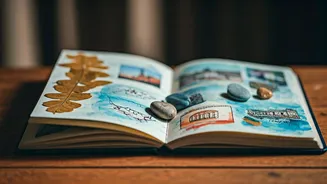
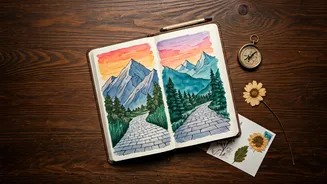
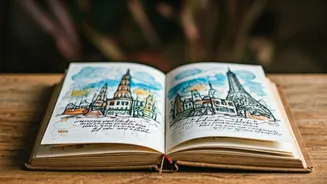
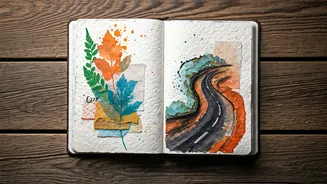
Let’s get this out of the way: the biggest barrier to starting an art journal is the belief that you “can’t draw.” This is a myth. An art journal is for you and you alone. It is not a portfolio to be judged. It’s a private space for observation and play. Give yourself permission to be imperfect. Your lines can be wobbly, your proportions off, your colors completely imaginary. The goal is to document your personal experience. Think of it as visual note-taking. You can combine scribbled drawings with written words, ticket stubs, and pressed leaves. Use stick figures. Draw a map of your walk. Label colors with words. If you can write your name, you can do this. The reward isn't a perfect drawing, but the act of looking closely enough to try.
Your Simple, Travel-Ready Kit
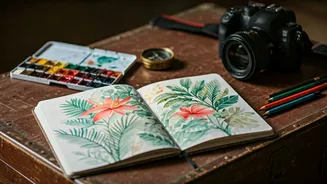
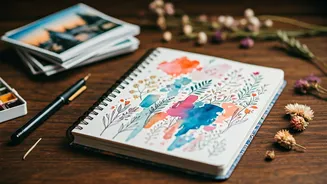
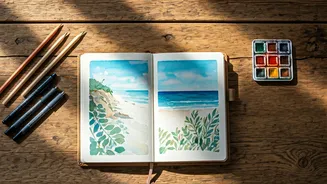
You don't need a bulky, expensive art setup to get started. In fact, a minimalist kit is better, as you’ll be more likely to carry and use it. Here’s a perfect starter pack that fits in any small bag: 1. The Journal: A small, sturdy notebook (around 5x8 inches) with thick, unlined paper that can handle ink and a bit of watercolor without bleeding through. Brands like Moleskine Art or Stillman & Birn offer great options. 2. The Pen: One good, waterproof black pen. A Micron Pigma (size 05 is versatile) or a Faber-Castell Pitt artist pen is perfect. Waterproof ink means you can add color over your lines without smudging. 3. The Color: A small, travel-sized watercolor palette. A simple student-grade set with 12 half-pans is more than enough. Alternatively, a few water-soluble colored pencils or watercolor brush pens offer a mess-free way to add a splash of color.
Quick Prompts to Break the Blank Page
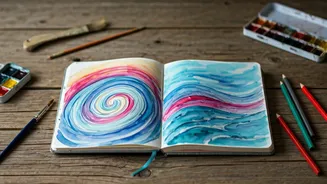
Staring at an empty page can be intimidating. The key is to start small and specific. Don't try to draw the entire Eiffel Tower. Instead, pick a tiny, manageable detail. Here are a few prompts you can do in under 10 minutes: * Your Morning Coffee: Sketch the cup and saucer at your favorite cafe. * A Single Detail: Draw a doorknob, a window latch, or an interesting tile from the floor. * Food Cart Finds: Quickly sketch the street food you just bought. * Textural Rubbing: Place a leaf or coin under the page and rub over it with the side of a pencil. * Abstract Colors: Forget objects. Just paint swatches of the dominant colors you see around you—the blue of the sea, the yellow of the taxis, the green of the park.