








Understanding the Need for Height
Cats are, by nature, both predator and prey. Their instinct tells them that high ground offers a tactical advantage. From a perch, they can survey their territory for potential threats and opportunities (like an unsuspecting toy mouse) without feeling
vulnerable. In the wild, climbing trees and rocks provides safety from larger predators on the ground. This hardwired impulse doesn't disappear just because they live indoors. When a cat climbs, they are tapping into a core part of their identity. A lack of vertical space can lead to stress and anxiety, as they may feel perpetually exposed and unable to retreat to a secure position.
The Benefits of a 'Cat Superhighway'
The concept of a 'cat superhighway'—a series of interconnected shelves, perches, and cat trees—was popularized by cat behaviorist Jackson Galaxy. It's more than just a place to nap; it's a dedicated environment that provides crucial enrichment. For a shy or timid cat, a high perch can be a confidence-building sanctuary. In a multi-cat household, vertical territory helps establish social hierarchy and reduces conflict over floor-level resources like food bowls or litter boxes. Cats can pass each other without forcing a confrontation. It also encourages exercise, as they leap, climb, and balance, keeping them physically active and mentally engaged. This can prevent boredom-related behaviors like destructive scratching or over-grooming.
Choosing the Right Shelves
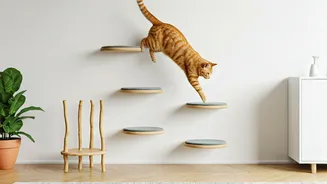
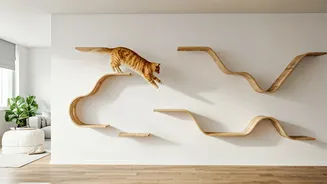
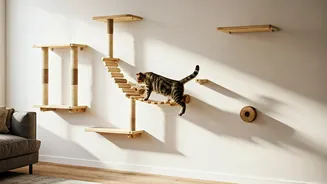
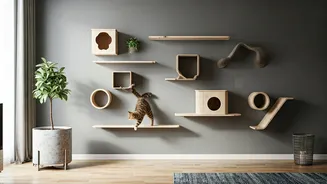
When shopping for cat shelves, function should trump form, but you can certainly find options that match your home decor. Look for shelves that are deep enough for your cat to comfortably loaf or turn around on—at least 10-12 inches is a good starting point. The surface material is also key. Bare, slick wood can be difficult for cats to grip. Opt for shelves that are carpeted or have a non-slip fabric covering. If you prefer a minimalist wood look, you can easily add a piece of carpet remnant or a sisal mat with adhesive backing. Many companies now sell complete 'catification' kits with various shelf sizes and steps, taking the guesswork out of the equation. Staggered individual floating shelves also work well, allowing you to create a custom path.
Planning Your Vertical Layout
A single, isolated shelf is a start, but a connected pathway is the ultimate goal. Think like a cat: where would you want to go? An ideal cat highway has clear entry and exit points. Start the path near a piece of furniture your cat already uses, like a sofa, cat tree, or sturdy bookcase, to give them an easy 'on-ramp.' Plan the route to lead to a desirable destination, such as a sunny window with a view of the bird feeder, or a cozy, high-up corner for napping. The spacing between shelves is critical. Measure your cat’s comfortable jumping distance—both horizontally and vertically—to ensure the path is challenging but not dangerous. A good rule of thumb is no more than a few feet between shelves, allowing for a confident leap.
Safety and Installation Are Key
This is the most important step. A wobbly or poorly installed shelf is a serious hazard. Your cat's full, flying weight will be landing on these surfaces, so they must be anchored securely. Whenever possible, screw the shelf brackets directly into wall studs. A stud finder is an inexpensive and essential tool for this job. If a stud isn't available in your desired location, use heavy-duty drywall anchors rated to hold significantly more than your cat's weight—aim for anchors rated for 50 pounds or more to be safe. After installation, test every single shelf by pressing down on it firmly with your own weight. If it wiggles or gives at all, reinforce it before you let your cat explore. A secure environment is a happy environment.