






The Legend of the Garden Guardian
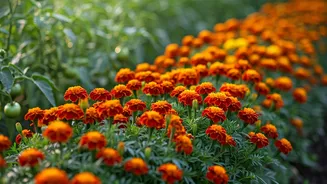
Walk into any garden center, and you’ll likely hear someone recommend marigolds as a natural pest deterrent. The story goes that planting them around your tomatoes, beans, and other prized vegetables creates a protective barrier. Their famously strong,
pungent scent is said to confuse or repel a host of unwanted visitors, from tiny aphids to destructive nematodes, all while providing a continuous burst of yellow, orange, and red blooms from spring until the first frost. This two-for-one promise—beauty and brawn—has made marigolds a staple of companion planting for generations. It’s an appealingly simple, organic solution. But like many pieces of handed-down wisdom, the reality is a little more complex and a lot more interesting.
The Real Pest Control: Below the Soil
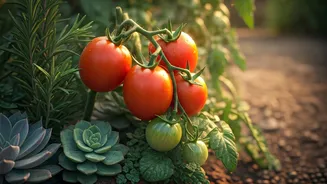
The strongest scientific evidence for marigolds’ pest-fighting power lies not in what they do above ground, but what happens beneath the soil. The roots of certain marigold varieties, specifically French marigolds (Tagetes patula), release a chemical compound that is toxic to a group of microscopic, plant-destroying worms called root-knot nematodes. These pests are a serious problem for home gardeners, attacking the roots of tomatoes, peppers, and other vegetables, causing stunting and poor yields. However, it’s not a magical force field. To be effective, the marigolds must be planted densely in an infested area and allowed to grow for an entire season. For maximum benefit, many farmers and gardeners will till the mature marigold plants into the soil at the end of the season, which releases a higher concentration of the nematicidal compounds. So, while a few marigolds scattered among your tomatoes won’t create a nematode-free zone, a dedicated planting can absolutely help cleanse the soil for the following year's crop.
Above Ground: Scent, Confusion, and Myths
What about the bugs we can see? This is where the claims get a bit fuzzier. The strong scent of marigolds can, in some cases, help mask the smell of your vegetable plants, making it slightly harder for certain pests like whiteflies to find their targets. Think of it less as a repellent and more as camouflage. However, marigolds are not a silver bullet. They won’t stop a determined squash bug or cabbage worm. In fact, some pests are actually attracted to them; spider mites, in particular, can thrive on marigolds in hot, dry weather, and slugs find their petals a tasty snack. And as for larger pests? The idea that marigolds repel rabbits and deer is, unfortunately, a widespread myth. Most hungry mammals will either ignore the flowers or happily munch on them if other food is scarce. Relying on marigolds to protect your garden from them will only lead to disappointment.
How to Use Marigolds Effectively
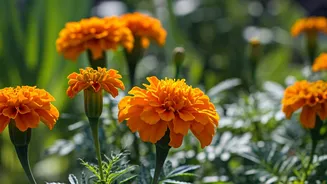
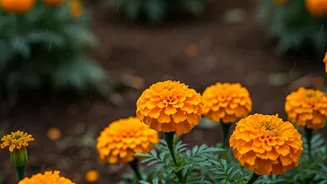
To get the most out of your marigolds, you need a strategy. First, choose the right variety. For nematode control, plant French marigolds like ‘Nemagold’ or ‘Tangerine Gem’. If your goal is simply to add some minor olfactory confusion for flying insects, any strongly scented variety will do. Interplanting a few marigolds throughout your vegetable patch is a classic technique. It may not create an impenetrable fortress, but it diversifies the ecosystem, attracts beneficial insects like hoverflies, and adds vibrant color. For serious nematode issues, dedicate a patch of your garden to a dense, season-long planting of French marigolds as a cover crop. The key is to manage your expectations: view them as one helpful tool in a larger pest management strategy that also includes healthy soil, proper watering, and physical barriers when needed.
Don't Forget the 'Stunning' Part
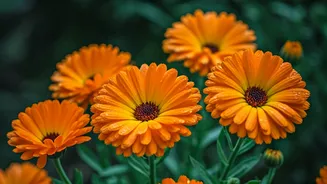
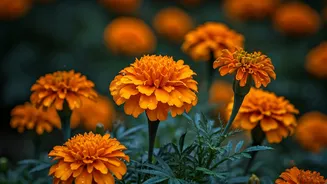
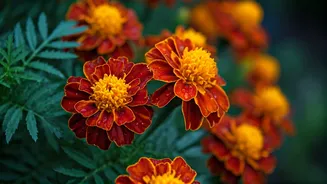
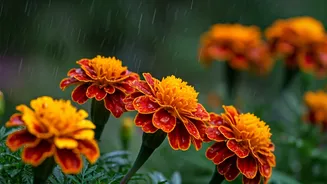
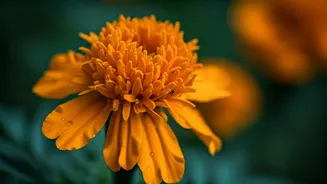
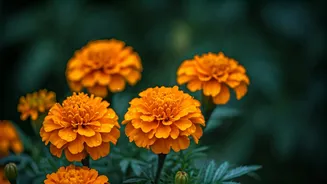
Even if their pest-repelling powers are sometimes overstated, marigolds have more than earned their spot in the garden on looks alone. They are incredibly versatile and resilient. African marigolds (Tagetes erecta) grow tall, some reaching up to three feet with huge, globe-like blooms that make a bold statement in the back of a border. French marigolds are more compact, perfect for edging, containers, and filling in gaps with their delicate, often bicolored flowers. Then there are the Signet marigolds (Tagetes tenuifolia), which have a lacy foliage and a citrusy scent, producing masses of small, edible flowers that look beautiful in salads. From fiery oranges and deep reds to sunny yellows and creamy whites, there’s a marigold to fit any color scheme, offering tireless beauty from the summer heat well into the cool days of fall.