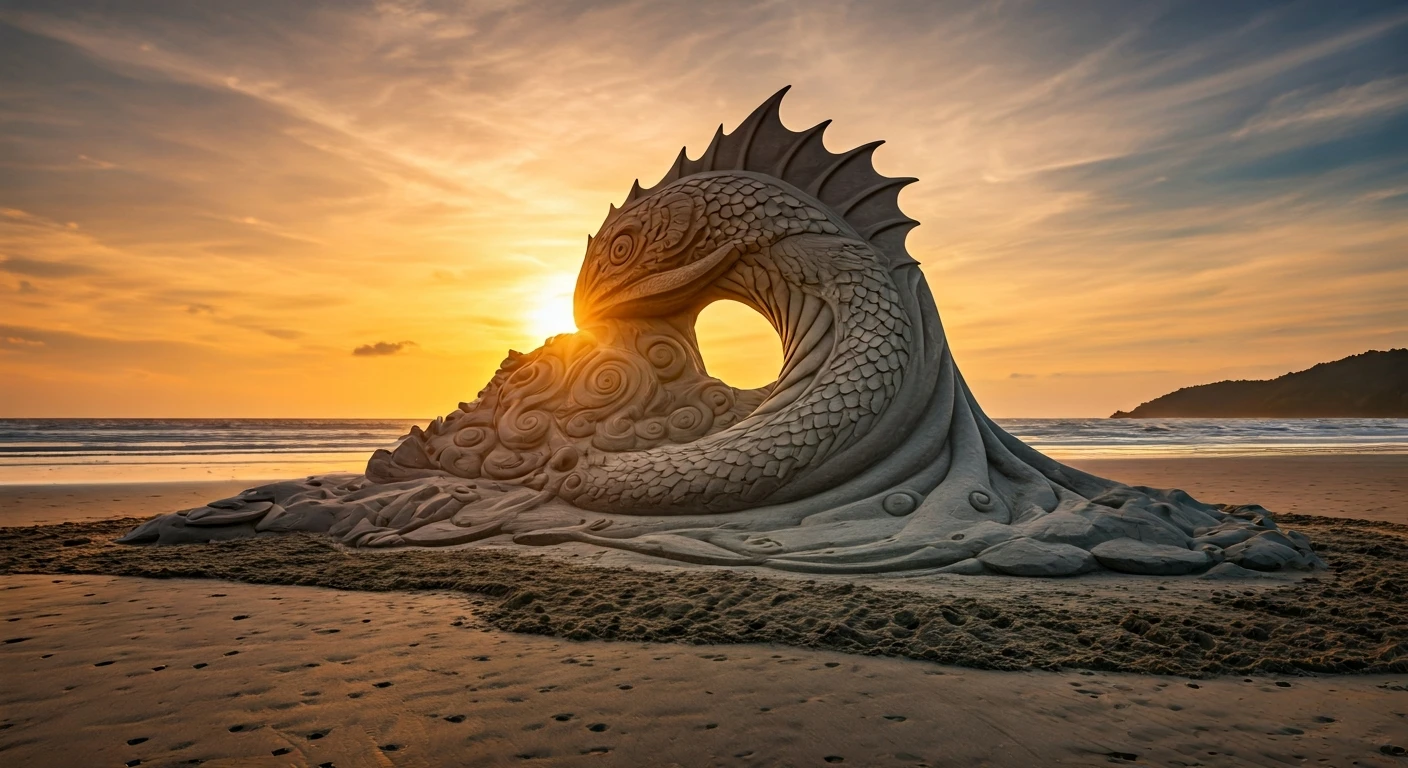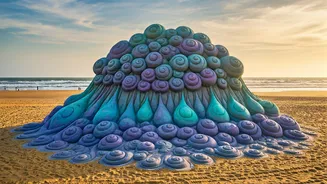








More Than Just a Sandcastle
When you picture art on a beach, your mind might leap to childhood memories of lopsided castles and gritty moats. But a global community of artists is working on an entirely different scale. We’re talking about massive, detailed works of art—some spanning
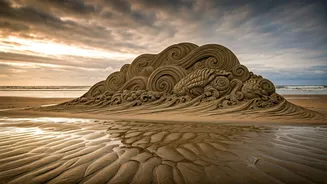
over 100,000 square feet—created using nothing more than sand, water, and a few simple tools. This isn’t about building something to last; it’s about creating a moment of pure astonishment. These artists, known as sand or beach artists, transform vast stretches of coastline into ephemeral galleries. They meticulously carve, sculpt, and rake intricate patterns and figures, knowing full well that their canvas will be wiped clean by the next high tide. This fleeting nature isn't a drawback; it's the very soul of the art form, a poignant commentary on beauty, time, and impermanence.
The Masters of the Medium
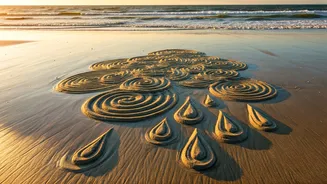
In India, particularly on the shores of Puri Beach in Odisha, sand art is a revered practice, deeply intertwined with culture and spirituality. The headline’s reference to the “monsoon” is a nod to this region, where the rainy season brings the damp, compact sand ideal for sculpting. Artist Sudarsan Pattnaik is a global icon in this field, a Padma Shri awardee who has represented India in competitions around the world. His works are often monumental, depicting deities, conveying social messages about climate change, or paying tribute to global events. His sculptures are narrative, detailed, and deeply human. Meanwhile, on the Pacific coast of the United States, artists like Andres Amador take a different but equally stunning approach. Amador, based in California, uses a rake to etch enormous, geometric patterns onto the sand during low tide. His designs—flowing mandalas, intricate fractals, and vast, abstract labyrinths—can only be fully appreciated from above. He calls his work "earthscape art," and it transforms the beach into a giant, meditative zen garden. While Pattnaik builds up, creating three-dimensional figures, Amador works with the flat plane, creating two-dimensional masterpieces of staggering scale and complexity.
A Canvas of Tides and Weather
For these artists, the environment is both their medium and their collaborator—and their adversary. They are meteorologists and oceanographers as much as they are sculptors. They must understand the tides, the wind, and the consistency of the sand. The best sand for sculpting is fine-grained and angular, allowing it to lock together when wet. The monsoon season in South Asia provides this in abundance, but it also brings the constant threat of a downpour that could dissolve a masterpiece in minutes. The tide is the ultimate clock. An artist may have only a few hours between the receding and returning water to complete their vision. This race against time infuses the creative process with a unique tension and energy. Every minute counts. The finished piece might exist for a day, an afternoon, or merely a few precious hours before the ocean calmly reclaims the shore, leaving no trace behind.
Art with a Message
Because of its temporary nature, sand art is an incredibly powerful medium for timely commentary. It’s a headline you can walk around, a tweet made of earth. Sudarsan Pattnaik frequently uses his platform on Puri Beach, which sees thousands of visitors, to raise awareness for social and environmental causes. He has created sculptures urging for world peace, promoting wildlife conservation, and celebrating cultural festivals. During the pandemic, his sand art reminded people to wear masks and honor frontline workers. This ability to create and share a large-scale public message almost instantaneously gives sand art a relevance and immediacy that gallery art, with its long production and exhibition cycles, often can't match. It’s a democratic art form, free for all to see on the public stage of the beach, until the waves have the final say.